Free Historical Christmas Ornament Assignment & Other Ideas
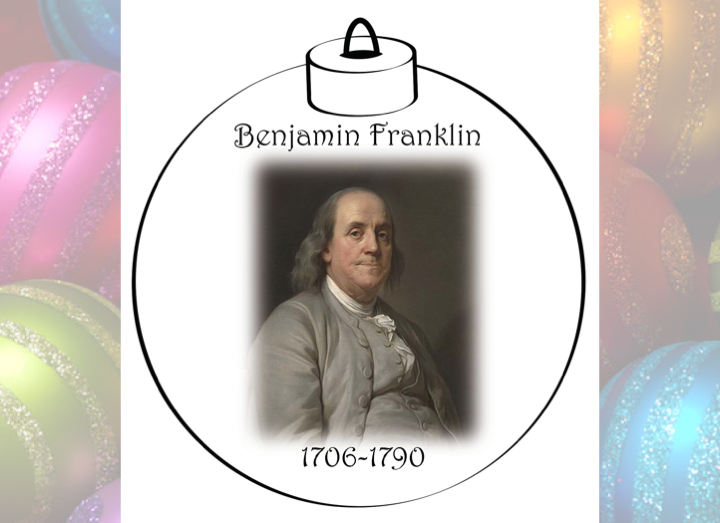
Do you need something fun to do with your students before the Christmas holidays? Have your students create a commemorative Christmas ornament about someone or something you have studied this year! You can get all of the directions and downloads at my TPT store here. It’s free! There’s a printable and digital template, so you can use it in the classroom or for distance learning. Links to Google Slides are also included.

Do you need more ideas? I’ve got an older blog post that gives you several other options here.
 

Pearl Harbor PowerPoint, Interactive Quiz, and Videos

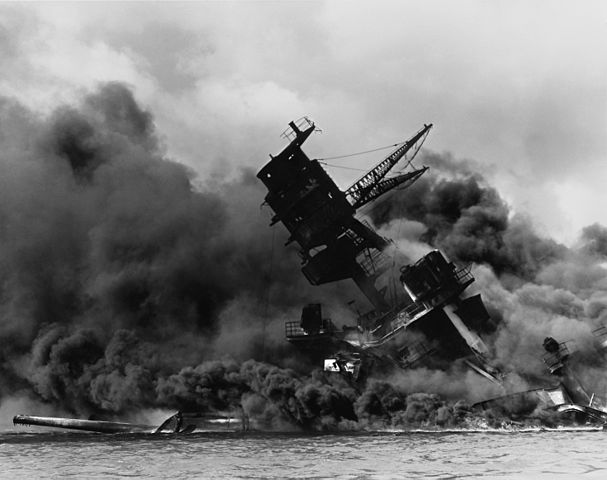
In honor of December 7th, I have created a PowerPoint summary of the key points you may want to review with your students when discussing the importance of the attack on Pearl Harbor. I also created an interactive quiz and have embedded several videos that might be useful in your classroom.

Click here to download my free PowerPoint summary of Pearl Harbor.

Pearl Harbor Interactive Quiz (10 Questions)

Quick video summary of the attack


FDR’s Famous Speech (speech starts at 0:30)


Interview with survivor of USS Arizona (It’s about 15 minutes long, but it’s so interesting!)


New Product: Get Those Students Out of Their Seats!

I’ve finally released my Stand and Sorts for US History! What is a stand and sort? It’s a way to get your students out of their seats while reviewing content. Category signs are taped on the walls in various locations in the classroom.  Students (or groups of students) are given characteristic/example cards.  Students use their knowledge of the content to determine (based on their card) what category sign they must stand under.  The cards can be reshuffled and the activity can be repeated.  A stand and sort can also be completed individually (at the students’ desks) or as a group.  You can also make it a group competition stand and sort, where each group races to get their example cards posted around the classroom before the other groups do so. My students LOVED the group competition. Years ago I created Stand and Sorts for Economics and people really enjoyed them. I’ve always wanted to make some stand and sorts for US History and was finally able to get them finished! You can buy them on TPT here.

Use these stand and sorts to:

  1. Reinforce content immediately after you teach it
  2. Review content the day after teaching it
  3. Do one stand a sort a day as review leading up to standardized testing
  4. Give a struggling student extra practice

Each stand and sort is listed below.

  • 13 Colonies (New England Colonies, Middle Colonies, Southern Colonies)
  • American Revolution (Britain, Colonies)
  • Important Founding Documents (Declaration of Independence, Articles of Confederation, Constitution, Bill of Rights)
  • Articles of Confederation v. Constitution
  • Founding Fathers (George Washington, John Adams, Thomas Jefferson, James Madison, Alexander Hamilton, Benjamin Franklin)
  • Branches of Government (Legislative, Executive, Judicial)
  • Industrial Revolution (Before v. After)
  • Civil War (Union, Confederacy)
  • Civil War Events (Harper’s Ferry, Fort Sumter, Bull Run/Manassas, Antietam, Gettysburg, Vicksburg, Sherman’s March to the Sea, Appomattox)
  • American Inventors (Benjamin Franklin, Eli Whitney, Robert Fulton, Thomas Edison, George Washington Carver, Alexander Graham Bell, Wright Brothers, Garrett Morgan, Henry Ford, Samuel Morse)
  • Roaring Twenties v. Great Depression
  • World War II (Allies, Axis)
  • World War I v. World War II
  • Cold War (US, Soviet Union)
  • Korean War v. Vietnam War
  • Civil Rights (Little Rock Nine, Montgomery Bus Boycott, Sit-ins, Freedom Summer, Martin Luther King, Jr., Malcolm X, Plessy v. Ferguson, Brown v. Board of Education, SCLC & SNCC, Freedom Ride)
  • Vietnam War (US v. North Vietnam)
  • Late 20th Century Presidents (John F. Kennedy, Lyndon Johnson, Richard Nixon, Gerald Ford, Jimmy Carter, Ronald Reagan)

Short Video about the First Thanksgiving

Use this short video before Thanksgiving break as a bell ringer or filler.

The True Story of the First Thanksgiving – PBS (2:58)

Optional questions to ask:

  • How long did the first Thanksgiving last?
  • How many men did Massasoit bring with him and what did they contribute to the feast?
  • Why is the idea of Native Americans and colonists coming together so appealing?
  • The Pilgrims and Native Americans were coming out of a time of loss and grief. How can being thankful help someone get over loss and grief?
  • Why is it important to have an attitude of thankfulness, especially during the current pandemic? How does an attitude of thankfulness affect your thoughts and behavior?

Big Changes to the Site are Coming!

Changes are coming, and I’m SO excited!

I’ve decided to do 2 big things:

  1. change the structure of my site
  2. build a comprehensive list of resources

After taking a very long break from my podcast and blog for personal reasons, I’ve slowly been able to dedicate more time to updating my Let’s Teach History website. Since I’ve been able to revisit my site and really focus on it being useful, I realized that the organization of my site needs to change.

I already have over 130 links to free resources for teaching US History listed on my site.

Did you know that?

Can you find them all?

Of course not! I’ve realized that teachers don’t always have time to go searching through blog posts to find a resource. I want you to find what you need quickly. So, I’ll be posting easy-to-search lists of resources with links that will be organized by time period or by type.

I want to create a massive collection of quality, FREE resources to help high school teachers teach US History. I’m talking about worksheets, notes, videos, discussion starters, quizzes, and more! I’ll also be creating more of my own free and paid content along the way. My goal is to add at least one new resource/link a day! I’ll create a blog post every so often with a list of new resources so that you won’t miss anything new.

I’m hoping to make this changeover to the new format within the next two weeks! Be sure to come back and check out the more user-friendly layout! Also, if you have any resources you think should go on my list, use the contact form on my site to let me know!

Old Literacy Test

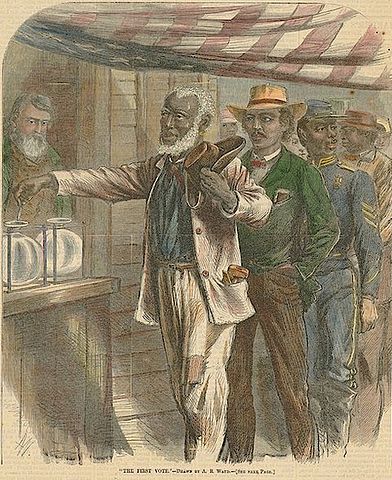
In honor of election day, I thought I’d share this. It’s the 1965 Alabama Literacy Test that was given to prevent African-Americans from voting. You better know your Constitution if you are going to pass this test! Give it to your students and see how they do! Ask them if they think the average citizen today would be able to pass this test. Aren’t you grateful you don’t have to pass this in order to vote? If you don’t have time to cover it in class, print it out and have students come by and do it after school for extra credit.


Photo:  The First Vote by A.R. Waud, Library of Congress – Public Domain

Short Halloween History Videos

I always show my students a couple of short videos about the history of Halloween each year. Here are some of my favorites from the History Channel. The first gives a general history of Halloween. The second focuses more on the origins of trick or treating. Both are about 2-3 minutes long. Use them as a fun filler at the end of class or to grab students’ attention at the beginning of class. You can even use them to start a discussion about how American traditions and culture were influenced by other cultures.

Free Interactive Drag and Drop Review Activities

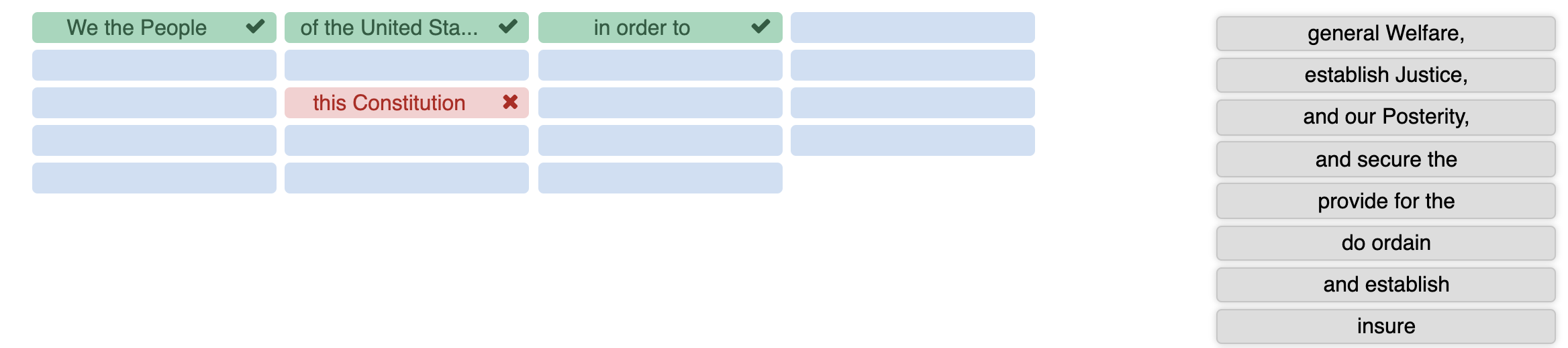
I’ve figured out a way to add some drag and drop reviews to my site, and I am SO EXCITED! I’ve already made one about the Declaration of Independence and the Preamble to the Constitution. I used to make my students memorize these passages. This would have been a great help! I can’t wait to make more of these! I’ll be posting all interactive review activities on my website under the For Students tab.

Free Industrial Age Interactive Crossword Puzzle

I’m experimenting with new things for this site, and I’ve come across a nifty interactive crossword program. I created a free, interactive crossword puzzle about the Industrial Age. Feel free to use it. There’s not a print version yet, so this might be something that you would link to in an e-learning environment or to help your students review. Let me know if you like it and I may create more! Click here to load the crossword puzzle or get the link. It works best on a desktop, but it did work on my Android phone and Chromebook. It didn’t work right on Chrome on my iPad but did work on Safari. (Note: While the numbers of the answers are the same each time the page loads, the placement of the letter squares are different. So, the answer to number one will always be the same, but the boxes for number one may be at the top left one time or the bottom right during another visit.)

What do you need during the coronavirus school shutdown?

I’m thinking about creating some free resources that teachers can use while most students are at home during the school shutdowns because of the coronavirus.  I thought about creating instructional videos or at-home activities.  What do you need?  What types of activities, videos, etc. would help right now?  What types of assignments are you giving your students?  What subjects do you need materials for?  What are you covering now?  Let me know how I can help you during this time! Use the contact form below to tell me!

[formidable id=”3″]


Musical Intro to Roaring Twenties

I think music can convey some things so much better than words.  When I was introducing my students to the Roaring Twenties, I decided to use music to make my point.  I displayed the following on the board:

This music characterizes life in the 1920s.  Do you think society was generally:

  • Fast-paced or slow-paced?
  • Poor or prosperous?
  • Traditional or changing?

Then, I played them the “Overture” and first part of “All That Jazz” from the movie/musical Chicago.  (See the Youtube link if you don’t have the song.) I only play the first minute or so, because A- the kids might lose interest and B- the words to “All That Jazz” start in.  You probably don’t want your students to be singing, “Where the gin is cold, but the piano’s hot,” as they leave your classroom, so I would most definitely stop it before the words kick in.  If you listen for the music to slow down, that’s your cue to stop it before the words begin.  While the song is not a legitimate 1920s song, I think it captures the spirit and sound of music from that time period.

After you stop the music, have your students answer the questions on the board.  Use this as a discussion starter or a way to begin discussing life during the Roaring Twenties.

Here’s a PowerPoint slide to display on the board.

Here’s the Youtube video of the song:

Photo: Louis Brooks.  Public Domain.

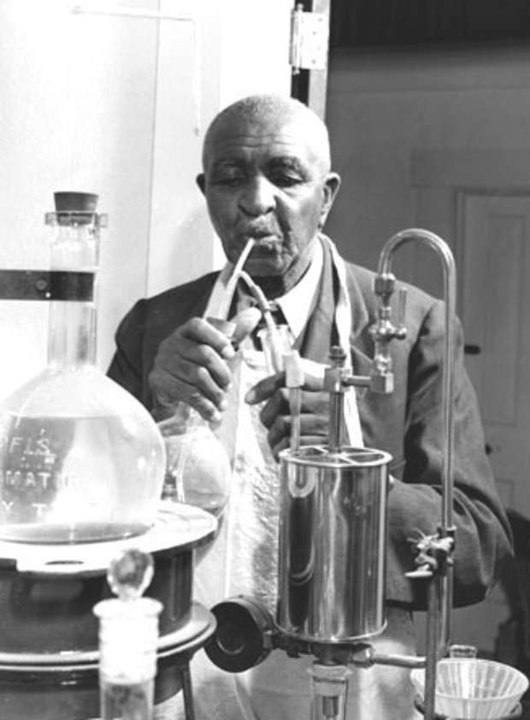
Video: George Washington Carver

This is an EXCELLENT video about George Washington Carver.  It does a great job of summarizing his contributions and highlights important character traits such as perseverance, endurance, and service.  Also, interesting fact:  George Washington Carver was born into slavery, kidnapped as an infant, and, once returned, was eventually raised and educated by his owner.

You can used this video when discussing inventors, Black History month, the contributions of African-Americans, challenges in the Reconstruction South, and the Tuskegee Institute.

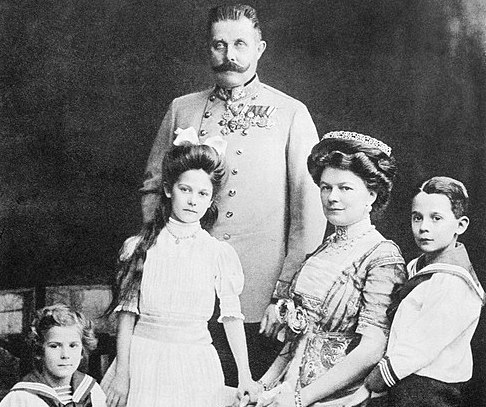
World War I Video: The Assassination of Franz Ferdinand

This is a good video explaining the start of World War I.  The link will take you to the an Encyclopedia Brittanica page about Franz Ferdinand.  It’s the first video on the page.  It’s entitled, “Witness the beginning of World War I with the assassination of Archduke Franz Ferdinand on June 28, 1914” and is 3:28 (after the ad).  I typically show a video like this after in order to reinforce the content after I have explained a historical event.  However, if you show this as conversation starter, bell-ringer, or opener, before you show this to your students, explain who the leaders are that are mentioned in the video.  For example, the video starts with Kaiser Wilhelm of Germany.  Explain briefly that Kaiser Wilhelm was the head of Germany and that Germany had the strongest military in Europe before the war.  Also, mention that Germany was aligned with Austria-Hungary, etc.  You may even want to write a list of countries and leaders on the board for reference.  If you do this, use a chart and use a different column for each “side.”

By the way, just a side note, I do NOT recommend the Biography.com video about Franz Ferdinand.  It is very biased and even calls him “stupid and unpleasant” and calls his assassin “studious.”  That is NOT an objective video!  I don’t deny that he probably wasn’t the most pleasant guy, but a video that uses language that it is clearly not being objective.

Next Class:  Access Prior Knowledge

This is a very interesting article including little known facts about Franz Ferdinand.  It would be great to go over it at the beginning of the next class as a way to access the students’ prior knowledge and gain their interest.  Keep in mind that there are some negative aspects to him (as with any leader) that are discussed in this article.  However, remind your students that just because someone is unlikeable or does something you disagree with does not mean that he/she deserve to be killed.  I have found that many students often respond with an emotional outburst like “Well, he deserved to be killed!” or “Serves him right!”  Use instances like that to reinforce the value of every human life, and remind students of how they would want to be treated by those who thought little of them.

Fun First Day Activity for US History

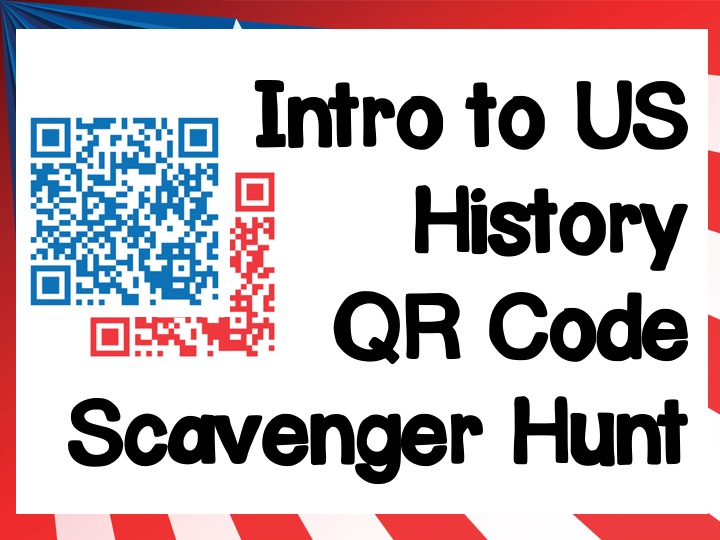
I’ve been wanting to create this for a while.  My Intro to Economics QR Code Scavenger Hunt is a hit.  I really wanted to make a QR code activity for the first day of US History but haven’t taken the time to do so.  I finally sat down and banged it out this summer.  I’ve been doing QR code activities with the students at the co-op where I teach and they LOVE them.  In case you don’t know, a QR code is a code that can be scanned using a smartphone or tablet.  During one of my QR code activities, students walk around the room searching for hidden QR codes.  Once they find a QR code, they scan it with their smartphones or tablets.  A QR app on the device (download this ahead of time…most are free) scans the code to reveal a question that the students must answer.  Unlike most QR codes you see on various products, my QR codes come up as plain text rather than something that must be accessed via an internet connection.  So, you don’t need Internet access to complete this activity.  It can be done individually, in pairs, or in groups.  These types of activities are great because they get students out of their seats and moving.  Check it out at my TPT store. I’m hoping to create more QR code activities that review or present US History content this year on TPT!

Interesting Wright Brothers Article

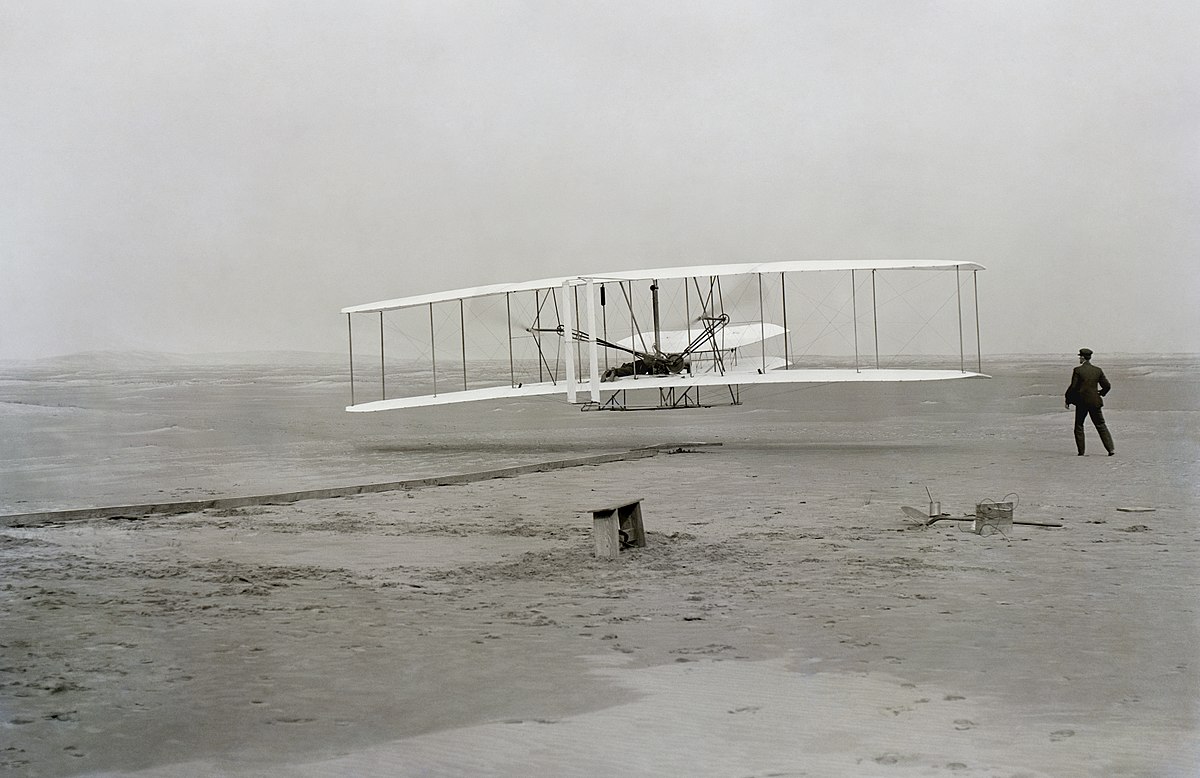
Did you know that Neil Armstrong took a piece of the Wright Brothers’ Flyer to the moon!!??  How cool is that!  I was teaching a lesson on the Wright Brothers in my American Inventors class and came across this link during my research.  It’s a History Channel article called “10 Things You May Not Know About the Wright Brothers.”  This sucker is full of fascinating info that will grab your students’ interest and make them want to know more.  As with most US history classes, I’m sure you probably won’t have time to spend a whole class period on the Wright Brothers, but this would be a great article to have your students read after they finish an assignment or test.  Remember, the more interesting you can make something or someone, the more likely your students will remember it and read more about it on their own time.

On a side note, how can you actually remember to fit this random article into your lessons/curriculum?  Take one afternoon and print off copies of all of the interesting articles that you would like to squeeze in to your curriculum throughout the year.  Put them in a folder and keep them someplace handy (or at least bookmark them or put them in a digital folder).  Whenever you have an extra 5 or 10 minutes to fill, pull out an article to cover.  But what if it’s not chronologically appropriate?  What if you don’t have any articles that fit the time period you are covering?  SO WHAT!  Who says history has to be covered chronologically?  As long as an article or activity leads to learning of some kind, it’s valid!  (Plus, over time, you can collect more and more articles like these and eventually have a nice assortment from various time periods.)