Short D-Day Quiz

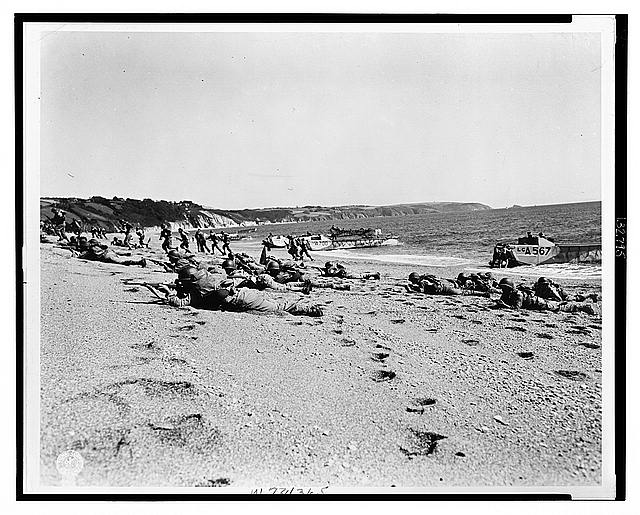
What does the “D” stand for in D-day?  This is a question that you will be asked every year you teach US History.  I found a quick little quiz about D-Day, which includes the answer to that question.  The quiz is just a quick 8-question quiz, but you can use it for several things:

  • Use it before the lesson to gauge prior knowledge
  • Use it as a warm-up or discussion starter
  • Copy and paste it into a Word document to create a quick assessment
  • Allow students to complete the quiz on a phone or other device as extra credit

The one downer about this quiz is that it doesn’t actually grade the answers; it just gives you the correct answers via a link at the bottom.  So, you need to have students write down their answers and compare.  If you are doing this in front of the class, the best way would probably be to have the quiz open on one tab and the answer page open in another tab for quick access.  It’s a small resource, but that doesn’t mean it isn’t useful.  Anything that can save you time and engage students is always a plus!
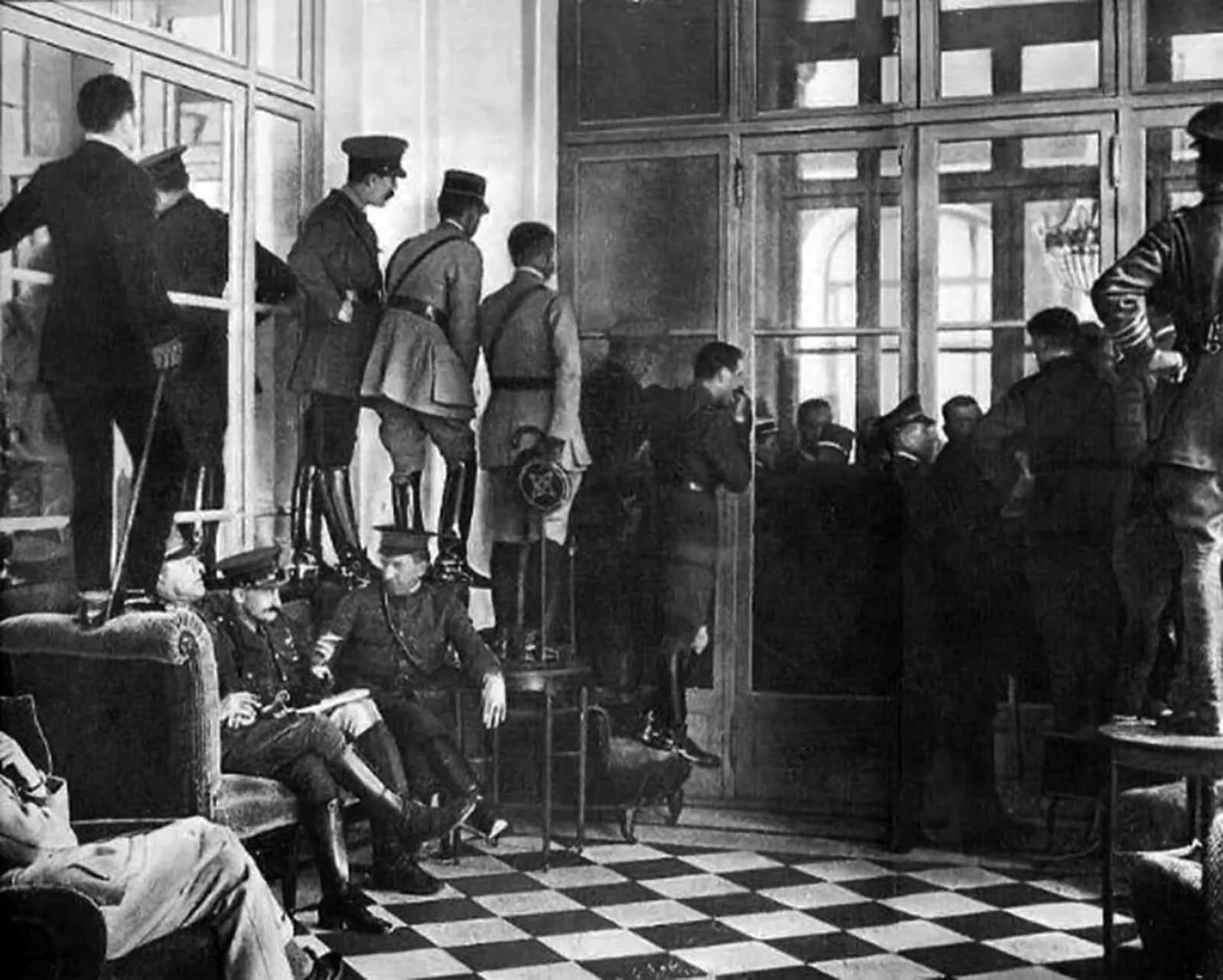
 

Photo: Final Dress Rehearsal for D-Day, Library of Congress – No known restrictions

Cool Photo of the Signing of the Treaty of Versailles

This is one of those historical photos that I just LOVE!  It reminds me that the people in those black and white photos were real people…and they had real emotions and real experiences.  If you had fought long and hard in World War I and saw many soldiers and friends die, wouldn’t you be ready for the war to be officially over?  Wouldn’t that be the day you were waiting for?  This is a picture of military officers and politicians standing on furniture so that they can witness the signing of the Treaty of Versailles!  How cool!  Share it with your students when you talk about World War I.

“This Day in History” Websites

You know that excited-yet-also-frustrated feeling you get when you come across something that is awesome and can totally help you out in the classroom?  You have that whole, “Why haven’t I found this sooner” moment.  Well, I had that when I came across this website today.  I was looking for a particular historical picture on the Library of Congress website (which has an amazing, yet overwhelming amount of stuff on it), when I came across their “Today in History” series.

When I taught full-time, I always had a “This day in history” segment in my bell ringer.  I would display one significant historical event (not necessarily specifically related to US history) on the board and discuss it briefly with my students.  When I did it, I had to create a PowerPoint slide with a picture and explanation for each school day of the year.  It took me a while to research and create them.  I did have a book called Today in History, which helped, but it was still time-consuming.

The students really enjoyed it.  Guess what?  You don’t have to go through all of that work to do this in your classroom. You can just go here and find the date you need.  Under each link for each date, there is a page about at least one historical event which contains a picture and an explanation.  It’s really easy to navigate!  Also, each page (or at least all of the ones I checked out) had links at the bottom to related Library of Congress resources.  Even if this doesn’t become a daily feature of your classroom, you could always keep it handy in case your lesson runs short and you need a filler for the last few minutes of class.

By the way, the History Channel also has a really good This Day in History page, which is accompanied by a video.  However, the video has a commercial and sometimes the videos are slow to load.  Also, the History Channel video covers 5 or 6 topics, and sometimes it’s more effective to focus on one particular event rather than mention several briefly.  Either way, both of these resources can save you time!


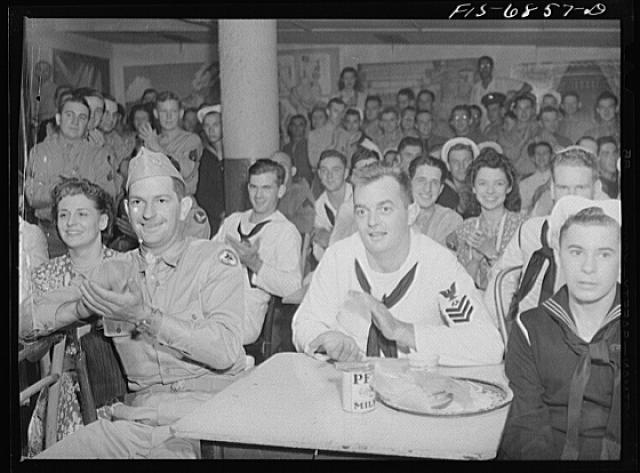
Photo:  Collins, M., photographer. (1942) New York, New York. Audience at the Stage Door canteen. Aug.?. [Image] Retrieved from the Library of Congress, https://www.loc.gov/item/owi2001009097/PP/.

LTH 013 – Thomas Edison Fun Facts Quiz

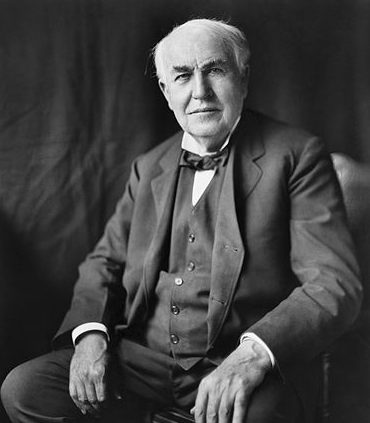
In this episode, I’ll tell you how to use a fun facts quiz in your classroom to grab your students’ attention.  I’ll also give you some awesome (and little-known) facts about Thomas Edison.

My New Product on TPT – Create a Twitter Page for a Historical Figure:  Template and 46 Assignments

Full Thomas Edison Fun Facts Quiz and Powerpoint 

Ford and Edison’s Excellent Camping Adventures” – Cool article from History.com    Update: Try this one instead: “When Henry Ford and Thomas Edison Went Camping in the Great Smoky Mountains”

Picture Source: Library of Congress, Public Domain
Intro music clip of “I Dunno” by Grapes CC BY-ND 3.0


Released End of Course Tests

The best way to prepare your students for a standardized test is to teach them the content in such a way that they will have a passion and interest for the material.  STILL, students don’t need to go into a standardized test administration without some practice dealing with these tests.  Ugh, I hate those things.  Since, unfortunately, they are a necessary evil, it is important to help you students go into the test administration feeling as confident and comfortable as possible.  It is very important to expose students to the types of questions that they will encounter for two reasons.

1- You can model good test-taking skills for your students.  (Show a question and then explain how you would go about answering it as if you weren’t sure of the answer.)

2- It will help reduce test anxiety.  (De-mystify the whole idea of a top-secret, scary test for your students.  Show them questions that were used in the past.  Allow them to see the layout and wording of questions.)

What’s the best way to do this?  Several states have released older versions of their end of course tests.  Look at these, take questions from them, and put them on a powerpoint slide.  Discuss one question a day starting a week or two before the test.  You don’t have to cover them all, but you do need to cover the basic types of questions (reading a passage questions, map questions, political cartoon questions, graph questions, etc.).

If you are really ambitious, you can go through each of these tests and categorize the questions based on topic.  (This might be a good summer or holiday project.)  You can then use them when you cover each unit or use them as test questions for your own classroom tests.

When covering these questions, I always tell my students one thing:  “You will not know everything on this test, so don’t freak out if you come across a question you don’t know the answer to.  Try your best, that’s all I ask.”

Texas Released End of Course Test and Answer Key (scroll down for 7 different tests)

Georgia Released End of Course Test and Answer Key (separate)


Understanding and Using Bloom’s Taxonomy

The last time I really heard someone say the words “Bloom’s Taxonomy” was in college.  Now, however, you always hear people talking about “higher-level thinking” or “high-level thinking skills.”  Both of these popular ideas are based on Bloom’s Taxonomy.  So what is Bloom’s Taxonomy and why should you even care about it?  Bloom’s Taxonomy (or BT as I’ll call it) is a way to determine different levels of human cognition.  In simpler terms, BT categorizes how much you are making your students think about the material.  BT divides thinking into different levels.  Lower-level BT questions or assignments deal with things such as memorization and observation.  Higher-level BT assignments force students to think more deeply about a topic, which hopefully will lead to better understanding and retention.  BT was revised in 2001 and changed up a little, but the idea behind and usefulness of BT is still important.

What does this have to do with your classroom?  Use BT as a guide to make sure that you are really making your students think deeply about topics.  Don’t just expect students to memorize things.  Use questions that help them create a new and deeper understanding of the content.

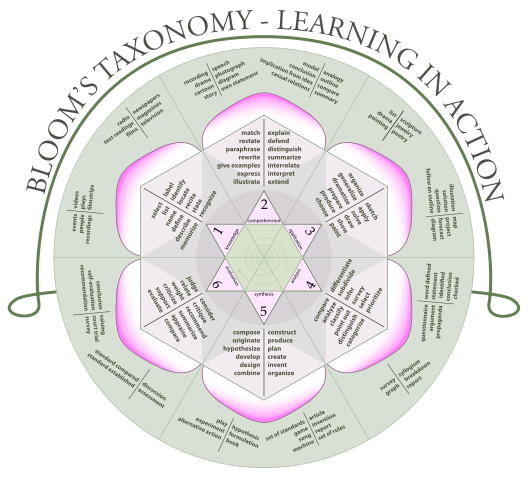
Look at the various visual guides to Bloom’s Taxonomy given here.  Notice the words listed under each category.  These words are the cues to help you evaluate what you are asking of your students.  Are you asking them to recognize, list, or describe (which are low-level skills) or are you asking them to compare, construct, and interpret (high-level skills)?  There is nothing wrong with using low-level thinking skills.  In fact, that is probably where you need to start when introducing a topic.  Just don’t stay there.  Make sure that after you tell students about a person or event, have them look past the facts and analyze, evaluate, or create something.

Print one of these visual guides and keep it with your lesson plans.  Use it when you create test questions and assignments, and help your students become better thinkers.


Image Credit: Bloom’s Taxonomy By K. Aainsqatsi – Own work, CC BY-SA 3.0,

Free Great Plains Reflection Worksheet

I’ve got it. The same thing that took down Harriet Tubman and Stonewall Jackson….pneumonia. And let me tell you, it is NO JOKE!  Thank the Lord for modern medicine! I was diagnosed with pneumonia last week (as well as a cracked rib from coughing so hard). I am getting better, thank goodness! Unfortunately, there is no way that I record a podcast being so weak and short of breath. I don’t want you to think that I have given up and walked away. I will resume my podcast hopefully next week. In the meantime, I will continue to post to my blog. I have a treat for you for stopping by…

Click here to download my worksheet called “Thinking About Life on the Great Plains.” It is a list of opinion questions that I used to give my students every year after we studied life on the Great Plains. My students love these questions, because it really makes them think about what is most important to them. What can you do with these questions? You can:

  • Give them to your students after they finish a test and wait for others to finish as well
  • Use a few of them as writing prompts or exit ticket questions
  • Use one to start a class discussion
  • Have the students complete the worksheet and get into groups to discuss it
  • Play a “four corners” type of game where you call out the question and students must stand on one side of the room or the other based on what their response to the question is

One good thing that has come of this is that while I’ve been sitting around trying to rest, I’ve been working away on history curriculum! I’ve got a cool product coming out next week (hopefully) that I think students will really like! Check the blog again next week to find out what it is!

Great Example of Connecting Students to Content

This!  Yes!  Yes!  A thousand times YES!  This teacher is doing it right!  If you don’t establish relevance or allow your students to form a connection to the material, they either won’t remember it or won’t care about it!  Think about it.  Have you made things so interesting or gotten such an emotional reaction out of your students that one of them actually posted about it later?  Let that be your goal today…and every day!

wifitax

Teddy Roosevelt Video Footage at the Library of Congress

According to the Library of Congress, “It has been said that during the silent newsreel period no president was more photogenic than Theodore Roosevelt. He was unusually cooperative with motion picture photographers, often pausing in the midst of official ceremonies to face the camera, bow, wave, smile, gesture, or otherwise accommodate the cameraman.”1

The Library of Congress has a good bit of video footage of Roosevelt at various places and events.  These things are really neat to watch!  Not only do you get to see the man himself, BUT you get a good glimpse of the crowds that came to see him.  Check out the outfits that everyone wore!  In some of the footage, it may take a minute or more for TR to appear.  If you want to show a few of these to your students, play a quick game of “Who Can Spot Teddy Roosevelt.”  Make sure that you watch the clips beforehand, so that you know when Roosevelt will appear (in case your students miss it and don’t see him).  Remind students that this is not some old movie with people in costumes; these were actual people in these clips!  They might get bored watching all of each clip, so you may want to show just a couple of minutes.  You could also show one a day for a few days at the end of class.  Here are a few below.  To see the full list of videos with descriptions, click here.


1 Theodore Roosevelt on Film – Theodore Roosevelt: His Life and Times on Film. (n.d.). Retrieved October 12, 2016, from https://www.loc.gov/collections/theodore-roosevelt-films/articles-and-essays/theodore-roosevelt-on-film/

Great World War I Poem

I’m not a big poetry buff, but I came across this today, and it really touched me.  Apparently, Rudyard Kipling’s 18-year-old son died in World War I in the Battle of Loos.  The poem “My Boy Jack” was written by Kipling after this tragedy.  Read the poem below.  Can’t you just imagine a worried parent asking again and again if anyone has had news of his son?

“Have you news of my boy Jack?”
Not this tide.
“When d’you think that he’ll come back?”
Not with this wind blowing, and this tide.

“Has any one else had word of him?”
Not this tide.
For what is sunk will hardly swim,
Not with this wind blowing, and this tide.

“Oh, dear, what comfort can I find?”
None this tide,
Nor any tide,
Except he did not shame his kind —
Not even with that wind blowing, and that tide.

Then hold your head up all the more,
This tide,
And every tide;
Because he was the son you bore,
And gave to that wind blowing and that tide!

So, how can you use this in your classroom?

  • Use it as an attention-getter or discussion starter.  Put it on the board at the beginning of class when you are talking about World War I.  Ask your students what they think it means and then tell them the origin.
  • Discuss it with students and have them write their own poem about World War I.
  • Discuss it and ask students what their friends or relatives would write about them if they died in battle.
  • Discuss it and talk about how families today deal with the grief of losing loved ones in military service.  Compare and contrast the experience today versus what people would have experienced then.


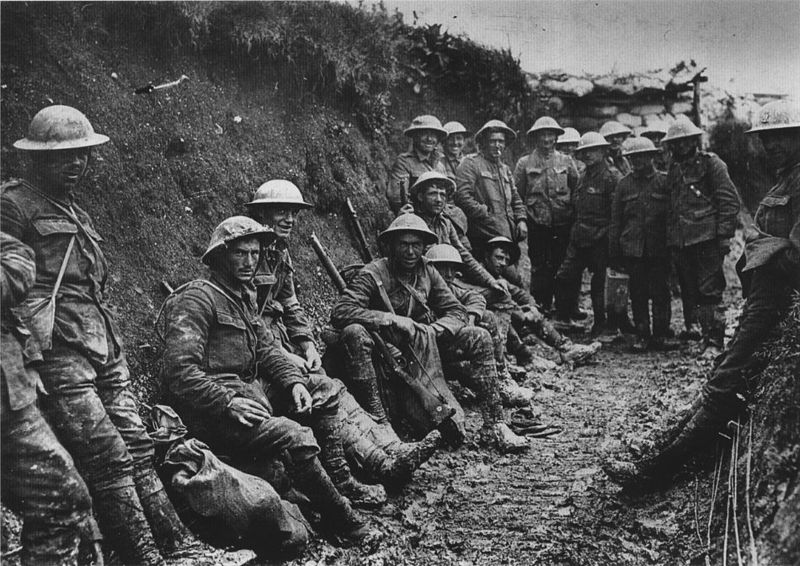
Photo: Royal Irish Rifles in a communications trench, first day on the Somme, 1916. Imperial War Museum – Public Domain.

LTH 012 – What to Put on Your Board

In this episode, I discuss what you should put on your board so that students, administrators, and others know what is going on in your classroom.  Stay tuned for interesting facts at the end!

What is an essential question?

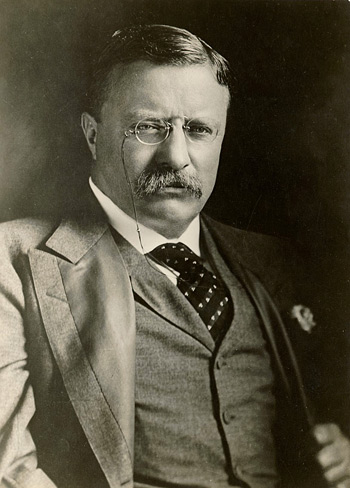
Teddy Roosevelt as a young man – Fierce!

Recording of Teddy Roosevelt – Library of Congress


Intro music clip of “I Dunno” by Grapes CC BY-ND 3.0

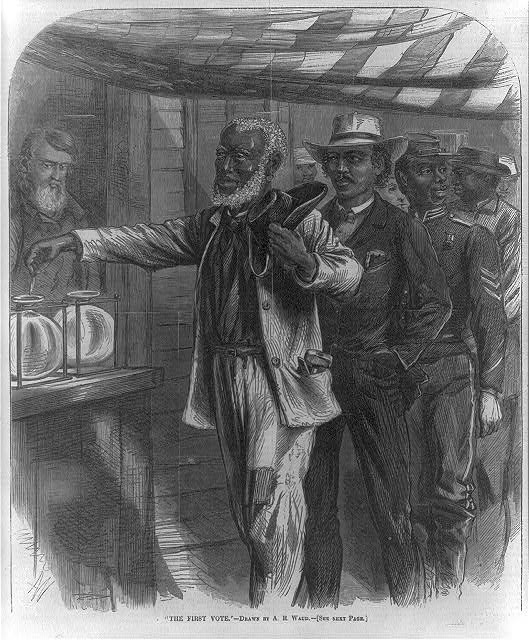
Old Voting Literacy Test

Have you ever wondered if you could pass one of those old literacy tests that they used to prevent certain people from voting?  I found this today and got really excited!  It’s the text of the 1965 Alabama Literacy Test that was given to prevent African-Americans from voting.  Wow, these questions are specific!  You better know your Constitution if you are going to pass this test.  Give it to your students and see how they do!  If you don’t have time to cover it in class, print it out and have students come by and do it after school for extra credit.


Photo:  The First Vote by A.R. Waud, Library of Congress – Public Domain

Civil War Cannonballs Surface in SC After Hurricane Matthew

How cool is this?!  Hurricane Matthew unearthed or washed up some cannonballs from the Civil War.  They were discovered on Folly Beach in SC!  Watch a quick interview with the person who discovered them (see embedded video below) which gives some great footage of the discovery.  Click here to read the whole article.

| WBTV Charlotte


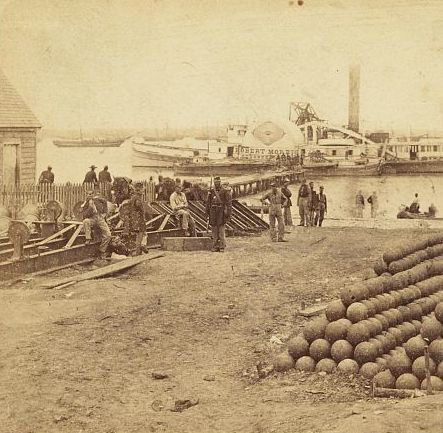
Photo: Embarkation for White House, from Yorktown, VA., Library of Congress – Public Domain

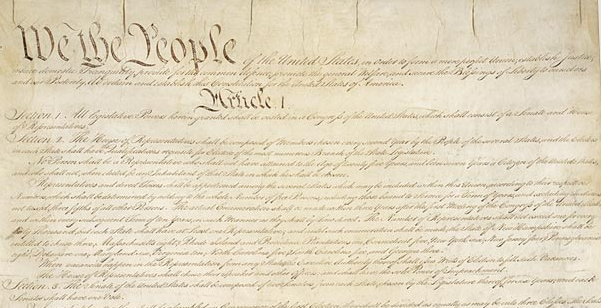
Help Students Memorize the Preamble to the Constitution

I am helping my daughter memorize the Preamble to the Constitution.  I think it is imperative that ALL citizens of this country memorize at least the introduction to our governing document.  The Preamble is a good reminder of why this country was founded and what the purpose of our government truly is.  I do NOT like the idea of making my students memorize a lot of random dates, but I always made my students memorize (and be able to explain) two things every year in US History:  the Preamble to the US Constitution and the first line of the second paragraph of the Declaration of Independence (“We hold these truths…Life, Liberty, and the Pursuit of Happiness.”).  I did not, however, just give the text to my students and say, “Memorize this.”  We worked for a few minutes in class every day for about a week, and then students had to recite it.

I wrote the various words and/or phrases of the selected text on various pieces of construction paper.  I divided the text up into bits that equaled the amount of students in my largest class.  So if my largest class had 28 students, I divided the text up into 28 chunks.  This way, each student had a piece.  In the smaller classes, I just gave a few students 2 chunks if there were extra pieces.  Then I did this:

  • Time the students on how quickly they can line up so that the words of the Preamble were in the correct order.
  • Read the words of the Preamble as a class.
  • Mix up the words and do it again, trying to beat the previous time.  If the students are successful, they get a reward (like candy or a few free minutes at the end of class).
  • Repeat this exercise each day until you are confident that most students know it.
  • After the second day, I don’t allow students to talk when they are moving around with their pieces.  It makes things a little harder (and more interesting).

The day of the unit test, students had to come up and say the Preamble to me after they took their test.  I didn’t make students say it in front of the class, because I had some students that knew it but just couldn’t handle saying it in front of others.  The recitation was worth 100 points.  I allowed the students to start over as many times as they needed, but I subtracted 5 points for every prompt required or word missed when they said it the final time.  One thing I did notice was that many students seemed very nervous having to come up and say it to me.  I think it’s intimidating for some students to have a teacher’s undivided attention while reciting something from memory, so be sure to smile and be encouraging.

When learning the Preamble, you can also show the the School House Rock video.  It’s older, but the song is very catchy.  (Just be aware that they leave out “of the United States” at the beginning.)

I also recently found this rap.  The video quality is not very good, but the rap is pretty catchy.  You could try to recreate it for your students or let them watch it and perform along with it.  (You’ll have to read your students’ attitudes and whether they will be willing to do this one or not.)

I also found this free memorization sheet that would great to use if needed.

LTH 010 – School Shootings: Have a Plan

In this episode, I’ll discuss the importance of having a plan beyond what your school provides in case you ever have to deal with an active shooter.  Stay tuned at the end for an update.

***Update:  I am sad to report that Jacob Hall passed away on October 10, 2016.

Alice Training

Active Shooter School Self-Assessment

Alice Individual Training

Jacob Hall GoFundMe Page


My Recommended Spiritual Resources for Those Who are Seeking are Listed Below:

One of my favorite videos on life’s purpose – Francis Chan

How can I have a personal relationship with God? – Chip Ingram

What is salvation?


60-Second Presidents Videos

I’ve mentioned this resource before in a couple of my podcasts, but I decided it would be a good idea to post the link for all of the videos.  PBS created a video series called 60-Second Presidents in which they cover the basic info and accomplishments of each US president.  The videos are short but interesting and would be a great way to review a president the day after you discussed his administration.  The site also has activities that go along with some of the videos, but these activities seem to be best suited (in my opinion) to a civics or government class.  Click here to check out these short but sweet videos.

LTH 009 – Proximity

In this episode, I’ll talk about the importance of getting up and moving around your classroom.  Stay tuned for interesting facts at the end!

Show Notes and Resources:

Video Clips on Death in the Civil War

Picture of Traveller’s Stable at Washington and Lee University


Intro music clip of “I Dunno” by Grapes CC BY-ND 3.0