
Understanding and Using Bloom’s Taxonomy
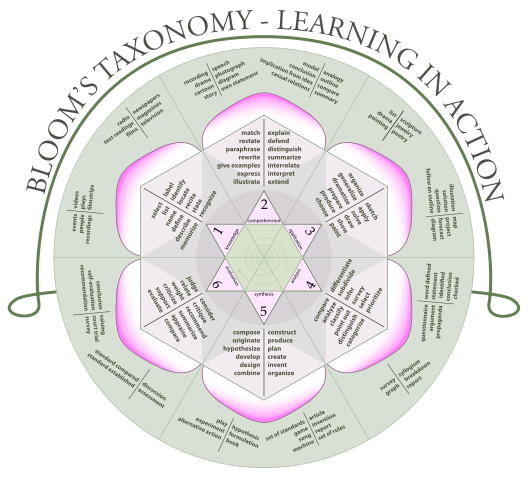
The last time I really heard someone say the words “Bloom’s Taxonomy” was in college. Now, however, you always hear people talking about “higher-level thinking” or “high-level thinking skills.” Both of these popular ideas are based on Bloom’s Taxonomy. So what is Bloom’s Taxonomy and why should you even care about it? Bloom’s Taxonomy (or BT as I’ll call it) is a way to determine different levels of human cognition. In simpler terms, BT categorizes how much you are making your students think about the material. BT divides thinking into different levels. Lower-level BT questions or assignments deal with things such as memorization and observation. Higher-level BT assignments force students to think more deeply about a topic, which hopefully will lead to better understanding and retention. BT was revised in 2001 and changed up a little, but the idea behind and usefulness of BT is still important.
What does this have to do with your classroom? Use BT as a guide to make sure that you are really making your students think deeply about topics. Don’t just expect students to memorize things. Use questions that help them create a new and deeper understanding of the content.
Look at the various visual guides to Bloom’s Taxonomy given here. Notice the words listed under each category. These words are the cues to help you evaluate what you are asking of your students. Are you asking them to recognize, list, or describe (which are low-level skills) or are you asking them to compare, construct, and interpret (high-level skills)? There is nothing wrong with using low-level thinking skills. In fact, that is probably where you need to start when introducing a topic. Just don’t stay there. Make sure that after you tell students about a person or event, have them look past the facts and analyze, evaluate, or create something.
Print one of these visual guides and keep it with your lesson plans. Use it when you create test questions and assignments, and help your students become better thinkers.






 d. See my example.