Fun Friday Fact: Teddy Roosevelt’s Famous Sidearm
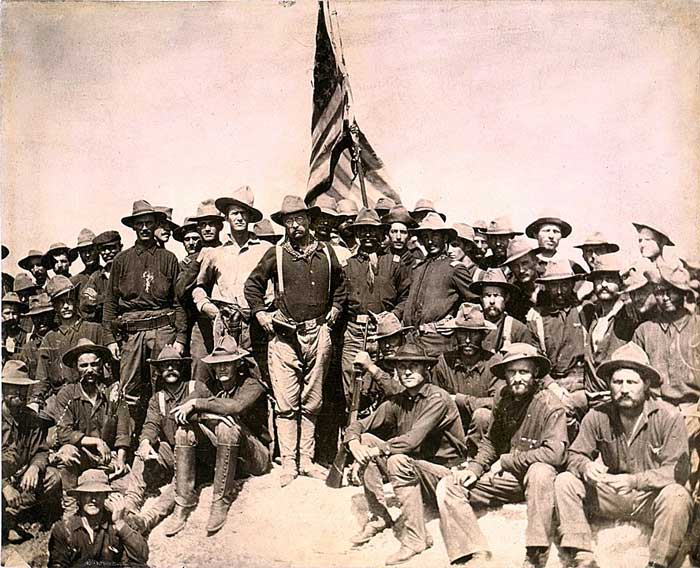
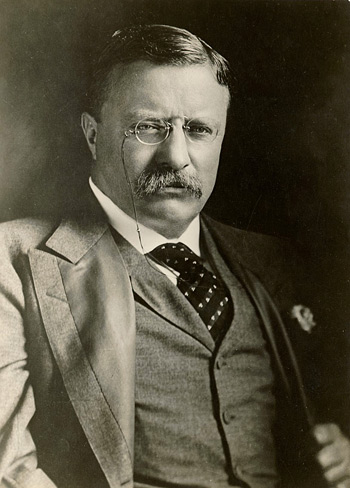
Here’s a fun fact that I didn’t find out until a few weeks ago. Did you know that when fighting in the Spanish American War, Teddy Roosevelt used a revolver that had been salvaged from the USS Maine? How cool! He used it when he charged San Juan Hill and was wearing it when the famous picture of he and his rough riders was taken.

How in the world did Roosevelt get it? The revolver was recovered by divers searching the Maine’s captain’s quarters for keys to the ship’s magazine bunkers. Eventually it was gifted to Roosevelt by his brother-in-law. Side note: The revolver was also stolen at one point! It was stolen from a locked display case in a museum and was missing for 16 years.
Have You Touched the Berlin Wall?

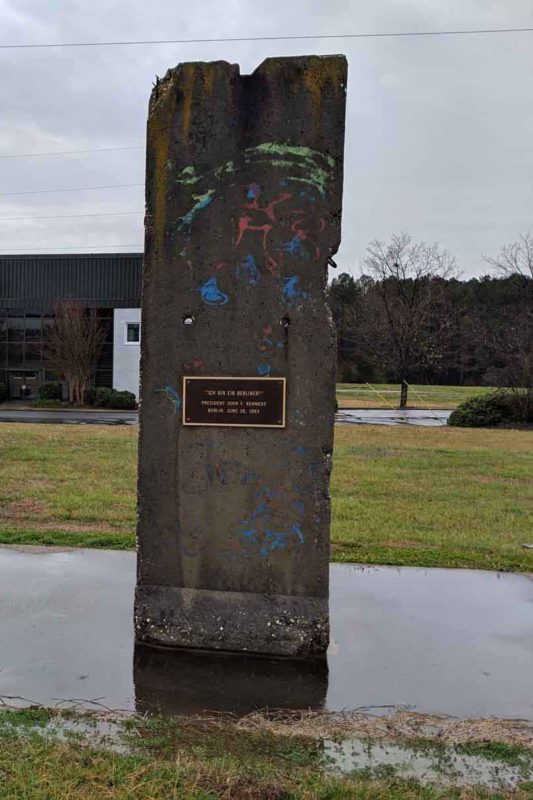
Did you know that there are many segments of the Berlin Wall on display in the United States? You can see if there is one close to you by checking here. A couple of years ago, I found out that there was a segment less than 45 minutes from me! I had no clue. It is in front of a German-run business located near the interstate. One day when my family and I were down that way, we stopped by and looked at it. It’s insane to think that we were touching something that was such a huge symbol of such a unique time. It also made me reflect on how blessed I am to be free, and it reminded me of the people who were living under such oppression that they were willing to risk their lives just to get over the very wall we were able to walk up and touch.

Encourage your students to go out and touch a piece of history! It may make a greater impact on them than any worksheet ever could.


Video and Assignment Ideas for Upton Sinclair’s The Jungle

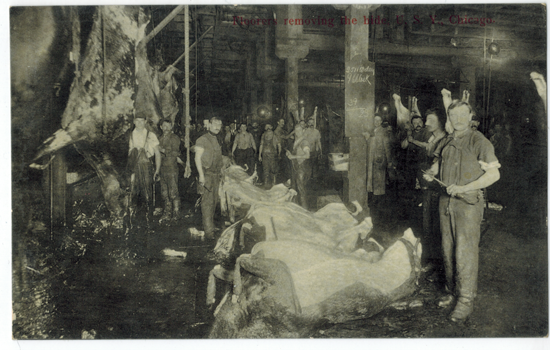
This video is a short and sweet summary of how Upton Sinclair’s book The Jungle led to changes in the meat-packing industry. It’s a great way to reinforce a discussion of the Pure Food and Drug Act, and it also shows some really interesting shots of the meat-packing industry back in the day.

You can use this in conjunction with my other free resources to teach The Jungle found in this blog post.

While you’re at it, check out my QR Code Scavenger Hunt on the Progressive Era in my TPT store. It’s a fun and engaging way to get students out of their seats while reviewing important aspects of the Progressive Era! Students LOVE my QR code scavenger hunts!

Sitting Bull and Little Bighorn Videos and Free Acrostic Poem Assignment

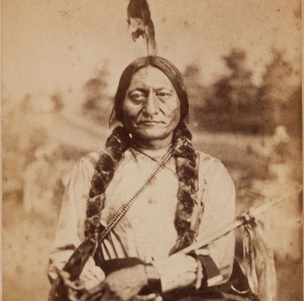
Here is a great video about Sitting Bull and his role in Native American resistance, particularly in the Battle of Little Bighorn. It’s not on Youtube, but you can watch it here. There’s even a link to download the video! This is a great option if you need to post it somewhere for distance learning or if you want to have a copy on your hard drive in case your internet goes down the day you want to show the video.

Here’s another video showing the reaction to the Battle of Little Bighorn.

This is a longer video that gives a play by play of the Battle of Little Bighorn. It might be too long for the classroom if you have a lot of material to cover, but it would be a great suggestion for students who want to learn more about the battle itself.

Easy assignments to implement after watching these videos include a word web about Sitting Bull or my free acrostic poem assignment.


*Image of Sitting Bull is in the public domain.

What do you need during the coronavirus school shutdown?

I’m thinking about creating some free resources that teachers can use while most students are at home during the school shutdowns because of the coronavirus.  I thought about creating instructional videos or at-home activities.  What do you need?  What types of activities, videos, etc. would help right now?  What types of assignments are you giving your students?  What subjects do you need materials for?  What are you covering now?  Let me know how I can help you during this time! Use the contact form below to tell me!

[formidable id=”3″]


Great Discussion Starter About the Cold War

If you have ever watched anything on Discovery or TLC or History Channel, at some point you’ve probably heard the fabulous voice of Mike Rowe. Among other projects, Mike has an awesome podcast called The Way I Heard It. He takes events or people that are well-known and adds a unique storytelling element to them that creates quite a bit of suspense. Most episodes are only about six minutes long, but they pack a powerful punch.

I was listening to one episode the other day, and I heard an amazingly interesting story that will definitely pique your students’ interest. You need to listen to “Episode 3: Clean Up on Aisle Four.” I don’t want to give away what or who the story is about, but this episode would be a GREAT little tidbit to add to your discussions somewhere in your unit about the Cold War. (I don’t want to get too specific or it might ruin the effect of the story.  Sorry!) If you want to skip the intro stuff, you can jump to the 40-second mark. The total story only lasts about four minutes, but that four minutes is enough to make an impact.

Classroom Uses

  • This would be a great bell-ringer or discussion-starter to begin class.
  • You could have students listen to this and complete a free-write.
  • Use this to help your students develop better listening skills.
  • Have students complete Window Notes on the podcast to encourage students to actively listen and then process the info.  (Here’s an example of Window Notes that I used in an earlier post.  Essentially you have them divide their paper into 4 sections.  Each section deals with a reading passage or listening exercise from different learning perspectives/styles.  Can be formal or informal.)  With Window Notes, you may want to listen to the podcast twice.

Isn’t it a great story?!  If I come across any more episodes that I think would work in class, I’ll post more later!

Photo used in accordance with licensing from Clipart.com.

Cool Photo of the Signing of the Treaty of Versailles

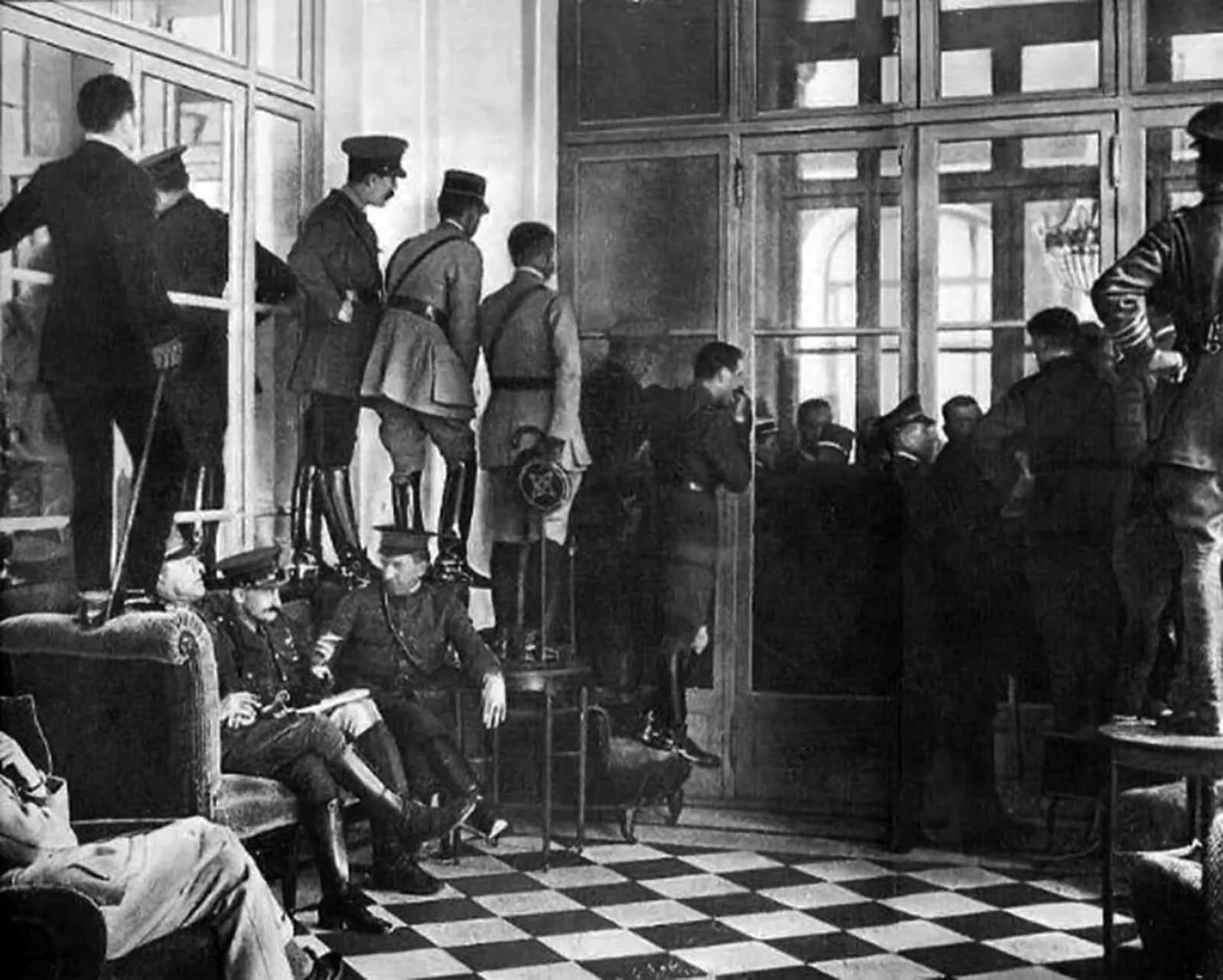
This is one of those historical photos that I just LOVE!  It reminds me that the people in those black and white photos were real people…and they had real emotions and real experiences.  If you had fought long and hard in World War I and saw many soldiers and friends die, wouldn’t you be ready for the war to be officially over?  Wouldn’t that be the day you were waiting for?  This is a picture of military officers and politicians standing on furniture so that they can witness the signing of the Treaty of Versailles!  How cool!  Share it with your students when you talk about World War I.

Teddy Roosevelt Video Footage at the Library of Congress

According to the Library of Congress, “It has been said that during the silent newsreel period no president was more photogenic than Theodore Roosevelt. He was unusually cooperative with motion picture photographers, often pausing in the midst of official ceremonies to face the camera, bow, wave, smile, gesture, or otherwise accommodate the cameraman.”1

The Library of Congress has a good bit of video footage of Roosevelt at various places and events.  These things are really neat to watch!  Not only do you get to see the man himself, BUT you get a good glimpse of the crowds that came to see him.  Check out the outfits that everyone wore!  In some of the footage, it may take a minute or more for TR to appear.  If you want to show a few of these to your students, play a quick game of “Who Can Spot Teddy Roosevelt.”  Make sure that you watch the clips beforehand, so that you know when Roosevelt will appear (in case your students miss it and don’t see him).  Remind students that this is not some old movie with people in costumes; these were actual people in these clips!  They might get bored watching all of each clip, so you may want to show just a couple of minutes.  You could also show one a day for a few days at the end of class.  Here are a few below.  To see the full list of videos with descriptions, click here.


1 Theodore Roosevelt on Film – Theodore Roosevelt: His Life and Times on Film. (n.d.). Retrieved October 12, 2016, from https://www.loc.gov/collections/theodore-roosevelt-films/articles-and-essays/theodore-roosevelt-on-film/

Great World War I Poem

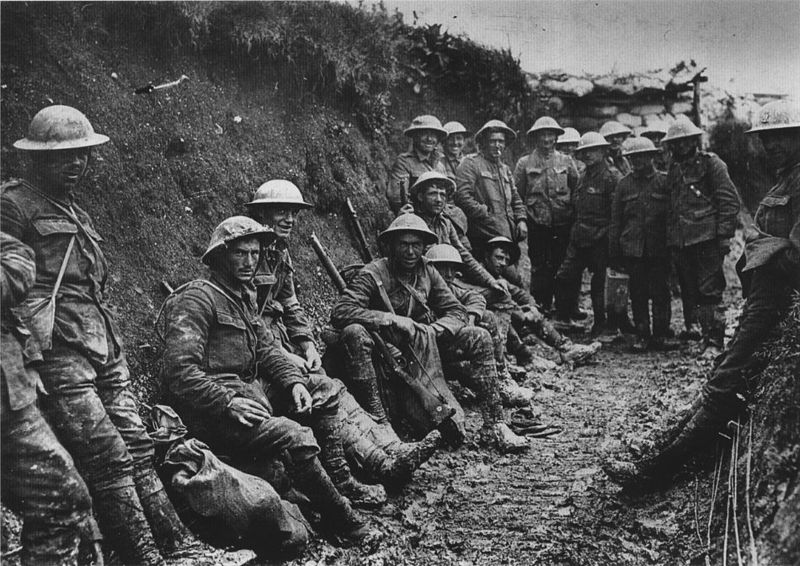
I’m not a big poetry buff, but I came across this today, and it really touched me.  Apparently, Rudyard Kipling’s 18-year-old son died in World War I in the Battle of Loos.  The poem “My Boy Jack” was written by Kipling after this tragedy.  Read the poem below.  Can’t you just imagine a worried parent asking again and again if anyone has had news of his son?

“Have you news of my boy Jack?”
Not this tide.
“When d’you think that he’ll come back?”
Not with this wind blowing, and this tide.

“Has any one else had word of him?”
Not this tide.
For what is sunk will hardly swim,
Not with this wind blowing, and this tide.

“Oh, dear, what comfort can I find?”
None this tide,
Nor any tide,
Except he did not shame his kind —
Not even with that wind blowing, and that tide.

Then hold your head up all the more,
This tide,
And every tide;
Because he was the son you bore,
And gave to that wind blowing and that tide!

So, how can you use this in your classroom?

  • Use it as an attention-getter or discussion starter.  Put it on the board at the beginning of class when you are talking about World War I.  Ask your students what they think it means and then tell them the origin.
  • Discuss it with students and have them write their own poem about World War I.
  • Discuss it and ask students what their friends or relatives would write about them if they died in battle.
  • Discuss it and talk about how families today deal with the grief of losing loved ones in military service.  Compare and contrast the experience today versus what people would have experienced then.


Photo: Royal Irish Rifles in a communications trench, first day on the Somme, 1916. Imperial War Museum – Public Domain.

Old Voting Literacy Test

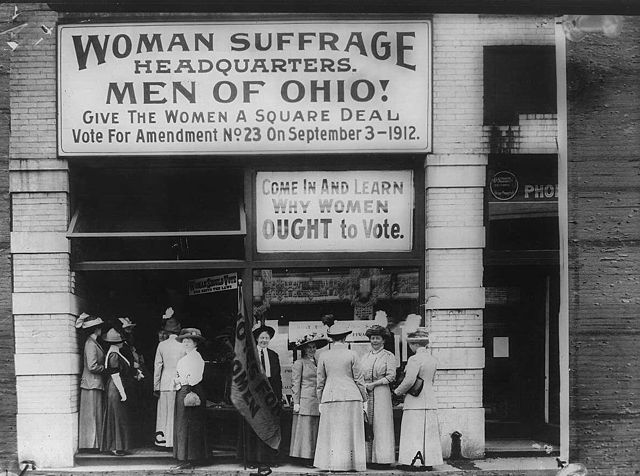
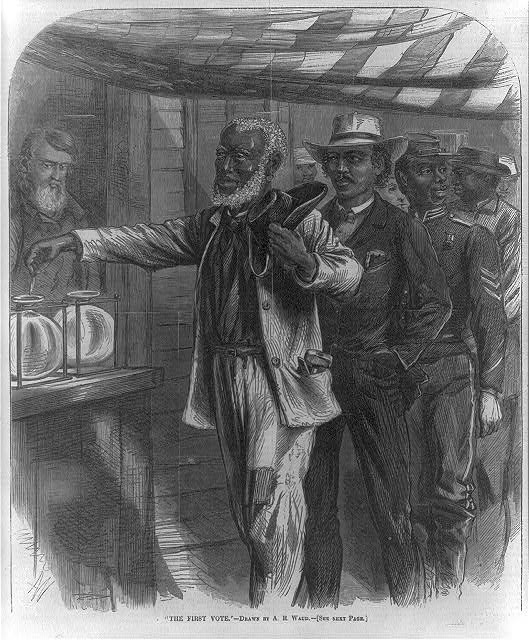
Have you ever wondered if you could pass one of those old literacy tests that they used to prevent certain people from voting?  I found this today and got really excited!  It’s the text of the 1965 Alabama Literacy Test that was given to prevent African-Americans from voting.  Wow, these questions are specific!  You better know your Constitution if you are going to pass this test.  Give it to your students and see how they do!  If you don’t have time to cover it in class, print it out and have students come by and do it after school for extra credit.


Photo:  The First Vote by A.R. Waud, Library of Congress – Public Domain

60-Second Presidents Videos

I’ve mentioned this resource before in a couple of my podcasts, but I decided it would be a good idea to post the link for all of the videos.  PBS created a video series called 60-Second Presidents in which they cover the basic info and accomplishments of each US president.  The videos are short but interesting and would be a great way to review a president the day after you discussed his administration.  The site also has activities that go along with some of the videos, but these activities seem to be best suited (in my opinion) to a civics or government class.  Click here to check out these short but sweet videos.

Using Excerpts from The Jungle to Teach About Muckraking and the Progressive Era

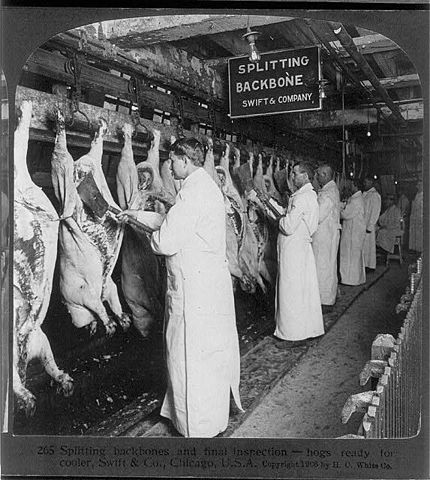
I will never forget reading an excerpt from Upton Sinclair’s The Jungle.  I was so grossed out that I did a full-body shiver.  YUCK!  And then I thought…what a great way to get students’ attention!  The gross-out factor is always an easy way to hook your students, and there are a few times in a US History course when the opportunity arises to use such a ploy.  If you are covering muckrakers and the Progressive Era, excerpts from The Jungle are a must.  I poured over pages of the book and compiled my favorite passages here.

So how can you use these passages?  I used them with window notes.  (If you are not familiar with window notes, you can watch a short prezi on them here, but I think you will understand the basics just by looking at my PowerPoint slides.).  Essentially, you are allowing students to take notes in such a way that it appeals to different types of thinkers and multiple intelligences.  First, display this PowerPoint on the board for the students to copy.  Then, you have two options:

1- Read some of the passages aloud.  If you do this, I suggest that you read them twice.  The first time through, have all students put their pencils down and just listen and focus on what they are hearing.  Then, during the second reading, allow students to fill in the notes as you read.  (I loved hearing the students’ reactions as I read the gross parts out loud!)  If you read these, I suggest only choosing a couple of passages, as reading them all might stretch your students’ attention spans too much.  Plus, the point can be conveyed thoroughly with only one or two of these passages.

2- Have students read the passages silently and fill in the notes as they go.

The PowerPoint that I have created has two different options to give you an idea of what you can do.  You can be very general or very specific.

Other Options:

  • Use an excerpt as a bell ringer to introduce muckrakers or labor unions.
  • Read one aloud and have students write a short freewrite as an exit ticket.
  • Have students create a poster protesting the working conditions in the meat-packing factories.
  • Have students imagine that they are a worker in a meat-packing factory and have them create a journal entry about a day at work.

Also, for you economics teachers out there, you can use these to introduce the importance of government regulation and how it protects the public.  Even if you don’t use them, the excerpts are a great read…and they’ll definitely make you more appreciative of the FDA!


Photo Chicago Meat Inspectors in Early 1906, Library of Congress, public domain