Two Exciting New Products! Lots of US History Help!
I’ve been slaving away behind the scenes to finish something I’ve been working on for a while! The first is a massive list of US History Assignments. I ended up with over 211 assignments and 15 printable templates! I’m breaking them up into 2 separate products based on time period. The first is 101 Assignments for Colonies to Civil War. I’m still putting the finishing touches on the second part, 110 Assignments for Reconstruction to 9/11. I hope to have that one available within the month!

I also have a set of 180 discussion starters and bell ringers I’ve been working on. You can find that here which also includes a link to a free sample download.

Use the code BLOG20 to get 20% off of your purchase!
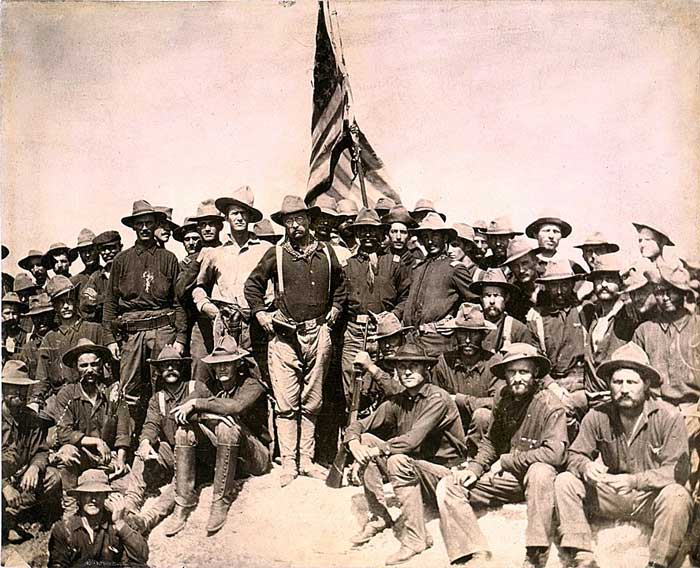
 

Fun Friday Fact: Teddy Roosevelt’s Famous Sidearm

Here’s a fun fact that I didn’t find out until a few weeks ago. Did you know that when fighting in the Spanish American War, Teddy Roosevelt used a revolver that had been salvaged from the USS Maine? How cool! He used it when he charged San Juan Hill and was wearing it when the famous picture of he and his rough riders was taken.

How in the world did Roosevelt get it? The revolver was recovered by divers searching the Maine’s captain’s quarters for keys to the ship’s magazine bunkers. Eventually it was gifted to Roosevelt by his brother-in-law. Side note: The revolver was also stolen at one point! It was stolen from a locked display case in a museum and was missing for 16 years.

Video and Assignment Ideas for Upton Sinclair’s The Jungle

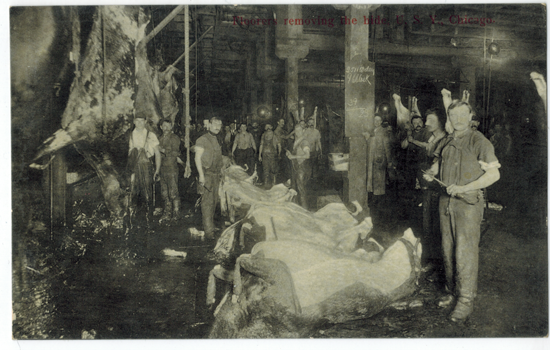
This video is a short and sweet summary of how Upton Sinclair’s book The Jungle led to changes in the meat-packing industry. It’s a great way to reinforce a discussion of the Pure Food and Drug Act, and it also shows some really interesting shots of the meat-packing industry back in the day.

You can use this in conjunction with my other free resources to teach The Jungle found in this blog post.

While you’re at it, check out my QR Code Scavenger Hunt on the Progressive Era in my TPT store. It’s a fun and engaging way to get students out of their seats while reviewing important aspects of the Progressive Era! Students LOVE my QR code scavenger hunts!

Erie Canal Video, Worksheet, and Assignments

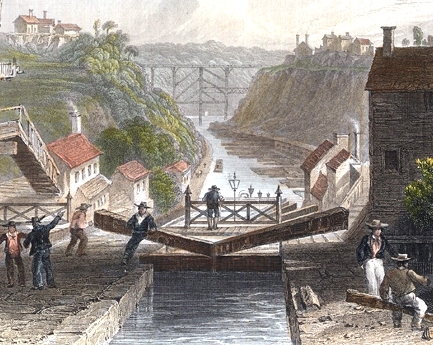
Check out the video tour of the Erie Canal Museum below. It gives you the basic information about the Erie Canal and it’s impact. While the narration could be more energetic, the video comes with review questions that students can answer while watching it to help reinforce the information they hear and see. The museum has also provided a document with over 20 different assignment ideas on the Erie Canal. I would allow students to pick one assignment and complete it. Some additional research may be required for some of the assignments, but a good variety of choices are given (blueprint, timeline, limerick, speech, poster, etc.).

Ultimately, whether you have a lot of time or just a few minutes, make sure your students can answer the following questions about the Erie Canal:

  • Where is the Erie Canal located?
  • Why was the Erie Canal built?
  • How did the Erie Canal affect shipping, transportation, and growth in the United States?


Image: Public Domain

Free Industrial Age Interactive Crossword Puzzle

I’m experimenting with new things for this site, and I’ve come across a nifty interactive crossword program. I created a free, interactive crossword puzzle about the Industrial Age. Feel free to use it. There’s not a print version yet, so this might be something that you would link to in an e-learning environment or to help your students review. Let me know if you like it and I may create more! Click here to load the crossword puzzle or get the link. It works best on a desktop, but it did work on my Android phone and Chromebook. It didn’t work right on Chrome on my iPad but did work on Safari. (Note: While the numbers of the answers are the same each time the page loads, the placement of the letter squares are different. So, the answer to number one will always be the same, but the boxes for number one may be at the top left one time or the bottom right during another visit.)

Video: George Washington Carver

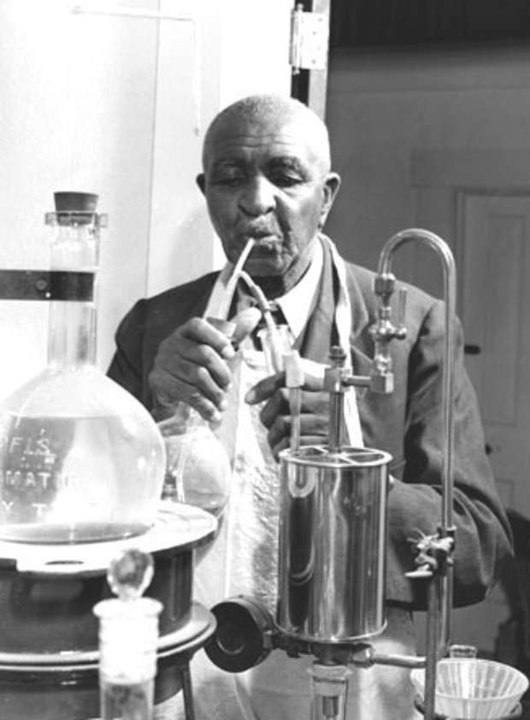
This is an EXCELLENT video about George Washington Carver.  It does a great job of summarizing his contributions and highlights important character traits such as perseverance, endurance, and service.  Also, interesting fact:  George Washington Carver was born into slavery, kidnapped as an infant, and, once returned, was eventually raised and educated by his owner.

You can used this video when discussing inventors, Black History month, the contributions of African-Americans, challenges in the Reconstruction South, and the Tuskegee Institute.

Eli Whitney Videos and Cotton Gin Craft

Eli Whitney.  You’ve all heard of him.  You know, he’s that guy that indirectly led to an increase in slavery and all of that horrible stuff.  He was just trying to help make life easier (and make a little cash in the process), but his ideas made a HUGE impact on America.

I taught a lesson on Eli Whitney this week.  In my opinion, you need to make sure your students know 2 things about Eli Whitney:

1- He invented the cotton gin

2- He came up with the idea of using interchangeable parts in manufacturing

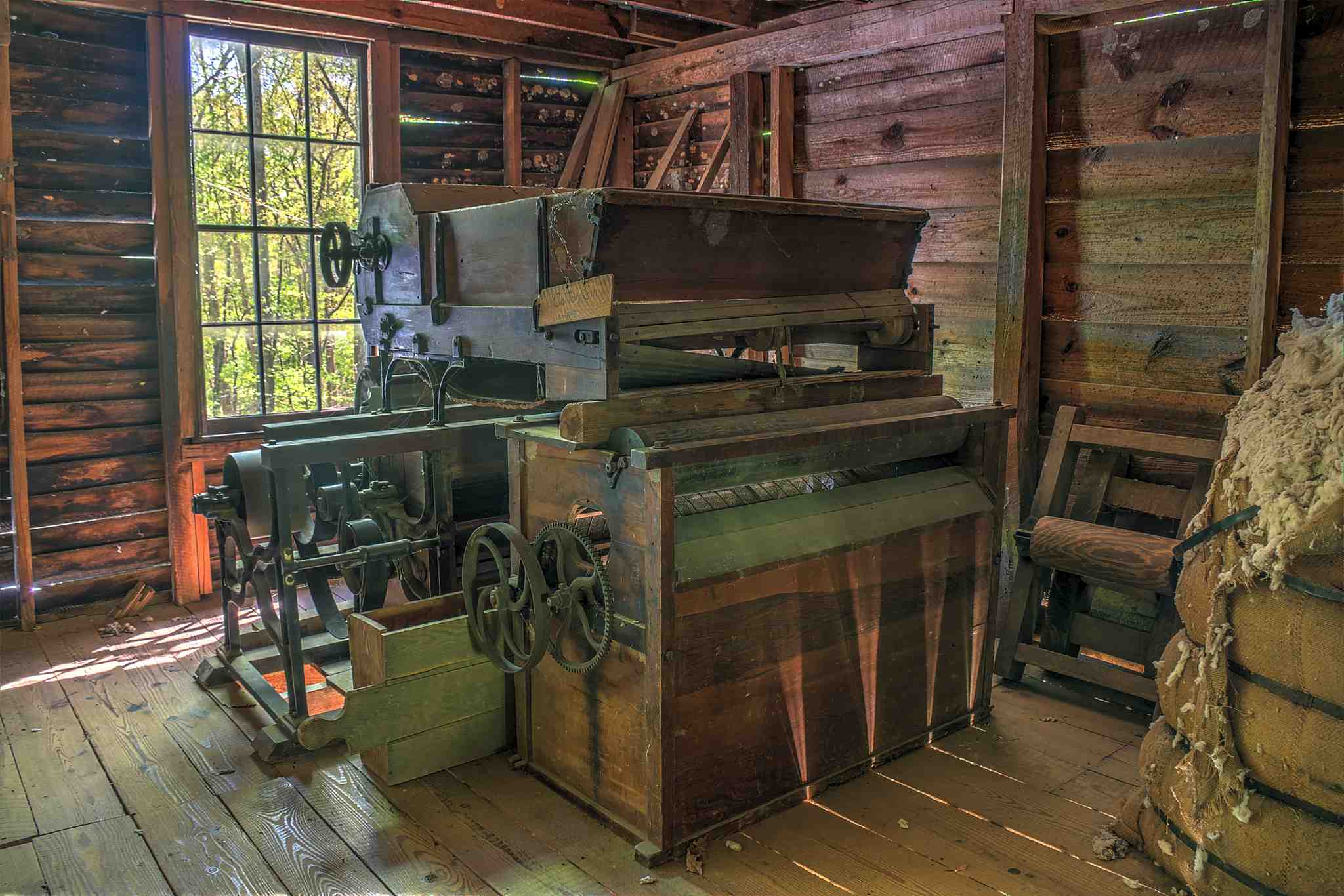
It can be hard to visualize how the cotton gin works without seeing one (or at least a diagram of one).  I found the BEST video I have ever seen showing the operation of a cotton gin.  Now granted, this video is in black and white and is probably older than me, but there is no better video that I have found which has clear shots of the teeth in the wheels.  When you show this to your students, just let them know ahead of time that it is an older black and white video and that there is a cheesy guy in a wig pretending to be Eli Whitney.

(Side note:  I have often found that students tend to dismiss something they see as old or in black and white IF they haven’t been prepped for it.  Before I show an older video, I always explain that the video explains or illustrates something so much better than other videos that it still has relevance and is worth showing.  Once I acknowledge any obviously cheesy moments or outdated phrases or clothing, it takes away much of the novelty of it, and the students can move past it and just absorb what the video is showing.)


Another “decent” video (although NOT the History Channel’s best production) is this one.  You may want to use this in between your discussion of the cotton gin and interchangeable parts.

Now, here’s what I’m REALLY proud of!  I decided that I wanted to have my students make some kind of crafty-type thing to help them remember how the cotton gin worked.  So I enlarged and printed the picture below on cardstock (you could use regular paper too if you had to).

I then gave my students some glue, cotton balls, and unpopped popcorn kernels (to represent cotton seeds).  They had to glue the stuff on the diagram in such a way as to represent what the cotton gin did.  Use liquid glue if you do this.  None of this will stick if you use a glue stick.  Also, tell your students to tear apart the cotton balls into smaller chunks.  The balls will last longer, and it just looks better.


Now, this will seriously take less than 5 minutes, so why should you do it?  Because sometimes your students need to do something hands-on.  Because sometimes your students need to do something other than take notes.  Because sometimes you need to do something different.  And if you think this craft may be too “childish” for your kids, I think you underestimate how refreshing a change of pace is when you are sitting in class and listening to people talk all day long.  Did I mention that it would be GREAT reinforcement for tactile learners…or really anyone?

If this idea is too simple for your “high-minded classroom ways,” (haha) try this:  Divide your students into small groups and give them a poster board, cotton balls, popcorn, and glue and say…”Make me a diagram of a cotton gin.” or “Make a poster demonstrating how a cotton gin works.”

Before you get your students pasting and crafting, you need to reinforce the impact of the cotton gin.  It is pointless for your students to know how the cotton gin works if they don’t know the impact it had on the South (and really the world).  I used a table to show the students the difference the cotton gin made.  Have them cut out each box and put it in the correct spot in the chart.  (See link at the bottom of the article.)

One thing that you need to discuss when covering the effects of the cotton gin is the positive and negative effects of the invention.  Have a brief discussion about the good and bad that has resulted from various inventions (start off discussing the cell phone).  Have students do some deep thinking about consequences and cause and effect (maybe a short free-write).  Many people talk about the fact that the cotton gin led to an increase in slavery but often overlook the fact that the cotton gin also provided a way for poor farmers living in the South (who didn’t own slaves) to better support their family.  Also, cotton provided the raw materials necessary for textile mills to expand which provided more jobs.

Once you cover the cotton gin and move on to interchangeable parts, there’s more fun stuff to do.  After explaining interchangeable parts and their importance, may sure you show them that they are surrounded by hundreds of examples of them.  You can use your board markers as a handy example.  If you lose the top to one, you can replace it with another.

Have your students go on a scavenger hunt around the room for examples of interchangeable parts.  You can divide them into groups and have them race.  Whoever gets done first is the winner and gets candy or extra points on a quiz.  I would make them find about 30 different examples within the classroom.  Or, you could also set a timer and see which group can come up with the most examples of items with interchangeable parts in the time allotted.  Pretty much anything with a screw has interchangeable parts.  In fact, a screw is an interchangeable part!  Students are probably wearing examples of items with interchangeable parts as well:  watches, zippers, buttons, earrings, etc.

A word of warning, apparently there is a theory out there called the Mandela effect, where a group of people collectively remembers something wrong.  There’s a bunch of articles devoted to this.  Well, some crazy people claim that Eli Whitney was black and that he invented the cotton gin to reduce the work of slaves.  It’s a crazy Internet theory with no reliable evidence, but there’s always that ONE kid in class who’s read stuff like that and brings it up.  Haha!  The point is, the cotton gin changed the course of American history, regardless of the physical characteristics of the inventor!

Here’s a link to my cotton gin table.  It’s pretty simple.  You can add more stuff to it if you would like (specific statistics about cotton production and slavery).  The fonts may look weird if you don’t have them on your computer.


Featured image courtesy of Dsdugan – Own work, CC0, https://commons.wikimedia.org/w/index.php?curid=58026846

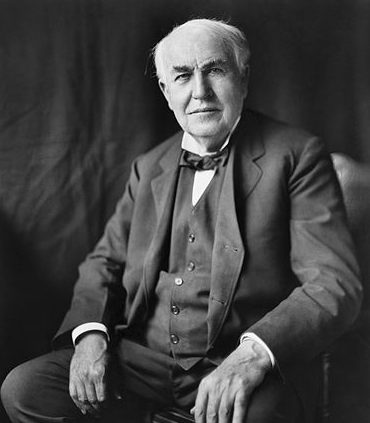
LTH 013 – Thomas Edison Fun Facts Quiz

In this episode, I’ll tell you how to use a fun facts quiz in your classroom to grab your students’ attention.  I’ll also give you some awesome (and little-known) facts about Thomas Edison.

My New Product on TPT – Create a Twitter Page for a Historical Figure:  Template and 46 Assignments

Full Thomas Edison Fun Facts Quiz and Powerpoint 

Ford and Edison’s Excellent Camping Adventures” – Cool article from History.com    Update: Try this one instead: “When Henry Ford and Thomas Edison Went Camping in the Great Smoky Mountains”

Picture Source: Library of Congress, Public Domain
Intro music clip of “I Dunno” by Grapes CC BY-ND 3.0