Branches of Government & Checks and Balances Drag and Drop Activities
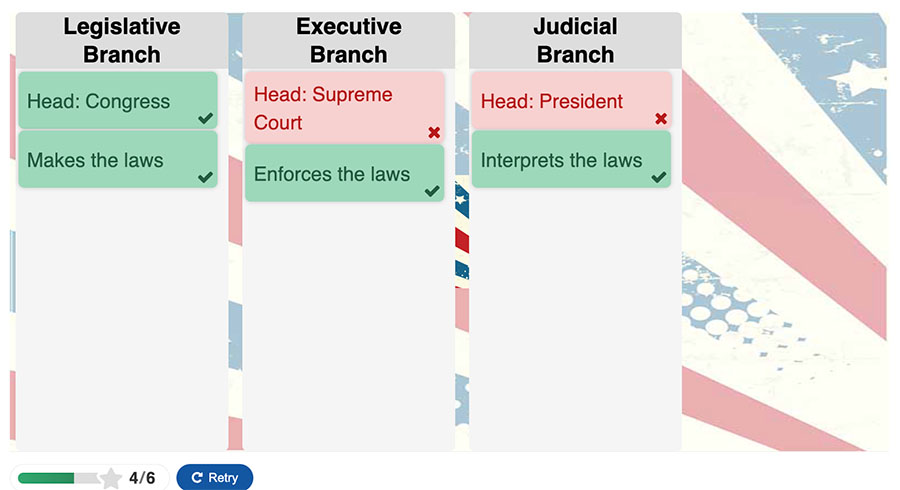
I’ve been trying out some new software to add interactive student activities to the website. Try the two drag and drop activities that I added below! One is the basics of the 3 branches of government and the other is a review of the basic checks and balances of each branch.

How You Can Use This In the Classroom
  • Use it during a unit on the Constitution as a review at the end of class. (Students can do it individually on their devices or you can project it and complete it as a class. See the QR code at the bottom. Students can scan it with their devices!)
  • Use it at the beginning of class the day after you have taught the information as a review.
  • Assign it as an exercise for students who finish their work early.
  • Use it at the end of the semester to review for an end of course test.


Have your students scan this QR code to quickly access these activities! (You can also access them under the “For Students” page.

Do you want to see more drag and drop review activities? Use my contact form to let me know!
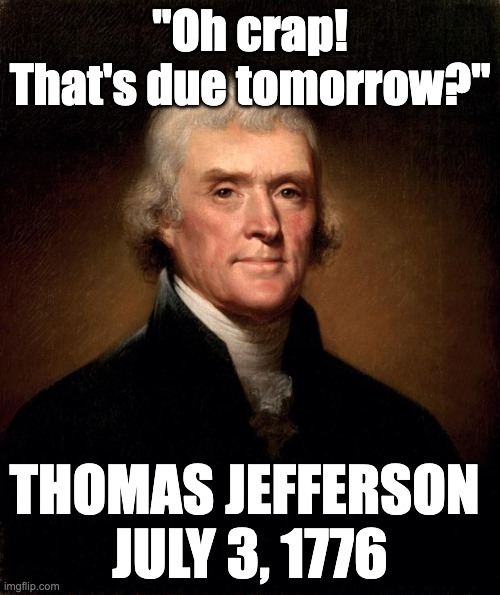
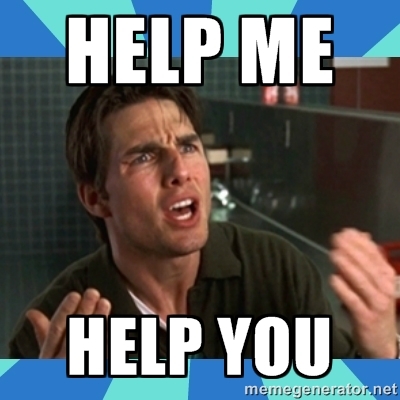
Great Declaration of Independence Meme to Use in the Classroom

I didn’t post on July 4th because I was enjoying my holiday. USA! USA! USA! BUT, I did come across several memes, and this one in particular made me laugh. I thought I’d share it.

Can you use this in the classroom? Totally!

  • You could put this on your board the day after you talk about the Declaration of Independence and see if your students get it…and if not, it’s a good way to remind them of THE most important date in American history (as well as who wrote most of the Declaration of Independence).
  • You could also use this as a bonus question for a test. “Explain what this meme means and why it is funny.”
  • You could round up a bunch of historical memes and use them as fun test prep reviews!

I think memes are actually a great way to help students practice analysis and critical thinking. Memes force students to recall information they know and then apply that knowledge to the meme to figure out what the meme is implying and why it the meme is funny.

While I’m on the subject of memes, did you know that the Keep Calm and Carry On memes were based on a British World War II motivational poster? It’s a good reminder to your students that history is everywhere!!!


Three Free Online Quizzes – US Presidents, World War I and II

I stumbled across this quiz today on the US Presidents. It’s only 10 questions, but it would be a good, quick little time-filler at the beginning or end of class. It doesn’t have a lot of ads on the page either, unlike most online quizzes, which is a plus! I decided to look through all of their quizzes on the page and find any that were relevant to US History. See below for links!

You could use them as an introduction to a topic or to quickly gauge the overall knowledge of the class. These would also be an easy, fun way to do a little end of the year test prep/review. You can project the quiz on the board and complete it orally together or have students silently write their answers before you reveal the correct answer. I find that these quizzes are a fun way to fill a few minutes as a class when your students’ brains are fried and their attention-span is gone. In my opinion, an informal approach works best with these.

World War I Online Quiz

World War II Online Quiz

US Presidents Online Quiz

New Product: Get Those Students Out of Their Seats!

I’ve finally released my Stand and Sorts for US History! What is a stand and sort? It’s a way to get your students out of their seats while reviewing content. Category signs are taped on the walls in various locations in the classroom.  Students (or groups of students) are given characteristic/example cards.  Students use their knowledge of the content to determine (based on their card) what category sign they must stand under.  The cards can be reshuffled and the activity can be repeated.  A stand and sort can also be completed individually (at the students’ desks) or as a group.  You can also make it a group competition stand and sort, where each group races to get their example cards posted around the classroom before the other groups do so. My students LOVED the group competition. Years ago I created Stand and Sorts for Economics and people really enjoyed them. I’ve always wanted to make some stand and sorts for US History and was finally able to get them finished! You can buy them on TPT here.

Use these stand and sorts to:

  1. Reinforce content immediately after you teach it
  2. Review content the day after teaching it
  3. Do one stand a sort a day as review leading up to standardized testing
  4. Give a struggling student extra practice

Each stand and sort is listed below.

  • 13 Colonies (New England Colonies, Middle Colonies, Southern Colonies)
  • American Revolution (Britain, Colonies)
  • Important Founding Documents (Declaration of Independence, Articles of Confederation, Constitution, Bill of Rights)
  • Articles of Confederation v. Constitution
  • Founding Fathers (George Washington, John Adams, Thomas Jefferson, James Madison, Alexander Hamilton, Benjamin Franklin)
  • Branches of Government (Legislative, Executive, Judicial)
  • Industrial Revolution (Before v. After)
  • Civil War (Union, Confederacy)
  • Civil War Events (Harper’s Ferry, Fort Sumter, Bull Run/Manassas, Antietam, Gettysburg, Vicksburg, Sherman’s March to the Sea, Appomattox)
  • American Inventors (Benjamin Franklin, Eli Whitney, Robert Fulton, Thomas Edison, George Washington Carver, Alexander Graham Bell, Wright Brothers, Garrett Morgan, Henry Ford, Samuel Morse)
  • Roaring Twenties v. Great Depression
  • World War II (Allies, Axis)
  • World War I v. World War II
  • Cold War (US, Soviet Union)
  • Korean War v. Vietnam War
  • Civil Rights (Little Rock Nine, Montgomery Bus Boycott, Sit-ins, Freedom Summer, Martin Luther King, Jr., Malcolm X, Plessy v. Ferguson, Brown v. Board of Education, SCLC & SNCC, Freedom Ride)
  • Vietnam War (US v. North Vietnam)
  • Late 20th Century Presidents (John F. Kennedy, Lyndon Johnson, Richard Nixon, Gerald Ford, Jimmy Carter, Ronald Reagan)

What do you need during the coronavirus school shutdown?

I’m thinking about creating some free resources that teachers can use while most students are at home during the school shutdowns because of the coronavirus.  I thought about creating instructional videos or at-home activities.  What do you need?  What types of activities, videos, etc. would help right now?  What types of assignments are you giving your students?  What subjects do you need materials for?  What are you covering now?  Let me know how I can help you during this time! Use the contact form below to tell me!

[formidable id=”3″]


Released End of Course Tests

The best way to prepare your students for a standardized test is to teach them the content in such a way that they will have a passion and interest for the material.  STILL, students don’t need to go into a standardized test administration without some practice dealing with these tests.  Ugh, I hate those things.  Since, unfortunately, they are a necessary evil, it is important to help you students go into the test administration feeling as confident and comfortable as possible.  It is very important to expose students to the types of questions that they will encounter for two reasons.

1- You can model good test-taking skills for your students.  (Show a question and then explain how you would go about answering it as if you weren’t sure of the answer.)

2- It will help reduce test anxiety.  (De-mystify the whole idea of a top-secret, scary test for your students.  Show them questions that were used in the past.  Allow them to see the layout and wording of questions.)

What’s the best way to do this?  Several states have released older versions of their end of course tests.  Look at these, take questions from them, and put them on a powerpoint slide.  Discuss one question a day starting a week or two before the test.  You don’t have to cover them all, but you do need to cover the basic types of questions (reading a passage questions, map questions, political cartoon questions, graph questions, etc.).

If you are really ambitious, you can go through each of these tests and categorize the questions based on topic.  (This might be a good summer or holiday project.)  You can then use them when you cover each unit or use them as test questions for your own classroom tests.

When covering these questions, I always tell my students one thing:  “You will not know everything on this test, so don’t freak out if you come across a question you don’t know the answer to.  Try your best, that’s all I ask.”

Texas Released End of Course Test and Answer Key (scroll down for 7 different tests)

Georgia Released End of Course Test and Answer Key (separate)


The Best Review Game Ever!

It’s the day before a test. There are 20 minutes of class left. Your students look up at you with pleading eyes that say, “Please don’t make us do another review worksheet!”  You pull out the flyswatters from your cabinet in the back of the room. All of the sudden, you hear several students say, “Yessssssss!”

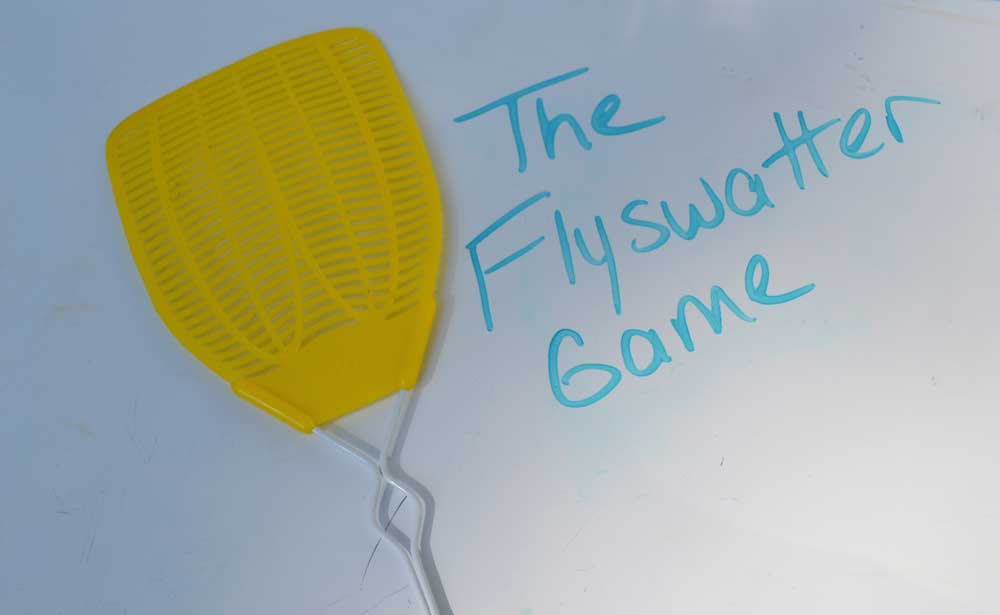
I call it “The Flyswatter Game.”  It was, by far, the most popular in-class review method amongst my students.  Most of you have probably heard or seen this type of review before, but even if you have, take a look at how I implemented the game.  Adding some basic rules and strategies can mean the difference between classroom chaos and a fun, engaging review.

The basic premise of the game is that the teacher asks questions and the students try to be the first to slap the correct answer on the board.  Sounds simple, right?  Here’s what I found was the most effective way to play the game.

Flyswatter Game Procedures
  • Write the names of 20-30 review terms on your board.  The terms should not be written in rows or columns, but written randomly and tilted diagonally.
    • If you have many terms or phrases, you may want to do something to make each phrase stand out visually.  This will help students read the terms and phrases more quickly during the game.  I used different colored markers to draw a circle around each worSlide1d.  See my example.
    • Write enough terms on the board so that each student has a least one chance to participate in a round.
  • Divide the class into 2 teams and have them move to different sides of the classroom.
  • Explain the rules.  (See below)
  • Ask for one volunteer from each team to start the game.
    • I have found that most students are enthusiastic about playing and students love to go up against their friends.  I let students choose their match-ups, with the understanding that a student cannot go twice unless all students have already had a turn.
    • It is understood that all students must participate or lose points on their participation grade for that day.  This is typically not a problem, as students tend to cheer on their teammates.
  • Ask a question whose answer is a term or phrase written on the board.
  • The first student to slap the correct answer with his/her flyswatter wins a point for his/her team.
  • When students are finished with their round, they must pass the flyswatter on to someone in their team that hasn’t gone.
  • Play continues this way for as long as necessary.  I typically did enough rounds so that each student got at least two chances to play.
  • The winning team receives candy or bonus points on a quiz or test.
Rules
  • Students must face away from the board and cannot turn around until I finish reading/saying the question.
  • Students get one slap at a time. If the student slaps the wrong answer, he must wait until the opponent slaps a term before he can slap again. If the opponent is right, the round ends.  If the opponent is also wrong, then either can slap again, until someone is wrong.  (The key here is to penalize a student for slapping a wrong answer. When I first started playing this game, students would get it wrong and just keep randomly slapping terms to try to guess the right answer before the opponent could hit anything.)  Continue the round until one of the students slaps the correct answer. If it is obvious after several slaps that neither student knows the answer and it is slowing down the momentum of the game, just have the class yell out the correct answer after so many chances.
  • Any student who uses physical force to block an opponent loses the round.
  • Any student who hits his opponent with the fly swatter automatically loses the round. (This rule and the previous one are particularly necessary when dealing with high school boys.)
  • Students who inappropriately criticize other students in the class lose a point for their team.  (This prevents a lot of those outbursts of, “Gosh, you’re so stupid!  I can’t believe you didn’t know that!”)
  • Students who try to give clues to their teammates and/or cheat will cause their team to lose the round.
Other Tips
  • I typically didn’t have questions written down.  I just looked at the terms on the board and made up a question on the spot.
    • If you do this, be aware that some evil-genius students eventually try to watch your eyes and see where on the board you are looking in order to figure out where to slap.  To avoid giving away the answer, simply look at various parts of the board each time and don’t look at the answer word right before you say the question.
  • Some terms can be the source of multiple questions, which can enable you to do more rounds in a game, even though your list of terms may be limited.  For example, the term “John Adams” may be on the board.  Throughout the game, you can ask several different questions for which he is the answer.
  • Students tend to get close to the board, thinking this will help them slap the answer first, but it actually limits their field of vision.  Encourage students to take a few steps back from the board so that they can see all of the terms at once.
  • Use two different colors of fly swatters so that it will be easier to see who slaps first.
  • Students who are often hesitant or don’t know much material typically tend to go towards the end of each cycle.  If necessary, modify the questions to meet the needs of the students in that round (ask easier questions for students who need them).
  • Be aware of student height and arm length when you pick a term. If you have a short student going up against a tall student, pick a term that they can both reach easily.
  • If, for some reason, you miss a slap, students will often be able to tell you who slapped first.  If the class cannot come to a consensus as to who slapped first, redo the round with the same two students, but ask a different question.
  • The first time you play this, it may take a lot of work trying to enforce the rules.  However, once the rules are established and students become used to abiding by them, subsequent games become much easier to manage.

Have fun!  Yes, it will get a little loud.  You may hear students yelling, “Oh!  Oh!  I know this!”  Or, “Ahhh, it’s right there!”  It is so fun and satisfying to see students who can hardly stay in their seats because they are so excited that they know the answer but can’t give it away!  Do you have any other tips or strategies for playing the Flyswatter Game?  Leave them in the comments below.

Click here to download a PDF with the game instructions, rules, and tips.