How to Find Interesting Facts for Your Lessons
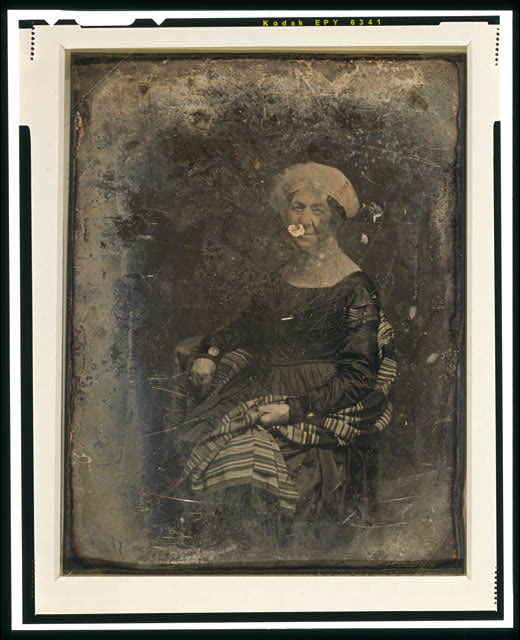
Guess what I came across today…a photograph of Dolley Madison! Yep, an actual photograph (see above)! It was taken in 1848 by Matthew Brady (of course) when she was 80 years old! How cool! How have I not seen this before?! There’s something so raw about historical photos that can’t be conveyed by paintings.

So, how did I come across this photo? I was researching James Madison for a lesson about the Constitutional Convention. I’ve taught this subject plenty of times, but I was making a new set of notes, and I wanted to double-check my facts and see if I could find out anything new. While I was reading about James Madison, I fell down a rabbit hole reading about his relationship with Dolley.

I found out so many cool things! For example:

  • Dolley Madison’s first husband and one of her children died during a yellow fever epidemic. She was widowed at 25.
  • Aaron Burr, the man who eventually killed Alexander Hamilton in their famous duel, introduced James Madison and Dolley. He knew Madison from college and was staying in Dolley’s mother’s boarding house.
  • Dolley served as hostess for widower Thomas Jefferson when he was President. James Madison was Jefferson’s Secretary of State at the time. Dolley selected furnishings for the White House, organized parties, and entertained ladies that visited.
  • Dolley was 17 years younger than Madison, but they were known to be very much in love and were married for 42 years.

I also found out things that had nothing to do with Dolley Madison but were well worth remembering. For example:

  • George Washington only had one real tooth left at the time of his inauguration.
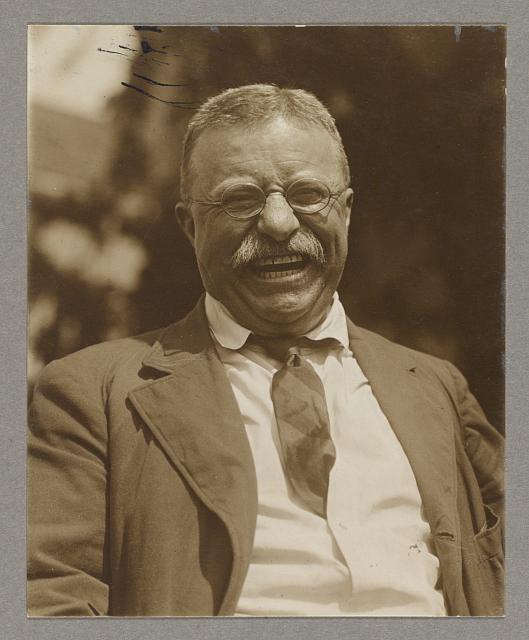
  • Teddy Roosevelt was known as the smiling president. He was the first president who was documented as smiling for photographs. He was so well-known for his smile that a Teddy’s teeth whistle was created for his 1904 presidential campaign. One is on display at the Smithsonian National Museum of American History.

Almost every one of these facts would pique students’ interest or at least break the monotony of class. How did I find out these facts? By reading up on what I was teaching. Now, I know you won’t always have time to read up on everything, especially if it’s something you have taught before and feel like you already know. Sometimes we are lucky that we even made it to school with a shower and clean clothes; forget having time to read about George Washington’s teeth (or tooth).

BUT, there are those days where you spend too much time on Facebook, right? Or watch one-too-many TikToks? Or read another click-bait article? Instead of using ALL of that time for mindless entertainment, why not take a minute to Google the person you are teaching about tomorrow?

And while we are on the subject of Googling, let me mention a VERY important point. Don’t believe everything you read on the internet. Ok, I know you don’t believe everything you read on the internet, BUT do you take time to fact check the bits of trivia you come across? A quick search of the Dolley Madison photo may reveal that actual photo taken of her, but you will also come across various fake photos of her and James Madison. It didn’t take me long to research and find out that John Quincy Adams was the first president ever photographed, and that was after James Madison was already dead.

If it’s not a well-known fact, verify it using several well-known sources. It typically takes less than a minute to verify something. All of the facts that I shared above were verified by either government-run websites or those run by historical societies that are reputable. And no, a person’s blog is not considered a reputable source (unless it’s mine, of course). 😉 Also, if you come across a quote from someone or about someone that seems very controversial or “off,” make sure you look at the context of the quote. People can twist quotes to suit their own political biases. We expect our students to use reputable sources for schoolwork so we should do the same.

So, next time you dread teaching the SAME lesson about the SAME person again this semester, try doing a little bit of reading. You never know when you’ll come across the one interesting fact that can grab that one student you’ve been trying to reach!



How to Have Happier Students and a Happier You

Are you grateful? Are your students? Did you know that studies show that people who are grateful sleep better, have higher energy levels, have higher self-esteem, and are happier? When is the last time you asked your students what they are grateful for? And while this may be too personal question to have students answer out loud, I’m sure you could encourage your students to write down one thing they are grateful for once a week or even every day! Looking for things to be grateful for helps retrain neural pathways to see the good in life rather than the bad. Don’t students need this ability? Don’t you and I?

If you don’t want to implement a gratitude exercise in class every day, that’s understandable. But how about once in a while when you finish class a few minutes early but don’t have quite enough time to start a new activity?

Give your students this sheet to put in their notebooks and have them fill it in occasionally.

I came across this article that is an interesting read about gratitude of historical figures in their own words. My absolute favorite quote is from Frederick Douglass:

“From Mas’r Daniel I got protection from the bigger boys, and from Miss Lucretia I got bread by singing when I was hungry, and sympathy when I was abused by the termagant in the kitchen. For such friendship I was deeply grateful, and bitter as are my recollections of slavery, it is true pleasure to recall any instances of kindness, any sunbeams of humane treatment, which found way to my soul, through the iron grating of my house of bondage. Such beams seem all the brighter from the general darkness into which they penetrate, and the impression they make there is vividly distinct.”  Frederick Douglass1882

Frederick Douglass was in SLA-VER-Y. He found something to be thankful for in his life of slavery. What a great attitude! He chose to find some good in the injustice of his early life. He was not a victim. He was a victor, an overcomer. And look at what he accomplished!

I am a very big advocate of not making people into victims. Students who feel empowered and grateful will accomplish far more than those who feel the world is out to get them. Be grateful! Write down what you are grateful for. Look for that silver lining! You’ll be better for it and so will your students.

Update in Progress – Fixing Links, Etc.

The file service that I was using to host all of my resources files has stopped working! I didn’t realize this had happened until recently. I am going through the site link by link and fixing everything. If you click on a link to download a resource and something doesn’t work, email me and let me know and I’ll make sure to get it to you. Thanks for your patience!

Free Christmas Assignments to Use with Almost Any Topic

Those last few days before the holidays can be a tricky time. Students have checked out mentally, or it’s too late to start a new topic before the break. What can you do (other than showing a movie) that is creative, fun, and also history related? Click here to download the following options for free:

1- Have the students create a commemorative Christmas ornament. This is a great idea if you want to focus on one specific person or topic with just a few facts. For example, create a commemorative ornament about Benjamin Franklin.

2- Have students design a themed Christmas tree about a historical topic. If a Christmas tree were about World War I, what might it have on it? What type of ornaments would it have? What might replace the star or the garland? This is a good assignment to choose if you are covering a topic with lots of information available.

The great thing about these assignments is that they are not content-specific and can therefore be used with various topics and time periods. This is helpful because many teachers are covering different topics before the Christmas break.

Download these assignments with in-depth instructions and examples here.

As always, each students is different and you want to make sure you have an option for those who don’t celebrate Christmas. If students don’t feel comfortable doing one of these assignments, have them design a T-shirt instead with similar criteria.

Eli Whitney Videos and Cotton Gin Craft

Eli Whitney.  You’ve all heard of him.  You know, he’s that guy that indirectly led to an increase in slavery and all of that horrible stuff.  He was just trying to help make life easier (and make a little cash in the process), but his ideas made a HUGE impact on America.

I taught a lesson on Eli Whitney this week.  In my opinion, you need to make sure your students know 2 things about Eli Whitney:

1- He invented the cotton gin

2- He came up with the idea of using interchangeable parts in manufacturing

It can be hard to visualize how the cotton gin works without seeing one (or at least a diagram of one).  I found the BEST video I have ever seen showing the operation of a cotton gin.  Now granted, this video is in black and white and is probably older than me, but there is no better video that I have found which has clear shots of the teeth in the wheels.  When you show this to your students, just let them know ahead of time that it is an older black and white video and that there is a cheesy guy in a wig pretending to be Eli Whitney.

(Side note:  I have often found that students tend to dismiss something they see as old or in black and white IF they haven’t been prepped for it.  Before I show an older video, I always explain that the video explains or illustrates something so much better than other videos that it still has relevance and is worth showing.  Once I acknowledge any obviously cheesy moments or outdated phrases or clothing, it takes away much of the novelty of it, and the students can move past it and just absorb what the video is showing.)


Another “decent” video (although NOT the History Channel’s best production) is this one.  You may want to use this in between your discussion of the cotton gin and interchangeable parts.

Now, here’s what I’m REALLY proud of!  I decided that I wanted to have my students make some kind of crafty-type thing to help them remember how the cotton gin worked.  So I enlarged and printed the picture below on cardstock (you could use regular paper too if you had to).

I then gave my students some glue, cotton balls, and unpopped popcorn kernels (to represent cotton seeds).  They had to glue the stuff on the diagram in such a way as to represent what the cotton gin did.  Use liquid glue if you do this.  None of this will stick if you use a glue stick.  Also, tell your students to tear apart the cotton balls into smaller chunks.  The balls will last longer, and it just looks better.


Now, this will seriously take less than 5 minutes, so why should you do it?  Because sometimes your students need to do something hands-on.  Because sometimes your students need to do something other than take notes.  Because sometimes you need to do something different.  And if you think this craft may be too “childish” for your kids, I think you underestimate how refreshing a change of pace is when you are sitting in class and listening to people talk all day long.  Did I mention that it would be GREAT reinforcement for tactile learners…or really anyone?

If this idea is too simple for your “high-minded classroom ways,” (haha) try this:  Divide your students into small groups and give them a poster board, cotton balls, popcorn, and glue and say…”Make me a diagram of a cotton gin.” or “Make a poster demonstrating how a cotton gin works.”

Before you get your students pasting and crafting, you need to reinforce the impact of the cotton gin.  It is pointless for your students to know how the cotton gin works if they don’t know the impact it had on the South (and really the world).  I used a table to show the students the difference the cotton gin made.  Have them cut out each box and put it in the correct spot in the chart.  (See link at the bottom of the article.)

One thing that you need to discuss when covering the effects of the cotton gin is the positive and negative effects of the invention.  Have a brief discussion about the good and bad that has resulted from various inventions (start off discussing the cell phone).  Have students do some deep thinking about consequences and cause and effect (maybe a short free-write).  Many people talk about the fact that the cotton gin led to an increase in slavery but often overlook the fact that the cotton gin also provided a way for poor farmers living in the South (who didn’t own slaves) to better support their family.  Also, cotton provided the raw materials necessary for textile mills to expand which provided more jobs.

Once you cover the cotton gin and move on to interchangeable parts, there’s more fun stuff to do.  After explaining interchangeable parts and their importance, may sure you show them that they are surrounded by hundreds of examples of them.  You can use your board markers as a handy example.  If you lose the top to one, you can replace it with another.

Have your students go on a scavenger hunt around the room for examples of interchangeable parts.  You can divide them into groups and have them race.  Whoever gets done first is the winner and gets candy or extra points on a quiz.  I would make them find about 30 different examples within the classroom.  Or, you could also set a timer and see which group can come up with the most examples of items with interchangeable parts in the time allotted.  Pretty much anything with a screw has interchangeable parts.  In fact, a screw is an interchangeable part!  Students are probably wearing examples of items with interchangeable parts as well:  watches, zippers, buttons, earrings, etc.

A word of warning, apparently there is a theory out there called the Mandela effect, where a group of people collectively remembers something wrong.  There’s a bunch of articles devoted to this.  Well, some crazy people claim that Eli Whitney was black and that he invented the cotton gin to reduce the work of slaves.  It’s a crazy Internet theory with no reliable evidence, but there’s always that ONE kid in class who’s read stuff like that and brings it up.  Haha!  The point is, the cotton gin changed the course of American history, regardless of the physical characteristics of the inventor!

Here’s a link to my cotton gin table.  It’s pretty simple.  You can add more stuff to it if you would like (specific statistics about cotton production and slavery).  The fonts may look weird if you don’t have them on your computer.


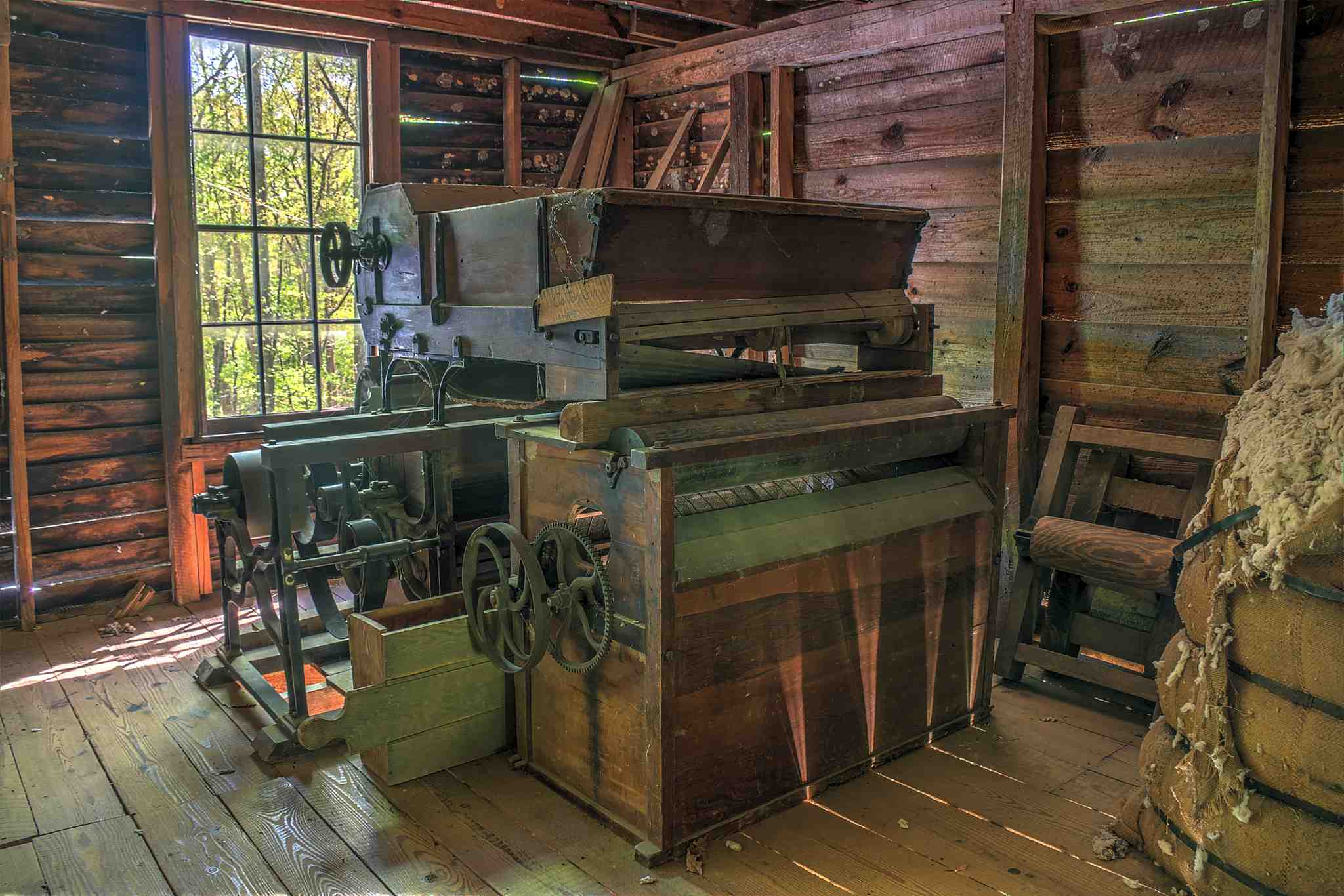
Featured image courtesy of Dsdugan – Own work, CC0, https://commons.wikimedia.org/w/index.php?curid=58026846

Tips for Remembering Constitutional Amendments

Do you know about ALL of the amendments to the Constitution?  Can you tell me what each one changed or added to the Constitution?  I can’t (gasp).  I’m betting your students can’t either (and probably you neither, unless you’ve been teaching Civics for a while).  Well, I found this video that gives some quick pneumonic devices to help you remember some of the more important amendments.  You don’t necessarily need to show this to your students, but I would watch it and go over these tricks with your students (and use them yourself).  The tip about the Reconstruction amendments is pretty helpful.

The one that he didn’t cover, which I think is super-important, is the 19th amendment, which gave women the right to vote.  I actually scoured the internet (ok, I looked for 10 minutes) to see if anyone else had tips for remembering the 19th, and I couldn’t find anything useful!  I used to tell my students to imagine a bunch of women standing in line to vote wearing t-shirts that say “19” or imagine a bunch of girls jumping up and down squealing, “I’m 19!”  You know, that would be a good extra credit assignment; have students come up with easy and creative ways to remember the some of the important amendments.

Do you have any neat ways to remember amendments?  Leave them in the comments below!

Maps…They’re Not Just For Geography

Did you know that I could once name and locate all of the countries in Africa?  How many people can say that?  (Well, you might be able to if you teach Geography, but even most social studies teachers don’t know them unless they end up teaching a geography class.)  How did I do that?  It was quite simple.  I had a really good college professor that loved geography and made African geography interesting.  One of the most helpful and yet simple activities we did in class was to color and label a map of Africa.  Yes, we colored…in college…and it worked.  I know that adult coloring is all the rage right now, but when I was in college most people would have looked down on a professor that resorted to coloring to teach a college class.  I have a very distinct memory of myself sitting in class at Clemson University coloring maps and LOVING it!  It seemed simple, but coloring maps appealed to various learning styles of the students in the classroom and enforced the content multiple ways.

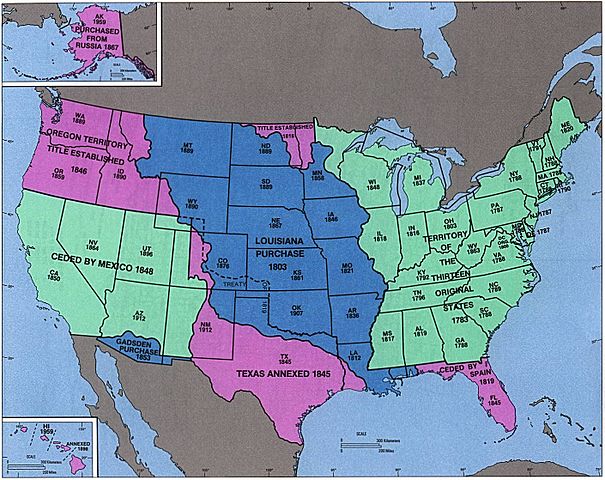
So, what does that have to do with US History?  Oftentimes, we talk about land acquisitions without ever showing students a map of the result of said acquisition.  Yes, the Louisiana Purchase made a HUGE impact on the size and natural resources of the US; but you don’t really get an idea of just how huge it was until you show it on a map.  Did you remember the size of the Louisiana Purchase from your high school classes?  Probably not.  But how many maps were you shown?  How many did you color and label?  Probably none.

You get my point.  Give your students blank maps and have them color and label important historical events, acquisitions, or information.  Don’t think you have time?  Some maps will only take 5 minutes to complete.  You can always set a time limit and whatever the students don’t finish in class must be completed for homework.  Some maps, such as a map showing land acquisitions of the US, would serve as excellent end of course review material!  See some examples of assignments below:

American Colonies Map – Use the map found here.  (No longer available.) Have students create a map of the 13 colonies.  Students must label each colony and color the three main colony divisions:   northern, southern, and middle colonies (or mid-Atlantic).  Students must also insert symbols for economic activities and religious groups.  Students must create a legend to go with their map.

Civil War Map – Use the map found here and tell your students to create a map depicting Union and Confederacy states and capitals.  You can also have students label Fort Sumter, important battles, or other items (the Mississippi River).  Explain the anaconda plan and have students label elements of the plan on their map.

Western Trails Map – Use the map found here.  Have students trace and label the route that they would take to go west.  They must label cities in which they would start and finish.  On the back, you can have students explain which route they chose and why.

Land Acquisition Map – Use the map found here.  Have students label and color all of the major US land acquisitions.  Have them include the year we got each piece and who we got each piece from.

I actually found two products on Teachers Pay Teachers that give you almost all the maps you might want for US History.  There are two different packages based on time period.  Each is $9.95.  Click here and here to learn more.  If $20 seems a little steep to you, just Google a map you want and you should be able to pull it up.  You may have to do a little copying, pasting, and resizing, but only once per map.  Save it and use it again and again.  The return on time invested will be worth it.

World War I Christmas Truce

“The soldier above all others prays for peace, for it is the soldier who must suffer and bear the deepest wounds and scars of war.” — Douglas MacArthur

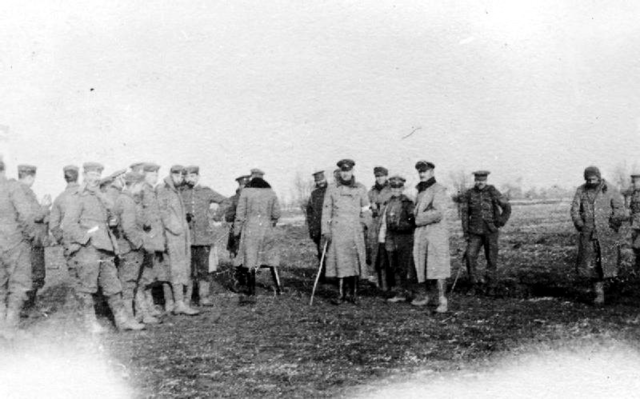
I absolutely LOVE stories of historical events that show humanity at its best.  One such story is that of the World War I Christmas truce.  If you’ve never heard of this incident, it is fascinating!  It began when British troops sitting in the trenches heard the Germans singing Christmas carols.  Next thing you know, the British and German troops met in no man’s land and exchanged gifts, took pictures, and even played soccer together!  Eventually, due to pressure by commanding officers, the fighting resumed between the two sides.  To check out the whole story, read about it here.  There are even pictures of the “enemies” mingling during the truce (see the picture above)!  How cool!  The History Channel also has a short video clip here that has a voiceover of one of the veteran’s who was involved!

If you like stories like this, you can also read the book Chicken Soup for the Veteran’s Soul.  It is full of neat anecdotes from various wars that will make you feel all warm and fuzzy inside.  I sometimes read a story from this book to my students when we had a few minutes to spare at the end of class.  Random Acts of Kindness:  True Stories of America’s Civil War is one that has a ton of heartwarming, true accounts from the Civil War.  (I actually mentioned this in my last podcast.)  Do you know of any other books like these?  I’d love to hear about them.  Leave a comment and let me know.


Photo:  British and German troops meeting in no man’s land during the unofficial truce – Imperial War Museums

“This Day in History” Websites

You know that excited-yet-also-frustrated feeling you get when you come across something that is awesome and can totally help you out in the classroom?  You have that whole, “Why haven’t I found this sooner” moment.  Well, I had that when I came across this website today.  I was looking for a particular historical picture on the Library of Congress website (which has an amazing, yet overwhelming amount of stuff on it), when I came across their “Today in History” series.

When I taught full-time, I always had a “This day in history” segment in my bell ringer.  I would display one significant historical event (not necessarily specifically related to US history) on the board and discuss it briefly with my students.  When I did it, I had to create a PowerPoint slide with a picture and explanation for each school day of the year.  It took me a while to research and create them.  I did have a book called Today in History, which helped, but it was still time-consuming.

The students really enjoyed it.  Guess what?  You don’t have to go through all of that work to do this in your classroom. You can just go here and find the date you need.  Under each link for each date, there is a page about at least one historical event which contains a picture and an explanation.  It’s really easy to navigate!  Also, each page (or at least all of the ones I checked out) had links at the bottom to related Library of Congress resources.  Even if this doesn’t become a daily feature of your classroom, you could always keep it handy in case your lesson runs short and you need a filler for the last few minutes of class.

By the way, the History Channel also has a really good This Day in History page, which is accompanied by a video.  However, the video has a commercial and sometimes the videos are slow to load.  Also, the History Channel video covers 5 or 6 topics, and sometimes it’s more effective to focus on one particular event rather than mention several briefly.  Either way, both of these resources can save you time!


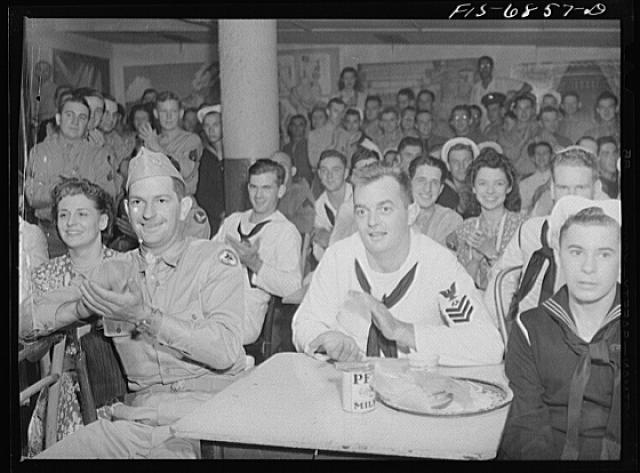
Photo:  Collins, M., photographer. (1942) New York, New York. Audience at the Stage Door canteen. Aug.?. [Image] Retrieved from the Library of Congress, https://www.loc.gov/item/owi2001009097/PP/.

LTH 006 – Mexican-American War

In this episode, we’ll look at activities and other resources to help you teach your students about the Mexican-American War.  Don’t forget to check the show notes below for free notes and assignments to use in your classroom.

Show Notes and Resources:

Bell-ringers, Exit Ticket, and Assignments

Guided Notes and Answer Key

Mexican-American War PowerPoint

Mexican-American War – PBS Video (2:29)

President Polk 60-Second President – Youtube Video (1:00)

Texas: Mexican-American War – Brittanica Kids Video (2:55)

“Did You Know” News Segment About Santa Anna’s Leg – Youtube Video (4:56)

Primary Source Worksheet – James K. Polk

Primary Source Worksheet – Joshua Giddings

Map of US in 1840

Map of US in 1850

Map of Texas Border Dispute


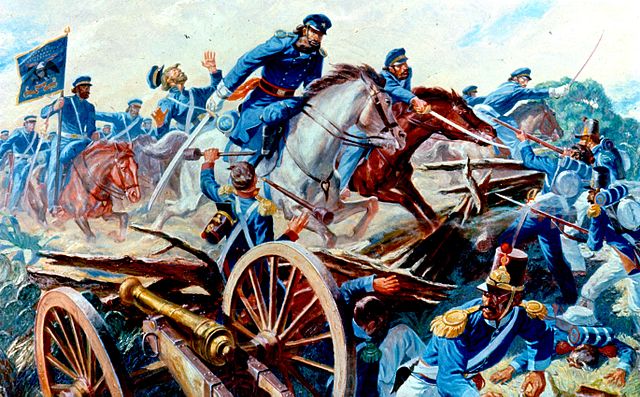
Photo Resaca de la Palma, Public Domain
Intro music clip of “I Dunno” by Grapes CC BY-ND 3.0

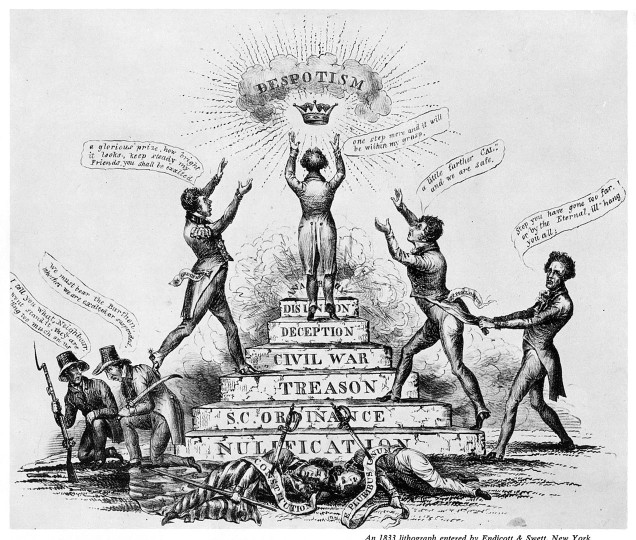
LTH 005 – Tariff of 1828 and the Nullification Crisis

In this episode, I’ll discuss free resources to help you teach the Tariff of 1828 and the Nullification Crisis.

Show Notes and Resources:

Discussion Starters

Guided Notes

Gilder Lehrman Powerpoint on the Nullification Crisis

Andrew Jackson 60 Second Presidents – PBS Video on Youtube (1 min.)

Jackson Nullification – History Channel Video on Youtube (1 min. 37 seconds)

Mr. O’s Andrew Jackson and the Nullification Crisis – Youtube Video (4 min. 33 seconds)

Writing Prompt & Propaganda Poster Assignment

Group Activity from Gilder Lehrman Institute of American History (Print out or download SC Exposition and Protest, Excerpt from Andrew Jackson’s Nullification Proclamation, Excerpt from Daniel Webster’s Reply to Hayne, and Nullification Readings Worksheet) — For some reason, when I tried to use a direct link to the lesson plan, a pop-up window came up and asked me to create an account, but when I went through Google it didn’t.  So, if you come across the pop-up, try Googling it to get access without encountering the pop-up.

Exit Ticket

Next Day Review

What is a Freewrite? Slide

Fort Hill Tour Information


Intro music clip of “I Dunno” by Grapes CC BY-ND 3.0