Free Civil War PowerPoint

Here is a free and pretty comprehensive slideshow about the Civil War. The slideshow contains 75 slides with graphs, charts, pictures, and more. You can’t download it, but you can display it on your projector/board. At some point, a pop-up window might appear asking you to sign up. Close the pop-up by clicking outside it, so you can still view the entire presentation. Be sure to enlarge the slideshow when you display it so that your students can easily see it. It’s a great
freebie with tons of information!

Biography Book Cover Assignment

If a book was written about your life what would it look like? What picture would be on the cover? What tag line would be used? What would the summary on the back say?

While working on my lesson for Benjamin Franklin, I decided to have my students create a book cover for a biography about him. This would be a great idea to use with any historical figure that you wanted your students to know a lot about.


You could use this book cover idea to reinforce the importance of people such as:
  • Christopher Columbus
  • George Washington
  • Thomas Jefferson
  • Andrew Jackson
  • Civil War generals
  • Abraham Lincoln
  • Teddy Roosevelt
  • Franklin Roosevelt
  • Dwight Eisenhower
  • Martin Luther King, Jr.
My students have to include the following things:
  • A catchy title that reflects the life of the person
  • A picture that represents that person’s life
  • A tag line under the title that gives a little more information (A phrase or one-line summary of this person)
  • A paragraph on the back of the book that gives a summary of the book, which includes some details of this person’s life/interests/importance.  (You may want to give a specific number of details required if you think your students might skimp on the information.)
  • You could also include an optional book endorsement quote by someone who would have known the person. (If the book was about Ben Franklin, you could have something like this… “A great book about a great man.” – Thomas Jefferson)
I whipped up a quick book cover template that I thought I’d share with you.  It would be a good idea to also show your students several copies of real book covers, so they get an idea of what you want.  (Just run down to the media center before class and grab a few.)

Maps…They’re Not Just For Geography

Did you know that I could once name and locate all of the countries in Africa?  How many people can say that?  (Well, you might be able to if you teach Geography, but even most social studies teachers don’t know them unless they end up teaching a geography class.)  How did I do that?  It was quite simple.  I had a really good college professor that loved geography and made African geography interesting.  One of the most helpful and yet simple activities we did in class was to color and label a map of Africa.  Yes, we colored…in college…and it worked.  I know that adult coloring is all the rage right now, but when I was in college most people would have looked down on a professor that resorted to coloring to teach a college class.  I have a very distinct memory of myself sitting in class at Clemson University coloring maps and LOVING it!  It seemed simple, but coloring maps appealed to various learning styles of the students in the classroom and enforced the content multiple ways.

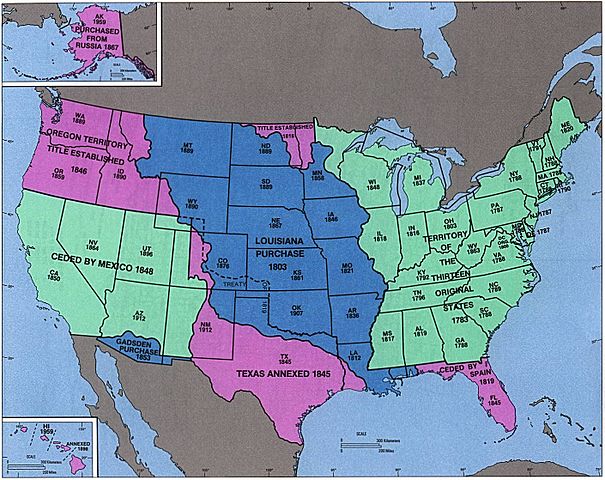
So, what does that have to do with US History?  Oftentimes, we talk about land acquisitions without ever showing students a map of the result of said acquisition.  Yes, the Louisiana Purchase made a HUGE impact on the size and natural resources of the US; but you don’t really get an idea of just how huge it was until you show it on a map.  Did you remember the size of the Louisiana Purchase from your high school classes?  Probably not.  But how many maps were you shown?  How many did you color and label?  Probably none.

You get my point.  Give your students blank maps and have them color and label important historical events, acquisitions, or information.  Don’t think you have time?  Some maps will only take 5 minutes to complete.  You can always set a time limit and whatever the students don’t finish in class must be completed for homework.  Some maps, such as a map showing land acquisitions of the US, would serve as excellent end of course review material!  See some examples of assignments below:

American Colonies Map – Use the map found here.  (No longer available.) Have students create a map of the 13 colonies.  Students must label each colony and color the three main colony divisions:   northern, southern, and middle colonies (or mid-Atlantic).  Students must also insert symbols for economic activities and religious groups.  Students must create a legend to go with their map.

Civil War Map – Use the map found here and tell your students to create a map depicting Union and Confederacy states and capitals.  You can also have students label Fort Sumter, important battles, or other items (the Mississippi River).  Explain the anaconda plan and have students label elements of the plan on their map.

Western Trails Map – Use the map found here.  Have students trace and label the route that they would take to go west.  They must label cities in which they would start and finish.  On the back, you can have students explain which route they chose and why.

Land Acquisition Map – Use the map found here.  Have students label and color all of the major US land acquisitions.  Have them include the year we got each piece and who we got each piece from.

I actually found two products on Teachers Pay Teachers that give you almost all the maps you might want for US History.  There are two different packages based on time period.  Each is $9.95.  Click here and here to learn more.  If $20 seems a little steep to you, just Google a map you want and you should be able to pull it up.  You may have to do a little copying, pasting, and resizing, but only once per map.  Save it and use it again and again.  The return on time invested will be worth it.

Civil War Cannonballs Surface in SC After Hurricane Matthew

How cool is this?!  Hurricane Matthew unearthed or washed up some cannonballs from the Civil War.  They were discovered on Folly Beach in SC!  Watch a quick interview with the person who discovered them (see embedded video below) which gives some great footage of the discovery.  Click here to read the whole article.

| WBTV Charlotte


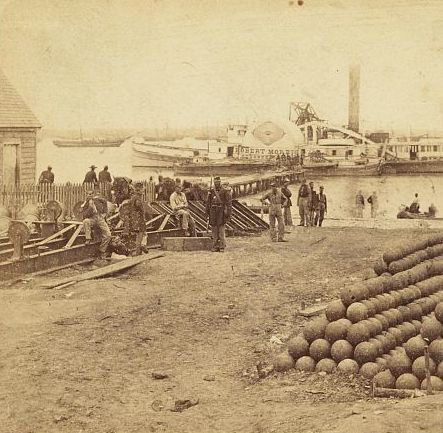
Photo: Embarkation for White House, from Yorktown, VA., Library of Congress – Public Domain

Death on the Battlefield: Two Great Civil War Video Clips

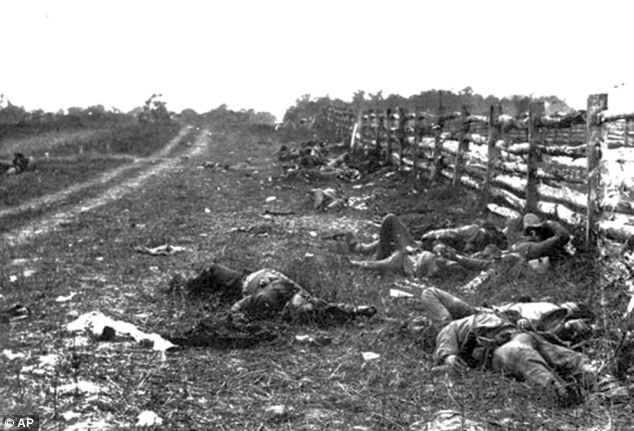
After recording my recent podcast about the Civil War activity that showed students Civil War casualty rates, I came across two great videos that you can use to go along with that activity.

#1 – This is actually a preview of the series Death and the Civil War.  It is a little over two minutes long, but it definitely pulls at your emotions!

#2 – This is from the Civil War Trust and it is called Battlefield Death In4.  This four-minute video gives an excellent summary of the logistical problems that the massive deaths in the Civil War caused.  They mention things that most students wouldn’t think of, like pigs digging up and eating corpses buried in shallow graves.  Plus, you can download this video so that you can access it quickly and/or have it in case your internet won’t work!  (This website covers various topics in four minutes.  After doing some digging, I found over 40 videos!!  What a great resource!)


LTH 008 – Fun Civil War Activity

In this episode, I’ll discuss a fun, quick activity to help your students understand casualty rates of the Civil War.

Show Notes and Resources:

Will You Survive – Numbers

Will You Survive Powerpoint

Civil War Medical Info and Worksheet

Source:  Civil War By the Numbers

Source:  Civil War Casualties


Intro music clip of “I Dunno” by Grapes CC BY-ND 3.0
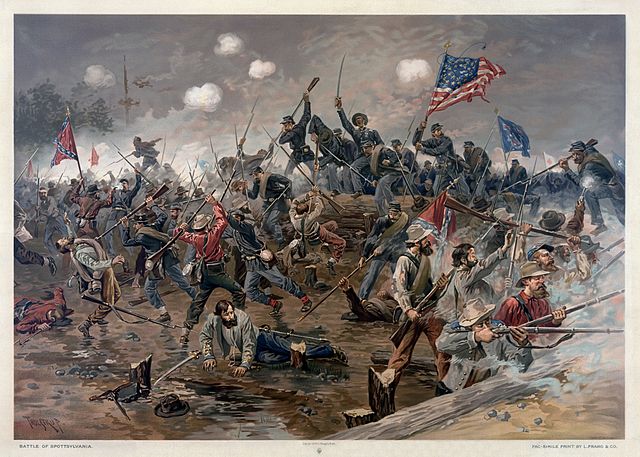
Photo:  A painting of Lee’s Army of Northern Virginia fighting the U.S. Army at Spotsylvania in 1864.  Library of Congress, Public Domain.