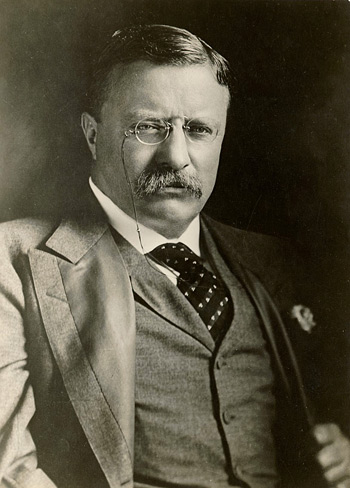
Fun Friday Fact: Teddy Roosevelt’s Famous Sidearm
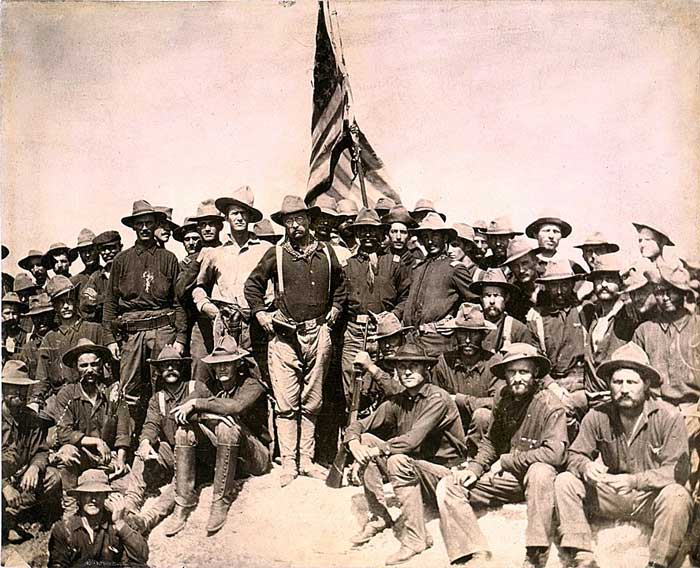
Here’s a fun fact that I didn’t find out until a few weeks ago. Did you know that when fighting in the Spanish American War, Teddy Roosevelt used a revolver that had been salvaged from the USS Maine? How cool! He used it when he charged San Juan Hill and was wearing it when the famous picture of he and his rough riders was taken.

How in the world did Roosevelt get it? The revolver was recovered by divers searching the Maine’s captain’s quarters for keys to the ship’s magazine bunkers. Eventually it was gifted to Roosevelt by his brother-in-law. Side note: The revolver was also stolen at one point! It was stolen from a locked display case in a museum and was missing for 16 years.
Inspiration and Encouragement from Teddy Roosevelt

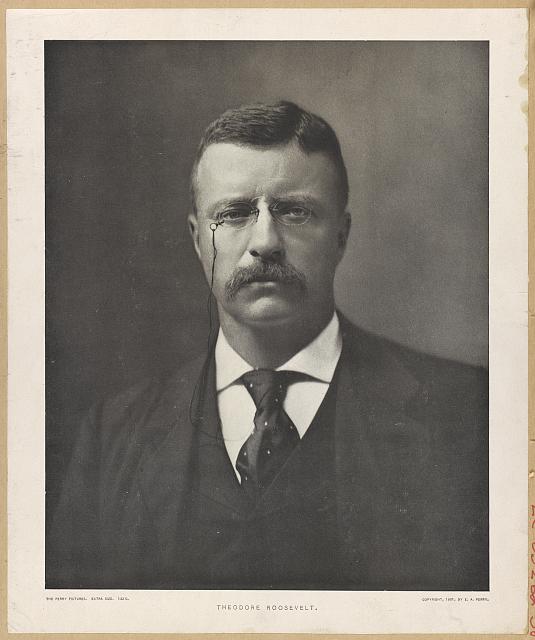
Do you need a little inspiration to keep going? Do your students? I LOVE “The Man in the Arena” speech by Teddy Roosevelt (who is definitely my favorite president). This is my favorite excerpt…

“It is not the critic who counts; not the man who points out how the strong man stumbles, or where the doer of deeds could have done them better. The credit belongs to the man who is actually in the arena, whose face is marred by dust and sweat and blood; who strives valiantly; who errs, who comes short again and again, because there is no effort without error and shortcoming; but who does actually strive to do the deeds; who knows the great enthusiasms, the great devotions; who spends himself in a worthy cause; who at the best knows in the end the triumph of high achievement, and who at the worst, if he fails, at least fails while daring greatly, so that his place shall never be with those cold and timid souls who neither know victory nor defeat.”

At least you are in the arena. You are showing up. That’s what matters.

Here’s a video of my favorite part of his speech. It can also be used in your classroom. Use it when you are studying Teddy Roosevelt or any day you want to inspire your students.

Students in high school may feel like they are under a microscope, especially considering there is a very real chance that some jerk classmate might end up posting some kind of criticism or negative post about them on social media. Many students have become afraid to take risks and try something new because they are afraid of failure. But failure is a part of learning. One of the best books I have ever read is Failing Forward by John Maxwell. As Maxwell says, “The more you do, the more you fail. The more you fail, the more you learn. The more you learn, the better you get.” Roosevelt’s speech is definitely in line with this philosophy. Remind your students when they are struggling, when they risk, when they fail, that they should pay no mind to the critics and haters. At least THEY are in the arena…and so are you.

How to Find Interesting Facts for Your Lessons

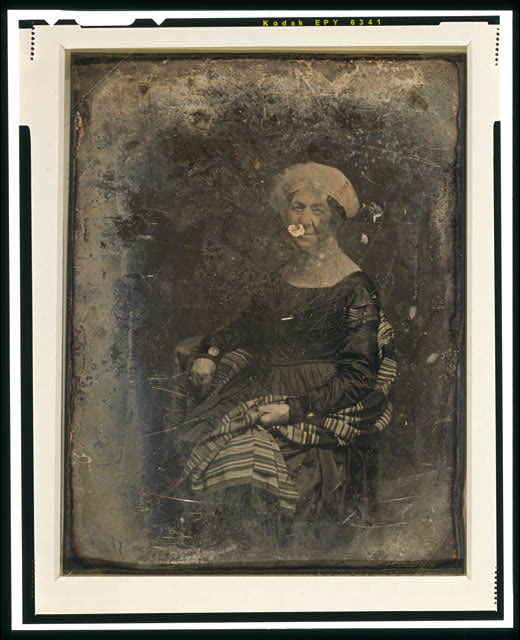
Guess what I came across today…a photograph of Dolley Madison! Yep, an actual photograph (see above)! It was taken in 1848 by Matthew Brady (of course) when she was 80 years old! How cool! How have I not seen this before?! There’s something so raw about historical photos that can’t be conveyed by paintings.

So, how did I come across this photo? I was researching James Madison for a lesson about the Constitutional Convention. I’ve taught this subject plenty of times, but I was making a new set of notes, and I wanted to double-check my facts and see if I could find out anything new. While I was reading about James Madison, I fell down a rabbit hole reading about his relationship with Dolley.

I found out so many cool things! For example:

  • Dolley Madison’s first husband and one of her children died during a yellow fever epidemic. She was widowed at 25.
  • Aaron Burr, the man who eventually killed Alexander Hamilton in their famous duel, introduced James Madison and Dolley. He knew Madison from college and was staying in Dolley’s mother’s boarding house.
  • Dolley served as hostess for widower Thomas Jefferson when he was President. James Madison was Jefferson’s Secretary of State at the time. Dolley selected furnishings for the White House, organized parties, and entertained ladies that visited.
  • Dolley was 17 years younger than Madison, but they were known to be very much in love and were married for 42 years.

I also found out things that had nothing to do with Dolley Madison but were well worth remembering. For example:

  • George Washington only had one real tooth left at the time of his inauguration.
  • Teddy Roosevelt was known as the smiling president. He was the first president who was documented as smiling for photographs. He was so well-known for his smile that a Teddy’s teeth whistle was created for his 1904 presidential campaign. One is on display at the Smithsonian National Museum of American History.

Almost every one of these facts would pique students’ interest or at least break the monotony of class. How did I find out these facts? By reading up on what I was teaching. Now, I know you won’t always have time to read up on everything, especially if it’s something you have taught before and feel like you already know. Sometimes we are lucky that we even made it to school with a shower and clean clothes; forget having time to read about George Washington’s teeth (or tooth).

BUT, there are those days where you spend too much time on Facebook, right? Or watch one-too-many TikToks? Or read another click-bait article? Instead of using ALL of that time for mindless entertainment, why not take a minute to Google the person you are teaching about tomorrow?

And while we are on the subject of Googling, let me mention a VERY important point. Don’t believe everything you read on the internet. Ok, I know you don’t believe everything you read on the internet, BUT do you take time to fact check the bits of trivia you come across? A quick search of the Dolley Madison photo may reveal that actual photo taken of her, but you will also come across various fake photos of her and James Madison. It didn’t take me long to research and find out that John Quincy Adams was the first president ever photographed, and that was after James Madison was already dead.

If it’s not a well-known fact, verify it using several well-known sources. It typically takes less than a minute to verify something. All of the facts that I shared above were verified by either government-run websites or those run by historical societies that are reputable. And no, a person’s blog is not considered a reputable source (unless it’s mine, of course). 😉 Also, if you come across a quote from someone or about someone that seems very controversial or “off,” make sure you look at the context of the quote. People can twist quotes to suit their own political biases. We expect our students to use reputable sources for schoolwork so we should do the same.

So, next time you dread teaching the SAME lesson about the SAME person again this semester, try doing a little bit of reading. You never know when you’ll come across the one interesting fact that can grab that one student you’ve been trying to reach!


Teddy Roosevelt Video Footage at the Library of Congress

According to the Library of Congress, “It has been said that during the silent newsreel period no president was more photogenic than Theodore Roosevelt. He was unusually cooperative with motion picture photographers, often pausing in the midst of official ceremonies to face the camera, bow, wave, smile, gesture, or otherwise accommodate the cameraman.”1

The Library of Congress has a good bit of video footage of Roosevelt at various places and events.  These things are really neat to watch!  Not only do you get to see the man himself, BUT you get a good glimpse of the crowds that came to see him.  Check out the outfits that everyone wore!  In some of the footage, it may take a minute or more for TR to appear.  If you want to show a few of these to your students, play a quick game of “Who Can Spot Teddy Roosevelt.”  Make sure that you watch the clips beforehand, so that you know when Roosevelt will appear (in case your students miss it and don’t see him).  Remind students that this is not some old movie with people in costumes; these were actual people in these clips!  They might get bored watching all of each clip, so you may want to show just a couple of minutes.  You could also show one a day for a few days at the end of class.  Here are a few below.  To see the full list of videos with descriptions, click here.


1 Theodore Roosevelt on Film – Theodore Roosevelt: His Life and Times on Film. (n.d.). Retrieved October 12, 2016, from https://www.loc.gov/collections/theodore-roosevelt-films/articles-and-essays/theodore-roosevelt-on-film/

LTH 012 – What to Put on Your Board

In this episode, I discuss what you should put on your board so that students, administrators, and others know what is going on in your classroom.  Stay tuned for interesting facts at the end!

What is an essential question?

Teddy Roosevelt as a young man – Fierce!

Recording of Teddy Roosevelt – Library of Congress


Intro music clip of “I Dunno” by Grapes CC BY-ND 3.0