Three Free Online Quizzes – US Presidents, World War I and II

I stumbled across this quiz today on the US Presidents. It’s only 10 questions, but it would be a good, quick little time-filler at the beginning or end of class. It doesn’t have a lot of ads on the page either, unlike most online quizzes, which is a plus! I decided to look through all of their quizzes on the page and find any that were relevant to US History. See below for links!

You could use them as an introduction to a topic or to quickly gauge the overall knowledge of the class. These would also be an easy, fun way to do a little end of the year test prep/review. You can project the quiz on the board and complete it orally together or have students silently write their answers before you reveal the correct answer. I find that these quizzes are a fun way to fill a few minutes as a class when your students’ brains are fried and their attention-span is gone. In my opinion, an informal approach works best with these.
World War I Online Quiz

World War II Online Quiz

US Presidents Online Quiz

A Quick Veteran’s Day Lesson

Most of you don’t have time to devote a whole day to covering Veteran’s Day. It’s unfortunate, but it’s the truth. There is so much material to cover in US History that Veteran’s Day typically gets a very small piece of the pie, if any. How can you cover Veteran’s Day well, but also do it quickly?

First of all, make sure your students know what a veteran is. They probably do, but it’s always good to cover the basics. Then, show the first video below. It explains what Veteran’s Day actually is and how it came about.

After the video, ask the following questions:

  • Veteran’s Day originated because of what war?
  • What was Veteran’s Day originally called?

Then show the video below. It’s about five minutes long, but it’s really well done. It shows a lot of clips from various wars. It evokes an emotional response and presents veterans as real people. It really helps students see the “people” behind the word veteran.

Then, have your students write an informal reflection or freewrite answering some of the following questions:

  • What kind of sacrifices do veterans make when they are in the military?
  • Would you be willing to make those same sacrifices?
  • What would happen to the US if it did not have any armed forces?
  • How does our military make your life better?
  • How can you thank a veteran when you see him/her?

Download a free copy of these questions to display on the board here.

World War I Video: The Assassination of Franz Ferdinand

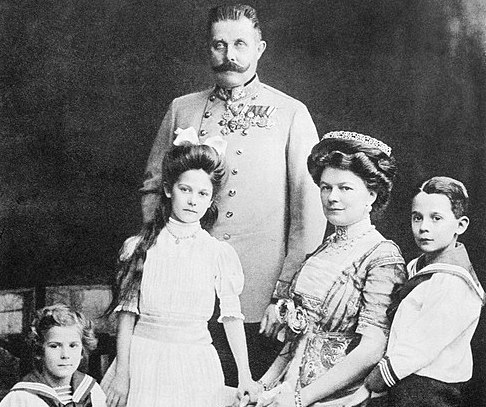
This is a good video explaining the start of World War I.  The link will take you to the an Encyclopedia Brittanica page about Franz Ferdinand.  It’s the first video on the page.  It’s entitled, “Witness the beginning of World War I with the assassination of Archduke Franz Ferdinand on June 28, 1914” and is 3:28 (after the ad).  I typically show a video like this after in order to reinforce the content after I have explained a historical event.  However, if you show this as conversation starter, bell-ringer, or opener, before you show this to your students, explain who the leaders are that are mentioned in the video.  For example, the video starts with Kaiser Wilhelm of Germany.  Explain briefly that Kaiser Wilhelm was the head of Germany and that Germany had the strongest military in Europe before the war.  Also, mention that Germany was aligned with Austria-Hungary, etc.  You may even want to write a list of countries and leaders on the board for reference.  If you do this, use a chart and use a different column for each “side.”

By the way, just a side note, I do NOT recommend the Biography.com video about Franz Ferdinand.  It is very biased and even calls him “stupid and unpleasant” and calls his assassin “studious.”  That is NOT an objective video!  I don’t deny that he probably wasn’t the most pleasant guy, but a video that uses language that it is clearly not being objective.

Next Class:  Access Prior Knowledge

This is a very interesting article including little known facts about Franz Ferdinand.  It would be great to go over it at the beginning of the next class as a way to access the students’ prior knowledge and gain their interest.  Keep in mind that there are some negative aspects to him (as with any leader) that are discussed in this article.  However, remind your students that just because someone is unlikeable or does something you disagree with does not mean that he/she deserve to be killed.  I have found that many students often respond with an emotional outburst like “Well, he deserved to be killed!” or “Serves him right!”  Use instances like that to reinforce the value of every human life, and remind students of how they would want to be treated by those who thought little of them.

World War I Christmas Truce

“The soldier above all others prays for peace, for it is the soldier who must suffer and bear the deepest wounds and scars of war.” — Douglas MacArthur

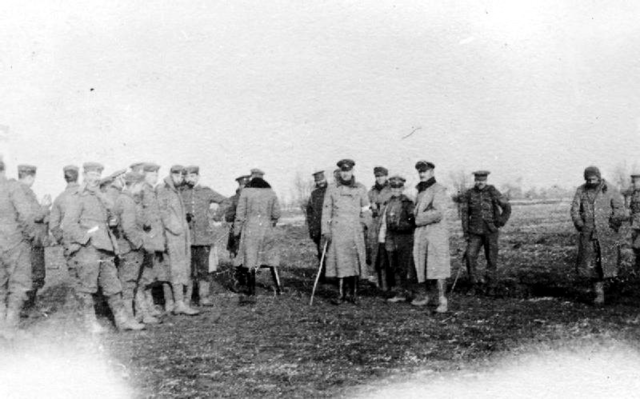
I absolutely LOVE stories of historical events that show humanity at its best.  One such story is that of the World War I Christmas truce.  If you’ve never heard of this incident, it is fascinating!  It began when British troops sitting in the trenches heard the Germans singing Christmas carols.  Next thing you know, the British and German troops met in no man’s land and exchanged gifts, took pictures, and even played soccer together!  Eventually, due to pressure by commanding officers, the fighting resumed between the two sides.  To check out the whole story, read about it here.  There are even pictures of the “enemies” mingling during the truce (see the picture above)!  How cool!  The History Channel also has a short video clip here that has a voiceover of one of the veteran’s who was involved!

If you like stories like this, you can also read the book Chicken Soup for the Veteran’s Soul.  It is full of neat anecdotes from various wars that will make you feel all warm and fuzzy inside.  I sometimes read a story from this book to my students when we had a few minutes to spare at the end of class.  Random Acts of Kindness:  True Stories of America’s Civil War is one that has a ton of heartwarming, true accounts from the Civil War.  (I actually mentioned this in my last podcast.)  Do you know of any other books like these?  I’d love to hear about them.  Leave a comment and let me know.


Photo:  British and German troops meeting in no man’s land during the unofficial truce – Imperial War Museums

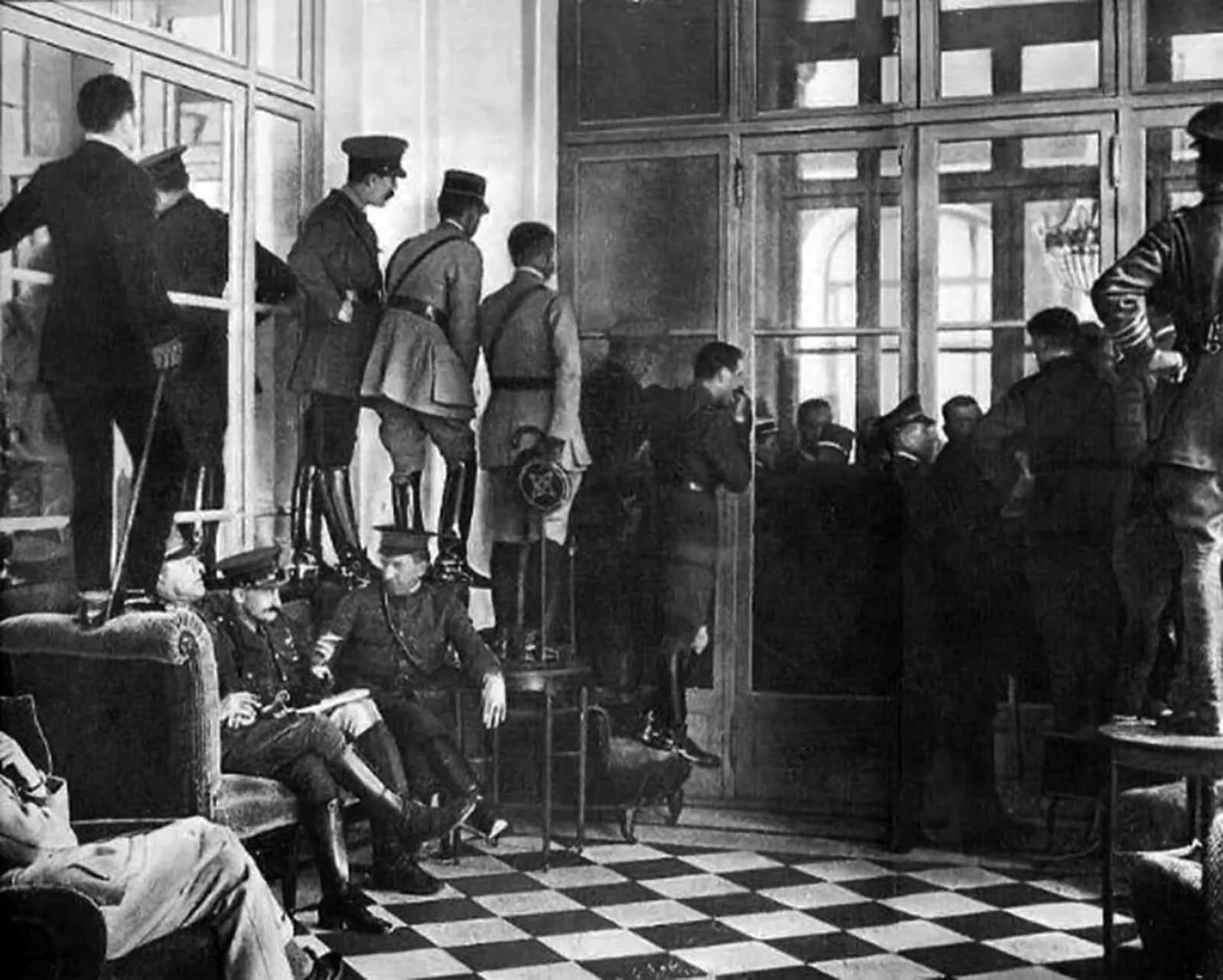
Cool Photo of the Signing of the Treaty of Versailles

This is one of those historical photos that I just LOVE!  It reminds me that the people in those black and white photos were real people…and they had real emotions and real experiences.  If you had fought long and hard in World War I and saw many soldiers and friends die, wouldn’t you be ready for the war to be officially over?  Wouldn’t that be the day you were waiting for?  This is a picture of military officers and politicians standing on furniture so that they can witness the signing of the Treaty of Versailles!  How cool!  Share it with your students when you talk about World War I.

Great World War I Poem

I’m not a big poetry buff, but I came across this today, and it really touched me.  Apparently, Rudyard Kipling’s 18-year-old son died in World War I in the Battle of Loos.  The poem “My Boy Jack” was written by Kipling after this tragedy.  Read the poem below.  Can’t you just imagine a worried parent asking again and again if anyone has had news of his son?

“Have you news of my boy Jack?”
Not this tide.
“When d’you think that he’ll come back?”
Not with this wind blowing, and this tide.

“Has any one else had word of him?”
Not this tide.
For what is sunk will hardly swim,
Not with this wind blowing, and this tide.

“Oh, dear, what comfort can I find?”
None this tide,
Nor any tide,
Except he did not shame his kind —
Not even with that wind blowing, and that tide.

Then hold your head up all the more,
This tide,
And every tide;
Because he was the son you bore,
And gave to that wind blowing and that tide!

So, how can you use this in your classroom?

  • Use it as an attention-getter or discussion starter.  Put it on the board at the beginning of class when you are talking about World War I.  Ask your students what they think it means and then tell them the origin.
  • Discuss it with students and have them write their own poem about World War I.
  • Discuss it and ask students what their friends or relatives would write about them if they died in battle.
  • Discuss it and talk about how families today deal with the grief of losing loved ones in military service.  Compare and contrast the experience today versus what people would have experienced then.


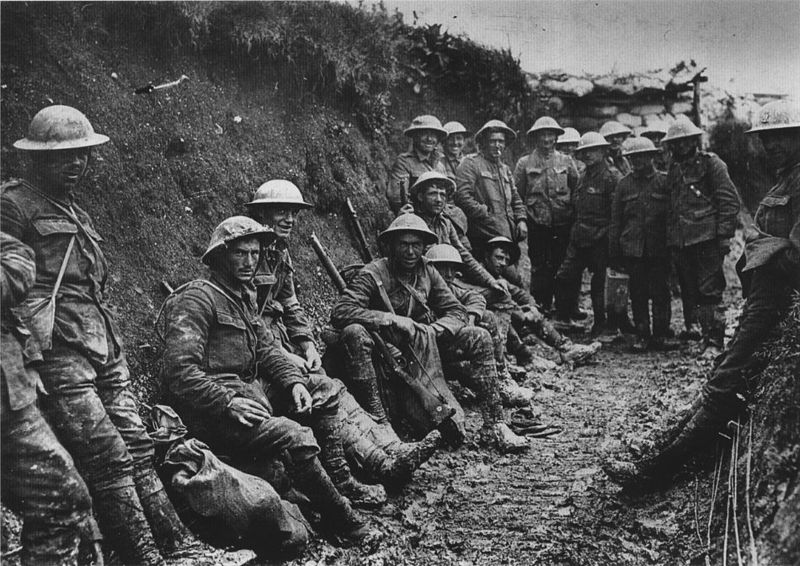
Photo: Royal Irish Rifles in a communications trench, first day on the Somme, 1916. Imperial War Museum – Public Domain.