New Blog with More Social Studies Resources

I love finding new US History resources, but for years I have wanted a place to catalog and post all of the resources I find for my other classes such as Geography, World History, and Economics. 

I’ve kicked around the idea of having two blogs for a while, and I finally decided to go for it. There’s still a lot in the works, but I have started posting resources, and I’m so excited that I can post so many things for so many different areas!

And so, I give you my new blog, The Social Studies Life. For now, I will be updating both blogs and will still continue to post US History resources on this blog unless I feel like I can’t keep up with both. But if you need resources for other social studies classes, be sure to check out my new brainchild! I’ve got a lot of video resources on there now, but I’m hoping to add more free printables as time goes on. I’ve also got some Economics resources that I used to sell but am going to release as freebies!

Also, don’t forget that I love hearing about free resources that I can share with others, so feel free to use the Contact form on either website to let me know of any awesome new resources you come across.
Two Exciting New Products! Lots of US History Help!

I’ve been slaving away behind the scenes to finish something I’ve been working on for a while! The first is a massive list of US History Assignments. I ended up with over 211 assignments and 15 printable templates! I’m breaking them up into 2 separate products based on time period. The first is 101 Assignments for Colonies to Civil War. I’m still putting the finishing touches on the second part, 110 Assignments for Reconstruction to 9/11. I hope to have that one available within the month!

I also have a set of 180 discussion starters and bell ringers I’ve been working on. You can find that here which also includes a link to a free sample download.

Use the code BLOG20 to get 20% off of your purchase!


Fun First Day Activity for US History

I’ve been wanting to create this for a while.  My Intro to Economics QR Code Scavenger Hunt is a hit.  I really wanted to make a QR code activity for the first day of US History but haven’t taken the time to do so.  I finally sat down and banged it out this summer.  I’ve been doing QR code activities with the students at the co-op where I teach and they LOVE them.  In case you don’t know, a QR code is a code that can be scanned using a smartphone or tablet.  During one of my QR code activities, students walk around the room searching for hidden QR codes.  Once they find a QR code, they scan it with their smartphones or tablets.  A QR app on the device (download this ahead of time…most are free) scans the code to reveal a question that the students must answer.  Unlike most QR codes you see on various products, my QR codes come up as plain text rather than something that must be accessed via an internet connection.  So, you don’t need Internet access to complete this activity.  It can be done individually, in pairs, or in groups.  These types of activities are great because they get students out of their seats and moving.  Check it out at my TPT store. I’m hoping to create more QR code activities that review or present US History content this year on TPT!

Assignment Ideas for the Week Before Christmas Break

You know it’s coming. That dreaded “week before Christmas break.” It’s a time when it’s every teacher for himself, and most educators believe that just for a few days, entire schools should be crop-dusted with ADHD meds.

What do you do? Half of your class has checked-out mentally and the other half have checked-out physically. If you are on a block schedule, then odds are that you have a few days sandwiched between end-of-course tests and Christmas break. If you only have a day or two, by all means, give your kids a break and watch a movie. You all deserve it. But don’t check out and just show something with zero educational value like Elf. Make sure it is a movie with historical content, and write a few class discussion questions on the board while you’re at it.

Sidenote: I recently was somewhat horrified to hear that some teachers the local area had students watch movies for the last TWO WEEKS of the semester because testing was over. I know that it’s hard to keep kids focused after testing, but if you automatically show movies to kill time you are telling your students several things:

  • School is about testing, not learning
  • Learning for learning’s sake is not valuable
  • It’s ok to take the easy way out

Movies in the classroom are ok as an occasional reward (be careful with this one) or to reinforce content, but they should NEVER take the place of instruction just because you don’t feel like teaching. Rant over.

What if your administrators won’t allow movies or you have more than just a day or two to kill? What then? Well, the thing to keep in mind is that you want assignments that meet the following criteria:

  • Creative (Kids are burned out from test or distracted by the coming break.)
  • Adaptable (Kids will be sporadically absent. Do something that can work with any subject matter and any amount of students.)

So just what can you do when things are crazy? Here are my assignment ideas to help get you through the pre-Christmas craziness. (Keep in mind that these can be used at the end of the year in May/June as well.)

  • Have students design a commemorative Christmas ornament about a historical figure. I just posted a very detailed version of this assignment on Teachers Pay Teachers. It will be free for a limited time. Get it while you can, and if you like it, please leave me a good review!
  • Put students in groups and have them act out historical events for the class to guess. (Each group must provide 3 clues within their skit and must give you a hard copy of the clues before they perform.)
  • Have students create a song in which they replace traditional Christmas lyrics with those about a historical event. Click here to download my stellar creation about Valley Forge called Deck the Tents…sure to be a blockbuster hit! 😉 If your students choose this option, take a picture of the lyrics and project them on the board. Have the class sing it together! Get into it and make it fun and silly.
  • Have student write poetry, create raps, or make acrostic poems about historical figures.
  • Have students plan a very brief presentation answering one of the following questions: What historical figure (that we have studied) would you like to meet and why? What historical event (that we have studied) would you like to have witnessed and why? Students should give 3-5 solid reasons for their feelings. Require students to make a bulleted list that they must eventually turn in to you, which will help them solidify/organize their thoughts. (You could make them write an essay, but the whole point of these activities is that they are low-stress for students. If you think your kids can handle it, go for it.) Then have students get in small groups and share their presentations.

The common thing about all of these activities is that they can be adapted to almost any subject, they allow kids to get creative, and they require very little planning on your part!

Good luck! You’re almost there!

*Image copyrighted and used in accordance with license agreement at Canstockphoto.com

Visual Syllabus – A Fun Way to Deliver the Boring Stuff…and More!

While prepping for my American Inventors class (I’m teaching one for my local homeschool co-op), I decided that I wanted to spice up my syllabus.  I stumbled across this simple but neat looking visual syllabus.  It’s only $1.75 on TPT. I’ve never used one before, but I decided to try it.  It was very easy to edit, and it looked pretty cool afterwards.  I did make a few changes and tweaks to fit my needs.  It’s much more visually appealing than a regular old syllabus.  I will say, however, that while you can give the basics on this syllabus, you STILL need to make sure you give out a copy of your procedures (which definitely won’t fit on this).

You could also use this syllabus for notes.  Change out some of the clip art and you can add note content instead of syllabus content.  It wouldn’t need to be anything fancy, but sometimes delivering content in a different manner helps break the monotony.  You could use it to create a broad overview of a war.  Have the dates in one box, the good and bad guys in another, important battles in another, and important people in another.  Oooooh, even better, give the blank template to your students and (as a review) have THEM create a “cheat-sheet” about the war!  That would be a great way to review the basics about a war or other large topic.

Here’s my syllabus that I created for my class.  I blacked out some top secret stuff that I didn’t think you needed to know…stuff I could let you read, but then I’d have to kill you!  This syllabus is doesn’t include all of the stuff that I would put in if I were teaching a large class full of 30 students, but it still has the basics.  Oh, and by the way, I wasn’t paid or anything like that to write about that syllabus product.  I just like sharing neat and useful things I find!




LTH 016 – How to Plan and Pace Your US History Course

In this episode, I’ll show you a way to quickly plan out your entire US History course.  I’ll also discuss a few ways to get caught up if you are behind, and you’ll learn why it’s not the end of the world if you don’t cover all of the content in the book.


Show Notes and Resources:

How I Organized My Units

Random Acts of Kindness:  True Stories of America’s Civil War – Book on Amazon

Intro music clip of “I Dunno” by Grapes CC BY-ND 3.0

“This Day in History” Websites

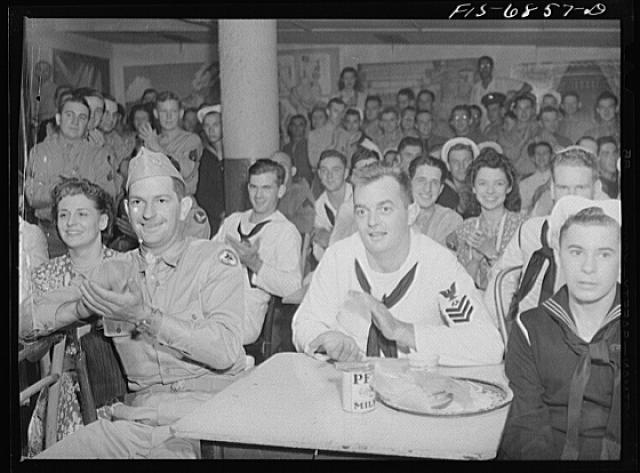
You know that excited-yet-also-frustrated feeling you get when you come across something that is awesome and can totally help you out in the classroom?  You have that whole, “Why haven’t I found this sooner” moment.  Well, I had that when I came across this website today.  I was looking for a particular historical picture on the Library of Congress website (which has an amazing, yet overwhelming amount of stuff on it), when I came across their “Today in History” series.

When I taught full-time, I always had a “This day in history” segment in my bell ringer.  I would display one significant historical event (not necessarily specifically related to US history) on the board and discuss it briefly with my students.  When I did it, I had to create a PowerPoint slide with a picture and explanation for each school day of the year.  It took me a while to research and create them.  I did have a book called Today in History, which helped, but it was still time-consuming.

The students really enjoyed it.  Guess what?  You don’t have to go through all of that work to do this in your classroom. You can just go here and find the date you need.  Under each link for each date, there is a page about at least one historical event which contains a picture and an explanation.  It’s really easy to navigate!  Also, each page (or at least all of the ones I checked out) had links at the bottom to related Library of Congress resources.  Even if this doesn’t become a daily feature of your classroom, you could always keep it handy in case your lesson runs short and you need a filler for the last few minutes of class.

By the way, the History Channel also has a really good This Day in History page, which is accompanied by a video.  However, the video has a commercial and sometimes the videos are slow to load.  Also, the History Channel video covers 5 or 6 topics, and sometimes it’s more effective to focus on one particular event rather than mention several briefly.  Either way, both of these resources can save you time!


Photo:  Collins, M., photographer. (1942) New York, New York. Audience at the Stage Door canteen. Aug.?. [Image] Retrieved from the Library of Congress, https://www.loc.gov/item/owi2001009097/PP/.

Understanding and Using Bloom’s Taxonomy

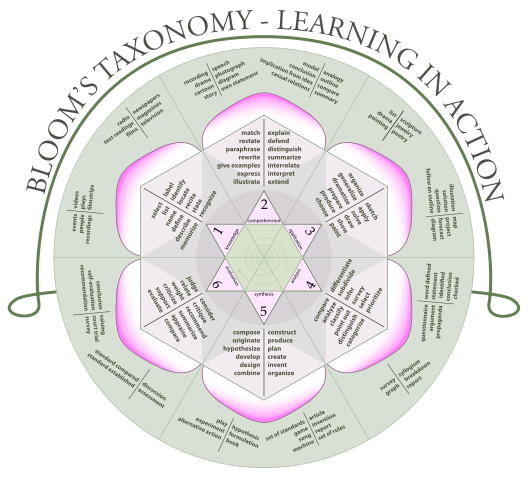
The last time I really heard someone say the words “Bloom’s Taxonomy” was in college.  Now, however, you always hear people talking about “higher-level thinking” or “high-level thinking skills.”  Both of these popular ideas are based on Bloom’s Taxonomy.  So what is Bloom’s Taxonomy and why should you even care about it?  Bloom’s Taxonomy (or BT as I’ll call it) is a way to determine different levels of human cognition.  In simpler terms, BT categorizes how much you are making your students think about the material.  BT divides thinking into different levels.  Lower-level BT questions or assignments deal with things such as memorization and observation.  Higher-level BT assignments force students to think more deeply about a topic, which hopefully will lead to better understanding and retention.  BT was revised in 2001 and changed up a little, but the idea behind and usefulness of BT is still important.

What does this have to do with your classroom?  Use BT as a guide to make sure that you are really making your students think deeply about topics.  Don’t just expect students to memorize things.  Use questions that help them create a new and deeper understanding of the content.

Look at the various visual guides to Bloom’s Taxonomy given here.  Notice the words listed under each category.  These words are the cues to help you evaluate what you are asking of your students.  Are you asking them to recognize, list, or describe (which are low-level skills) or are you asking them to compare, construct, and interpret (high-level skills)?  There is nothing wrong with using low-level thinking skills.  In fact, that is probably where you need to start when introducing a topic.  Just don’t stay there.  Make sure that after you tell students about a person or event, have them look past the facts and analyze, evaluate, or create something.

Print one of these visual guides and keep it with your lesson plans.  Use it when you create test questions and assignments, and help your students become better thinkers.


Image Credit: Bloom’s Taxonomy By K. Aainsqatsi – Own work, CC BY-SA 3.0,

Great Example of Connecting Students to Content

This!  Yes!  Yes!  A thousand times YES!  This teacher is doing it right!  If you don’t establish relevance or allow your students to form a connection to the material, they either won’t remember it or won’t care about it!  Think about it.  Have you made things so interesting or gotten such an emotional reaction out of your students that one of them actually posted about it later?  Let that be your goal today…and every day!

wifitax

LTH 012 – What to Put on Your Board

In this episode, I discuss what you should put on your board so that students, administrators, and others know what is going on in your classroom.  Stay tuned for interesting facts at the end!

What is an essential question?

Teddy Roosevelt as a young man – Fierce!

Recording of Teddy Roosevelt – Library of Congress


Intro music clip of “I Dunno” by Grapes CC BY-ND 3.0

LTH 010 – School Shootings: Have a Plan

In this episode, I’ll discuss the importance of having a plan beyond what your school provides in case you ever have to deal with an active shooter.  Stay tuned at the end for an update.

***Update:  I am sad to report that Jacob Hall passed away on October 10, 2016.

Alice Training

Active Shooter School Self-Assessment

Alice Individual Training

Jacob Hall GoFundMe Page


My Recommended Spiritual Resources for Those Who are Seeking are Listed Below:

One of my favorite videos on life’s purpose – Francis Chan

How can I have a personal relationship with God? – Chip Ingram

What is salvation?


LTH 009 – Proximity

In this episode, I’ll talk about the importance of getting up and moving around your classroom.  Stay tuned for interesting facts at the end!

Show Notes and Resources:

Video Clips on Death in the Civil War

Picture of Traveller’s Stable at Washington and Lee University


Intro music clip of “I Dunno” by Grapes CC BY-ND 3.0