A Quick and Easy Way to Increase Student Engagement
Check out my latest podcast and then check out the resource I suggested below.
Lincoln’s Assassination Crime Scene Investigation

Check out my latest podcast and then check out the resource I suggested below.
Lincoln’s Assassination Crime Scene Investigation
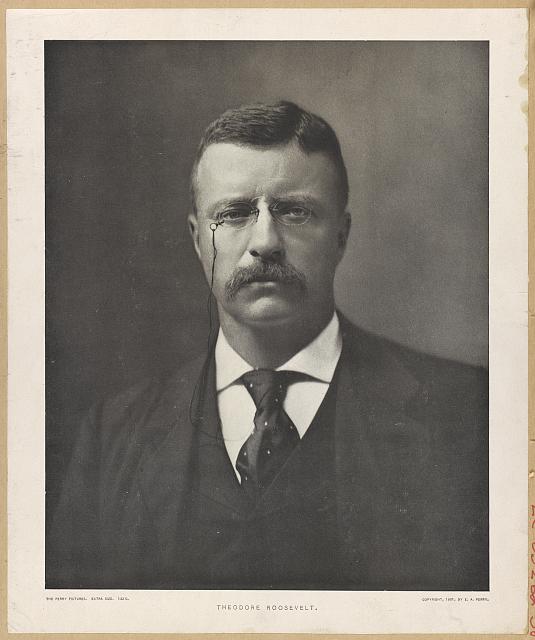
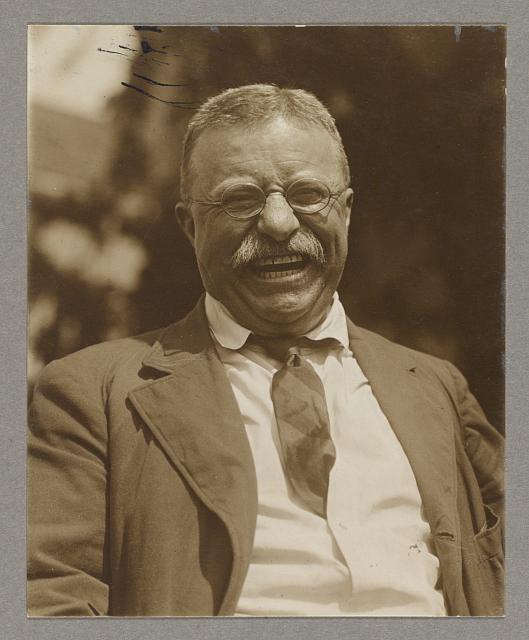
Do you need a little inspiration to keep going? Do your students? I LOVE “The Man in the Arena” speech by Teddy Roosevelt (who is definitely my favorite president). This is my favorite excerpt…
“It is not the critic who counts; not the man who points out how the strong man stumbles, or where the doer of deeds could have done them better. The credit belongs to the man who is actually in the arena, whose face is marred by dust and sweat and blood; who strives valiantly; who errs, who comes short again and again, because there is no effort without error and shortcoming; but who does actually strive to do the deeds; who knows the great enthusiasms, the great devotions; who spends himself in a worthy cause; who at the best knows in the end the triumph of high achievement, and who at the worst, if he fails, at least fails while daring greatly, so that his place shall never be with those cold and timid souls who neither know victory nor defeat.”
At least you are in the arena. You are showing up. That’s what matters.
Here’s a video of my favorite part of his speech. It can also be used in your classroom. Use it when you are studying Teddy Roosevelt or any day you want to inspire your students.
Students in high school may feel like they are under a microscope, especially considering there is a very real chance that some jerk classmate might end up posting some kind of criticism or negative post about them on social media. Many students have become afraid to take risks and try something new because they are afraid of failure. But failure is a part of learning. One of the best books I have ever read is Failing Forward by John Maxwell. As Maxwell says, “The more you do, the more you fail. The more you fail, the more you learn. The more you learn, the better you get.” Roosevelt’s speech is definitely in line with this philosophy. Remind your students when they are struggling, when they risk, when they fail, that they should pay no mind to the critics and haters. At least THEY are in the arena…and so are you.
I came across this piece of awesomeness via a Facebook ad (something useful on a Facebook ad, there’s a first). This is the PERFECT thing to get your kids awake and out of their seats! This is not any kind of endorsement. It’s just a cool thing that I like! See the video below to get the full experience! I got mine here.
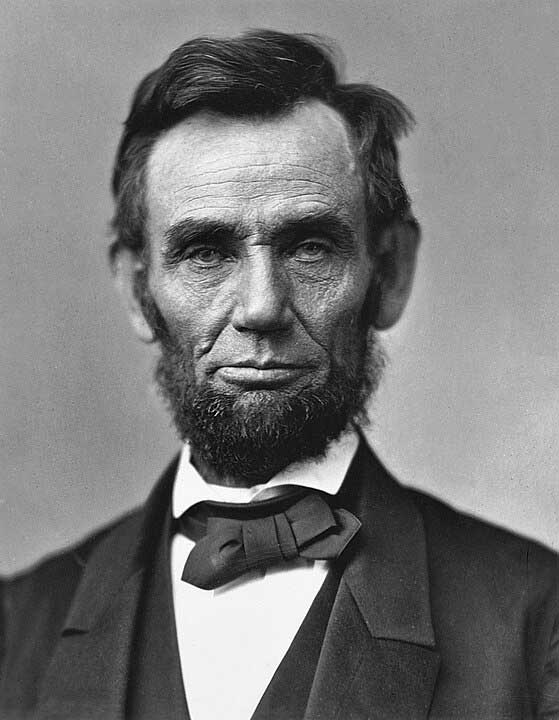
While we are teaching, why not try to make better human beings in the process? History provides many examples of things we should and should not do. Watch the video below to find out how you can teach character ed that everyone will appreciate. Click here for a list of character traits and examples that you can use in your class.
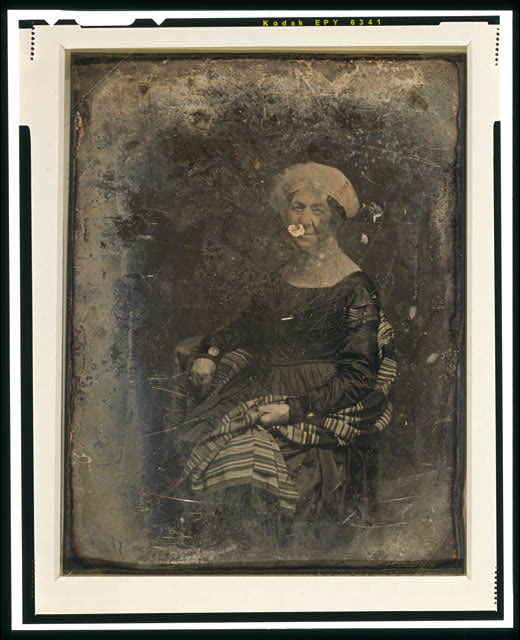
Guess what I came across today…a photograph of Dolley Madison! Yep, an actual photograph (see above)! It was taken in 1848 by Matthew Brady (of course) when she was 80 years old! How cool! How have I not seen this before?! There’s something so raw about historical photos that can’t be conveyed by paintings.
So, how did I come across this photo? I was researching James Madison for a lesson about the Constitutional Convention. I’ve taught this subject plenty of times, but I was making a new set of notes, and I wanted to double-check my facts and see if I could find out anything new. While I was reading about James Madison, I fell down a rabbit hole reading about his relationship with Dolley.
I found out so many cool things! For example:
I also found out things that had nothing to do with Dolley Madison but were well worth remembering. For example:
Almost every one of these facts would pique students’ interest or at least break the monotony of class. How did I find out these facts? By reading up on what I was teaching. Now, I know you won’t always have time to read up on everything, especially if it’s something you have taught before and feel like you already know. Sometimes we are lucky that we even made it to school with a shower and clean clothes; forget having time to read about George Washington’s teeth (or tooth).
BUT, there are those days where you spend too much time on Facebook, right? Or watch one-too-many TikToks? Or read another click-bait article? Instead of using ALL of that time for mindless entertainment, why not take a minute to Google the person you are teaching about tomorrow?
And while we are on the subject of Googling, let me mention a VERY important point. Don’t believe everything you read on the internet. Ok, I know you don’t believe everything you read on the internet, BUT do you take time to fact check the bits of trivia you come across? A quick search of the Dolley Madison photo may reveal that actual photo taken of her, but you will also come across various fake photos of her and James Madison. It didn’t take me long to research and find out that John Quincy Adams was the first president ever photographed, and that was after James Madison was already dead.

If it’s not a well-known fact, verify it using several well-known sources. It typically takes less than a minute to verify something. All of the facts that I shared above were verified by either government-run websites or those run by historical societies that are reputable. And no, a person’s blog is not considered a reputable source (unless it’s mine, of course). 😉 Also, if you come across a quote from someone or about someone that seems very controversial or “off,” make sure you look at the context of the quote. People can twist quotes to suit their own political biases. We expect our students to use reputable sources for schoolwork so we should do the same.
So, next time you dread teaching the SAME lesson about the SAME person again this semester, try doing a little bit of reading. You never know when you’ll come across the one interesting fact that can grab that one student you’ve been trying to reach!
Are you grateful? Are your students? Did you know that studies show that people who are grateful sleep better, have higher energy levels, have higher self-esteem, and are happier? When is the last time you asked your students what they are grateful for? And while this may be too personal question to have students answer out loud, I’m sure you could encourage your students to write down one thing they are grateful for once a week or even every day! Looking for things to be grateful for helps retrain neural pathways to see the good in life rather than the bad. Don’t students need this ability? Don’t you and I?
If you don’t want to implement a gratitude exercise in class every day, that’s understandable. But how about once in a while when you finish class a few minutes early but don’t have quite enough time to start a new activity?
Give your students this sheet to put in their notebooks and have them fill it in occasionally.
I came across this article that is an interesting read about gratitude of historical figures in their own words. My absolute favorite quote is from Frederick Douglass:
“From Mas’r Daniel I got protection from the bigger boys, and from Miss Lucretia I got bread by singing when I was hungry, and sympathy when I was abused by the termagant in the kitchen. For such friendship I was deeply grateful, and bitter as are my recollections of slavery, it is true pleasure to recall any instances of kindness, any sunbeams of humane treatment, which found way to my soul, through the iron grating of my house of bondage. Such beams seem all the brighter from the general darkness into which they penetrate, and the impression they make there is vividly distinct.” Frederick Douglass, 1882
Frederick Douglass was in SLA-VER-Y. He found something to be thankful for in his life of slavery. What a great attitude! He chose to find some good in the injustice of his early life. He was not a victim. He was a victor, an overcomer. And look at what he accomplished!
I am a very big advocate of not making people into victims. Students who feel empowered and grateful will accomplish far more than those who feel the world is out to get them. Be grateful! Write down what you are grateful for. Look for that silver lining! You’ll be better for it and so will your students.
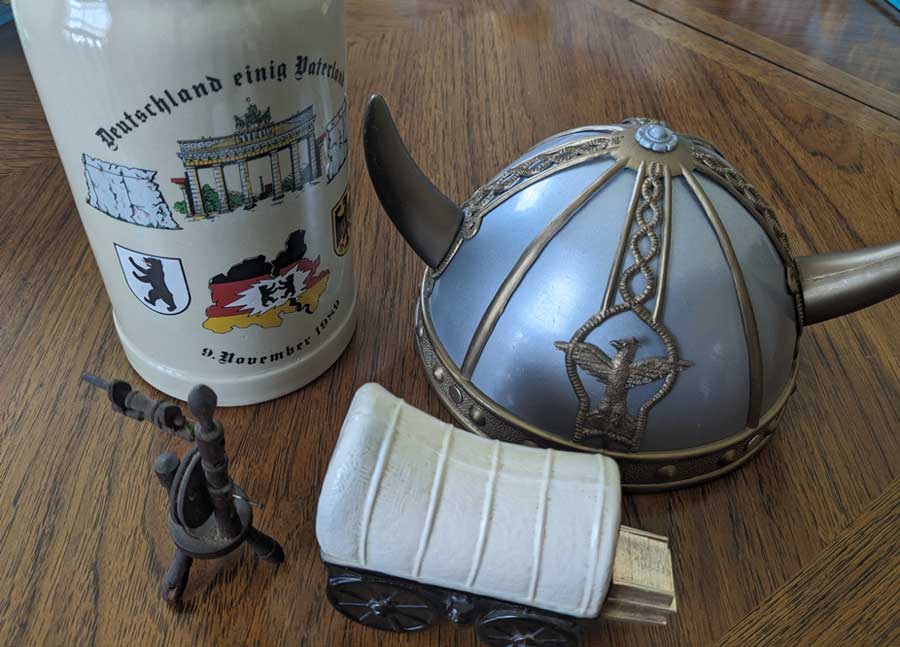
Guess who I thought I saw at Wal-mart and how it applies to my classroom! Watch the video below to find out more OR scroll down to listen to the audio only version.
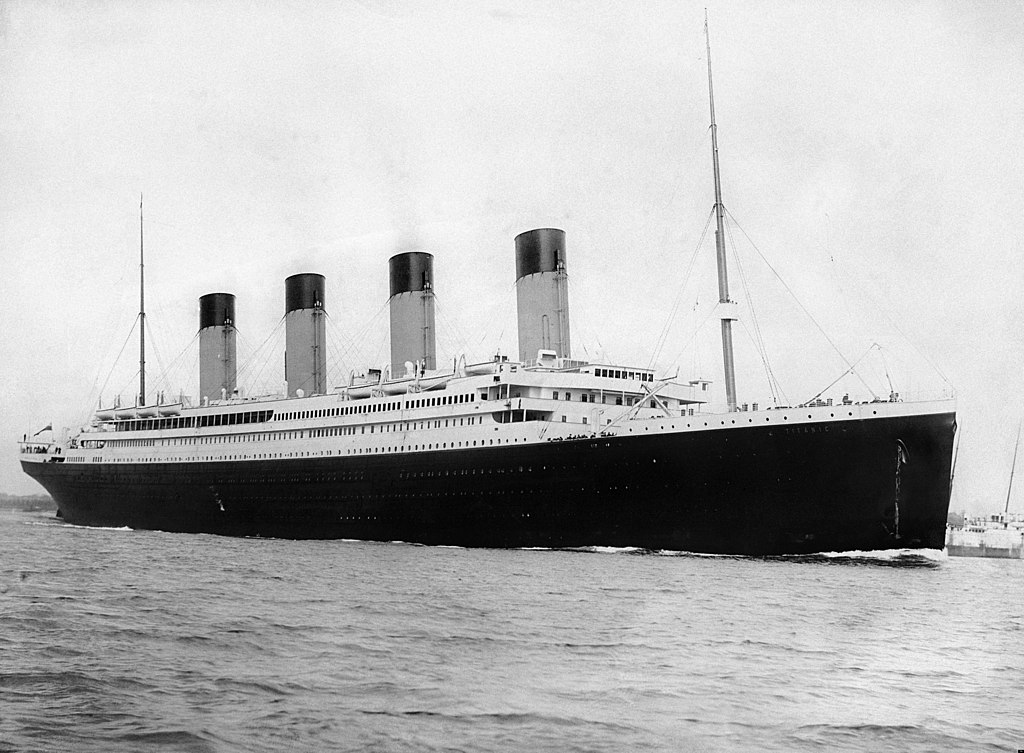
It’s so very sad to hear about the tragedy of the Titan submersible. By now, unless you’ve been living under a rock, you’ve heard about this story. Five people were killed when a submersible that was taking them to see the Titanic wreckage suffered a catastrophic failure. I am of the opinion that we can always learn from tragic circumstances, and that the more we can learn from them, the more the blow of the loss is softened. There are many, many lessons to be learned from the tragedy of the Titan, and I’m sure we’ll hear about those for weeks to come (well, as long as this story still interests news readers).
But what does this have to do with the classroom? It’s summer break. You don’t need to use this as a current event discussion in your classroom. But perhaps the lesson is not for your students, it is for you. What were these men willing to risk their lives and pay a ridiculous amount of money to see? The Titanic. Yes, the famed Titanic that I can bet is never mentioned in ANY state history standards. The Titanic, which has great maritime and cultural significance. The Titanic is not the worst maritime disaster, but I argue that it is the most well-known in the US. A seemingly “unsinkable” ship sinking on its maiden voyage and taking with it almost 1,500 innocent people? It’s something students should know about…and once again, it’s not something in most (if any) state standards.
I think it’s a good reminder of why we don’t need to teach to the test…why state standards aren’t the end-all, be-all of teaching. Why? Because history is more than just a list of terms. It’s a story. It’s a set of experiences that makes a group of people who they are. Very often we teach the facts of history, however the true lessons and wisdom that we can gain are pushed aside for what the “state” says is enough.
What events of historical significance are you skipping over so that your students can do well on a standardized test? What wisdom are you rushing past because someone tells you that you are only a good teacher if your students score well on a test created by people who don’t know you or your students’ abilities or struggles?
“In history, a great volume is unrolled for our instruction, drawing the materials of future wisdom from the past errors and infirmities of mankind.”
Edmund Burke

Of course you want a break. But there are a few simple things you can do during the summer break to help you enjoy your break more and be better prepared for next year. One thing you need to do before you get too far into your break is to reflect on the previous year. Don’t worry, you don’t need to schedule a whole day to be alone and reflect (seriously, 20 minutes will do). Use my free End of the Year Reflection worksheet to help you pinpoint things that you need to change. Watch the video below for more tips.
View this post on Instagram
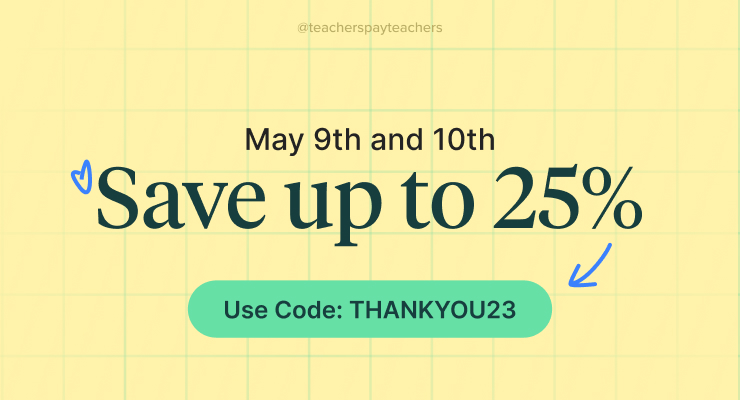
There will be a Teachers Pay Teachers appreciation sale on May 9th and 10th. Products in my store will be 20% off during the sale! Use the code THANKYOU23 to get an additional 5% off.
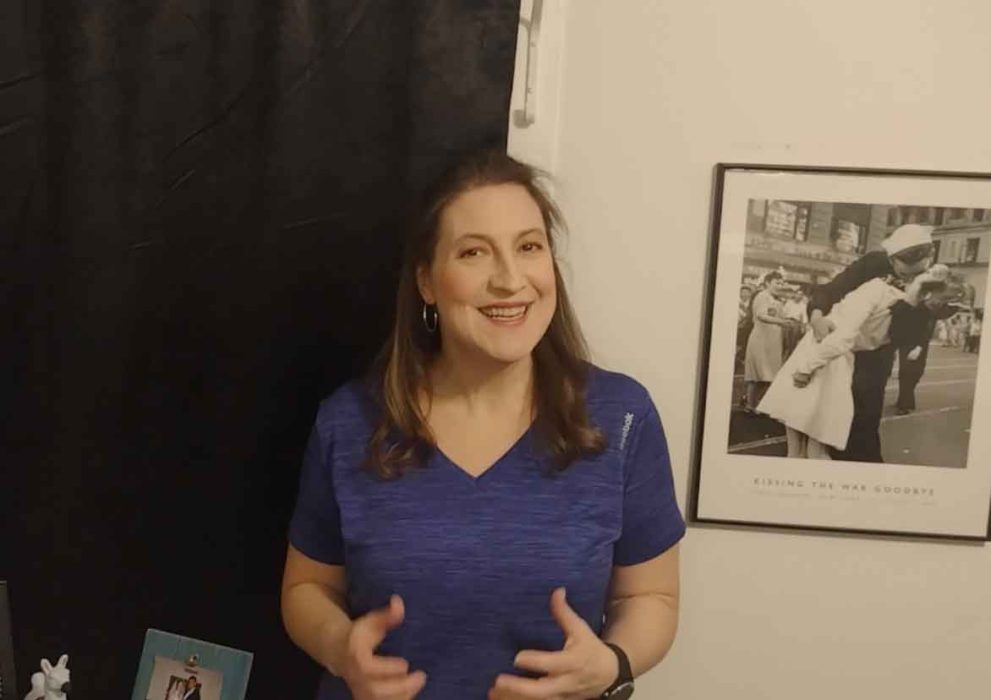
I’ve decided to start doing some video posts! Watch the video below or read the summary after the video for the basics.
An easy and creative way to let students showcase a large amount of knowledge on a subject is to have them create pamphlets. The most popular design for a pamphlet is the trifold layout.
A tri-fold pamphlet can be tricky for students to design, especially when creating it digitally. It’s hard to visualize which part will be the front. So, I created this free digital template to help your students create a trifold pamphlet! It works as a PowerPoint file, or you can upload it to Google slides and share it with your students. If your students create a hard copy at their desks, display the PowerPoint on your board to help them get started.
To give you an idea of what this might look like, I’ve included two sample assignments to use with the template. One covers the Continental Army, and the other covers Jamestown.
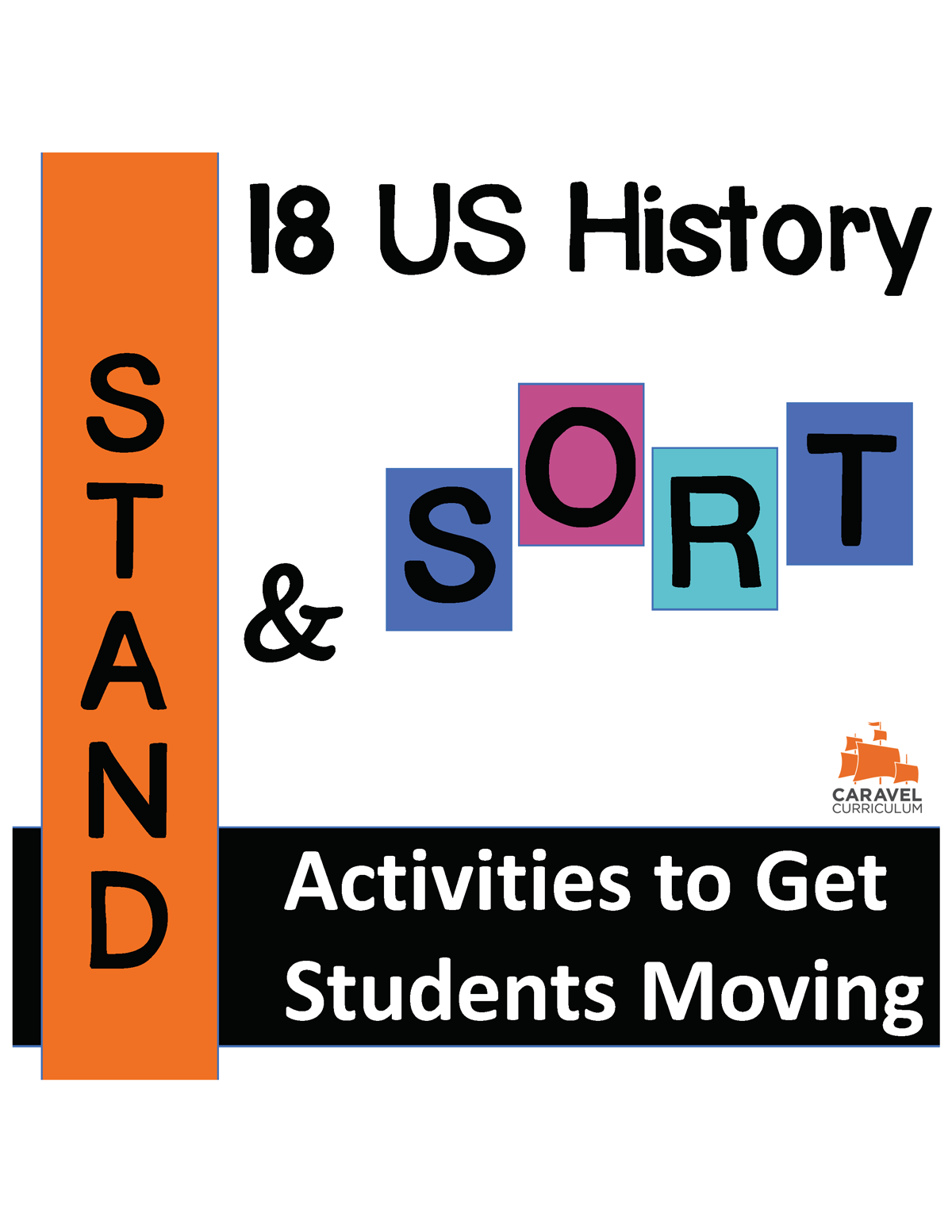
I’ve finally released my Stand and Sorts for US History! What is a stand and sort? It’s a way to get your students out of their seats while reviewing content. Category signs are taped on the walls in various locations in the classroom. Students (or groups of students) are given characteristic/example cards. Students use their knowledge of the content to determine (based on their card) what category sign they must stand under. The cards can be reshuffled and the activity can be repeated. A stand and sort can also be completed individually (at the students’ desks) or as a group. You can also make it a group competition stand and sort, where each group races to get their example cards posted around the classroom before the other groups do so. My students LOVED the group competition. Years ago I created Stand and Sorts for Economics and people really enjoyed them. I’ve always wanted to make some stand and sorts for US History and was finally able to get them finished! You can buy them on TPT here.
Use these stand and sorts to:
Each stand and sort is listed below.
In honor of election day, I thought I’d share this. It’s the 1965 Alabama Literacy Test that was given to prevent African-Americans from voting. You better know your Constitution if you are going to pass this test! Give it to your students and see how they do! Ask them if they think the average citizen today would be able to pass this test. Aren’t you grateful you don’t have to pass this in order to vote? If you don’t have time to cover it in class, print it out and have students come by and do it after school for extra credit.
I’m thinking about creating some free resources that teachers can use while most students are at home during the school shutdowns because of the coronavirus. I thought about creating instructional videos or at-home activities. What do you need? What types of activities, videos, etc. would help right now? What types of assignments are you giving your students? What subjects do you need materials for? What are you covering now? Let me know how I can help you during this time! Use the contact form below to tell me!
[formidable id=”3″]
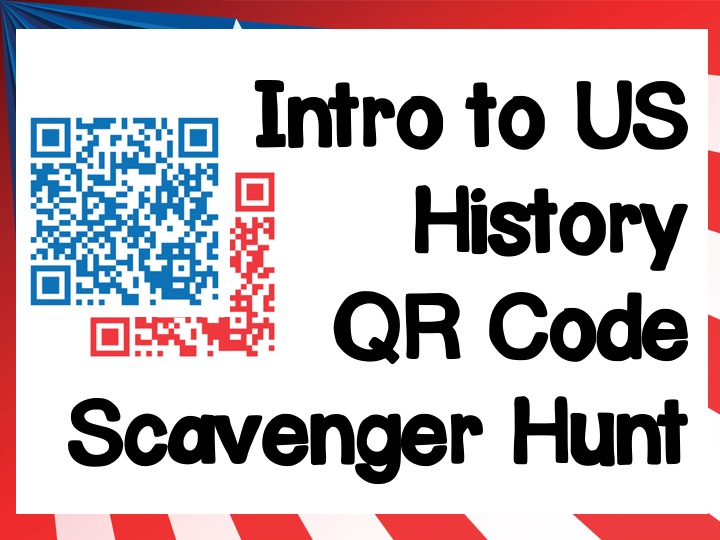
I’ve been wanting to create this for a while. My Intro to Economics QR Code Scavenger Hunt is a hit. I really wanted to make a QR code activity for the first day of US History but haven’t taken the time to do so. I finally sat down and banged it out this summer. I’ve been doing QR code activities with the students at the co-op where I teach and they LOVE them. In case you don’t know, a QR code is a code that can be scanned using a smartphone or tablet. During one of my QR code activities, students walk around the room searching for hidden QR codes. Once they find a QR code, they scan it with their smartphones or tablets. A QR app on the device (download this ahead of time…most are free) scans the code to reveal a question that the students must answer. Unlike most QR codes you see on various products, my QR codes come up as plain text rather than something that must be accessed via an internet connection. So, you don’t need Internet access to complete this activity. It can be done individually, in pairs, or in groups. These types of activities are great because they get students out of their seats and moving. Check it out at my TPT store. I’m hoping to create more QR code activities that review or present US History content this year on TPT!

You know it’s coming. That dreaded “week before Christmas break.” It’s a time when it’s every teacher for himself, and most educators believe that just for a few days, entire schools should be crop-dusted with ADHD meds.
What do you do? Half of your class has checked-out mentally and the other half have checked-out physically. If you are on a block schedule, then odds are that you have a few days sandwiched between end-of-course tests and Christmas break. If you only have a day or two, by all means, give your kids a break and watch a movie. You all deserve it. But don’t check out and just show something with zero educational value like Elf. Make sure it is a movie with historical content, and write a few class discussion questions on the board while you’re at it.
Sidenote: I recently was somewhat horrified to hear that some teachers the local area had students watch movies for the last TWO WEEKS of the semester because testing was over. I know that it’s hard to keep kids focused after testing, but if you automatically show movies to kill time you are telling your students several things:
Movies in the classroom are ok as an occasional reward (be careful with this one) or to reinforce content, but they should NEVER take the place of instruction just because you don’t feel like teaching. Rant over.
What if your administrators won’t allow movies or you have more than just a day or two to kill? What then? Well, the thing to keep in mind is that you want assignments that meet the following criteria:
So just what can you do when things are crazy? Here are my assignment ideas to help get you through the pre-Christmas craziness. (Keep in mind that these can be used at the end of the year in May/June as well.)
The common thing about all of these activities is that they can be adapted to almost any subject, they allow kids to get creative, and they require very little planning on your part!
Good luck! You’re almost there!

If a book was written about your life what would it look like? What picture would be on the cover? What tag line would be used? What would the summary on the back say?

While prepping for my American Inventors class (I’m teaching one for my local homeschool co-op), I decided that I wanted to spice up my syllabus. I stumbled across this simple but neat looking visual syllabus. It’s only $1.75 on TPT. I’ve never used one before, but I decided to try it. It was very easy to edit, and it looked pretty cool afterwards. I did make a few changes and tweaks to fit my needs. It’s much more visually appealing than a regular old syllabus. I will say, however, that while you can give the basics on this syllabus, you STILL need to make sure you give out a copy of your procedures (which definitely won’t fit on this).
You could also use this syllabus for notes. Change out some of the clip art and you can add note content instead of syllabus content. It wouldn’t need to be anything fancy, but sometimes delivering content in a different manner helps break the monotony. You could use it to create a broad overview of a war. Have the dates in one box, the good and bad guys in another, important battles in another, and important people in another. Oooooh, even better, give the blank template to your students and (as a review) have THEM create a “cheat-sheet” about the war! That would be a great way to review the basics about a war or other large topic.
 Here’s my syllabus that I created for my class. I blacked out some top secret stuff that I didn’t think you needed to know…stuff I could let you read, but then I’d have to kill you! This syllabus is doesn’t include all of the stuff that I would put in if I were teaching a large class full of 30 students, but it still has the basics. Oh, and by the way, I wasn’t paid or anything like that to write about that syllabus product. I just like sharing neat and useful things I find!

In this episode, I’ll show you a way to quickly plan out your entire US History course. I’ll also discuss a few ways to get caught up if you are behind, and you’ll learn why it’s not the end of the world if you don’t cover all of the content in the book.
Podcast: Play in new window | Download | Embed
Subscribe: RSS
Random Acts of Kindness: True Stories of America’s Civil War – Book on Amazon

In this episode, I discuss the importance of documenting student behavior and give you an easy way to do so. Stay tuned for interesting facts at the end!
Podcast: Play in new window | Download | Embed
Subscribe: RSS
Student Behavior Record with Checkboxes