New Blog with More Social Studies Resources

I love finding new US History resources, but for years I have wanted a place to catalog and post all of the resources I find for my other classes such as Geography, World History, and Economics. 

I’ve kicked around the idea of having two blogs for a while, and I finally decided to go for it. There’s still a lot in the works, but I have started posting resources, and I’m so excited that I can post so many things for so many different areas!

And so, I give you my new blog, The Social Studies Life. For now, I will be updating both blogs and will still continue to post US History resources on this blog unless I feel like I can’t keep up with both. But if you need resources for other social studies classes, be sure to check out my new brainchild! I’ve got a lot of video resources on there now, but I’m hoping to add more free printables as time goes on. I’ve also got some Economics resources that I used to sell but am going to release as freebies!

Also, don’t forget that I love hearing about free resources that I can share with others, so feel free to use the Contact form on either website to let me know of any awesome new resources you come across.

Two Exciting New Products! Lots of US History Help!

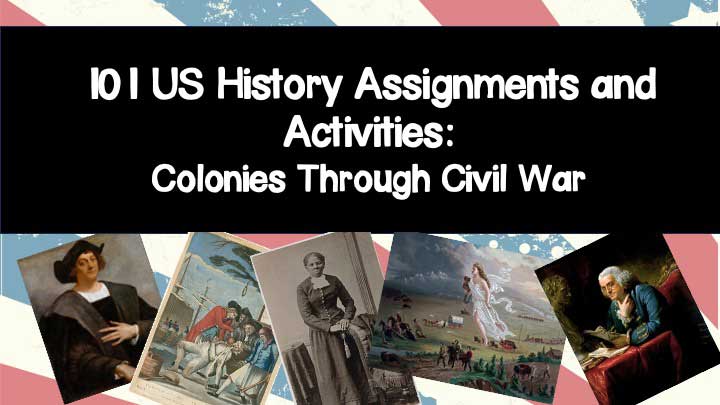
I’ve been slaving away behind the scenes to finish something I’ve been working on for a while! The first is a massive list of US History Assignments. I ended up with over 211 assignments and 15 printable templates! I’m breaking them up into 2 separate products based on time period. The first is 101 Assignments for Colonies to Civil War. I’m still putting the finishing touches on the second part, 110 Assignments for Reconstruction to 9/11. I hope to have that one available within the month!

I also have a set of 180 discussion starters and bell ringers I’ve been working on. You can find that here which also includes a link to a free sample download.

Use the code BLOG20 to get 20% off of your purchase!


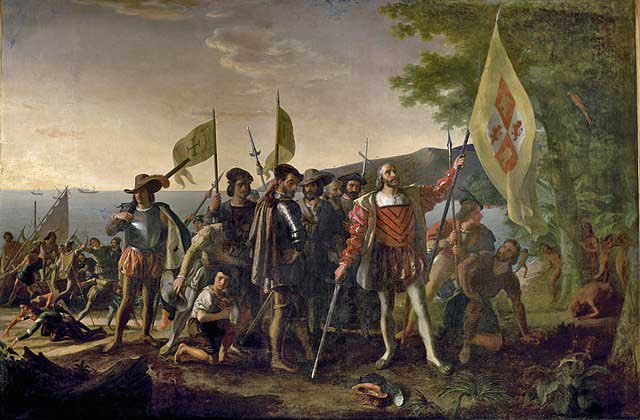
Christopher Columbus Quiz to Use in Classroom

This is a very interesting and pretty thorough quiz about Christopher Columbus. You can use it at the beginning of class to measure your students’ knowledge or as a way to spark interest in the topic. You can also use it as a filler at the end of class or at the start of the next class. I would project this on the board and go through it as a class. Give students time to guess the answer to each question and then submit the answer and discuss if necessary.

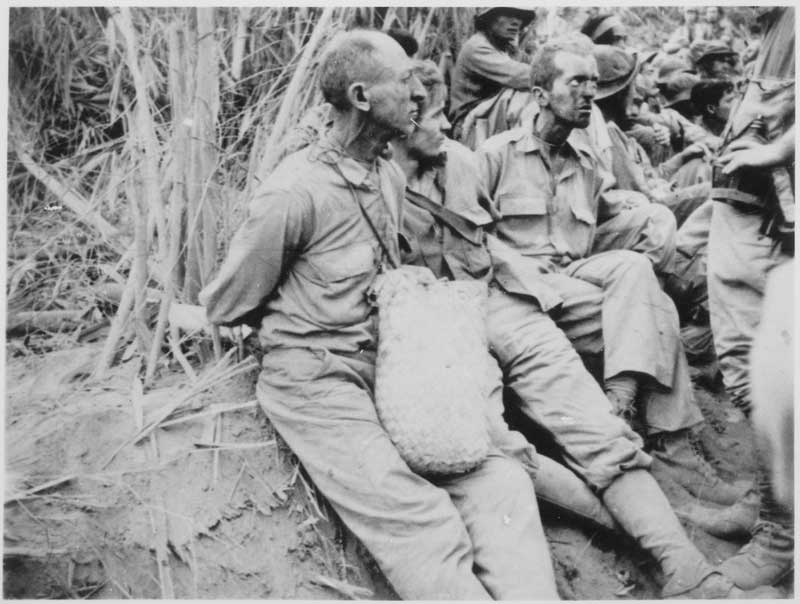
The Best Video I’ve Seen About the Bataan Death March

To hear the experiences of those who lived through insane things; that is what history is all about. This video is not a straight informational video…it is a biographical one. A survivor of the Bataan Death March describes his experience, and it is sure to get your students’ attention. That being said, because it is not informational from start to finish, preface it with the basic details of what the march was.

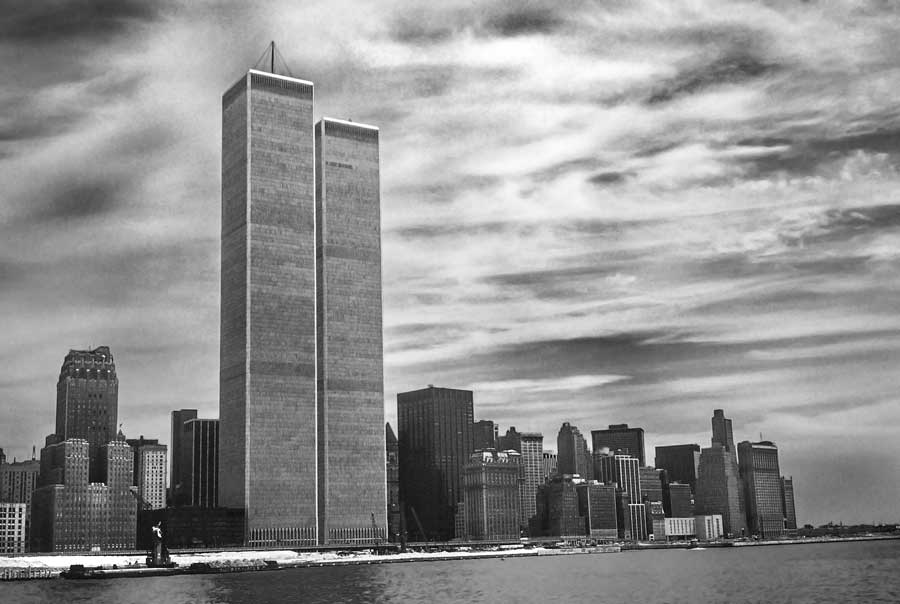
9/11 from the President’s Point of View

This is a really interesting video that explains what President Bush and his staff were thinking when they found out the World Trade Center towers were attacked. It includes clips of that famous shot when someone leans down and whispers into Bush’s ear, and you can see him trying to process it and at the same time remain calm in front of others. These kinds of first-hand accounts make things so much more real to students!

Vietnam War Videos to Show in Your Classroom

There are a myriad of videos out there about the Vietnam War. Many are great, but they are SO long. Most students do well with a video under five minutes. Here’s a roundup of some helpful videos I use to teach the Vietnam War.

Gulf of Tonkin Resolution (3:41)

Vietcong Guerilla (3:08)

The Most Dangerous Job in the Vietnam War (1:00)

Why New Soldiers Didn’t Survive Vietnam (0:51)

Tet Offensive (3:47 – This video is part of a History Channel page on the Vietnam War. You may need to scroll down to find the video. It’s worth the scroll!)

What was Significant About the 1968 Tet Offensive? (3:43)


Don’t forget these 3 videos in my other post which are essential to understanding Vietnam veterans!!

Three Videos to Help Your Students Understand Vietnam Veterans

Everyone knows that Vietnam veterans had a much different experience coming home than World War II veterans. To be honest, our country let the Vietnam vets down. Still, it’s hard to explain to students why Vietnam veterans had such a hard time coming home. These three Youtube videos, in my mind, give the most simple and understandable explanation as to why the Vietnam veterans seemed to have a harder time getting over the trauma of war than others.

How WWII and Vietnam Veterans Were Treated Differently

The Difference Between a World War II Vet and a Vietnam Vet


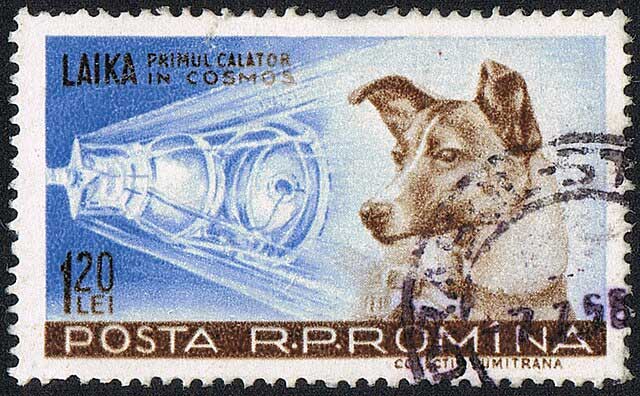
Laika, A Tragic Casualty of the Space Race

You’ve probably heard of Laika, the Soviet dog that was sent into space aboard Sputnik 2. Have you ever thought about what happened to her? Most of us just mention these things in passing as we cover the Space Race. But animals in space? Don’t pass up this chance to use it to engage your students. Laika’s story is sure to pique the interest of almost anyone.

A dog in space? It sounds kind of comical, right? But the reality of the situation was far from comical. Laika’s flight into space ended up being very stressful on her as evidenced by the fact that her heart rate was triple the normal rate! Soviet scientists knew that she would die; they just didn’t expect her to die the way she did. Reports were circulated that Laika would die a quick and painless death by asphyxiation when the oxygen ran out. However, the Soviets didn’t expect the temperature control system to malfunction. The cabin overheated and Laika died from the heat. The Soviets released false reports that Laika lived several days in space, and the truth about the flight was not revealed until many decades later. Even now, Laika’s story stirs up controversy about the use of animals in research.  You can read more about Laika and her training in this fascinating article.

Interesting Hitler Videos

I came across these two videos this week while prepping for a lesson on World War II. I had never seen some of this footage before.

The first video is about Hitler’s battle with Parkinson’s disease. What I love about this video is that it is the first video footage I have ever seen that actually shows him shaking (and trying to hide it, of course). To keep your students involved in the video, ask them to see if they can spot the shaking. (See the video below.)

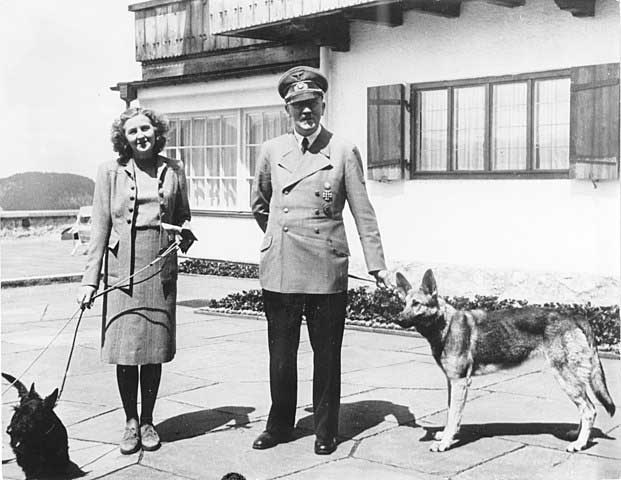
The second video discusses Hitler’s relationship with his girlfriend/eventual wife Eva Braun. Students are always very interested in learning what kind of woman would date Hitler. I knew a lot about Braun and Hitler already, but this video includes colorized footage of them which makes things seem so much more realistic. Also, this video does a great job of explaining what happened in the final hours of Hitler’s life when he was hiding in his bunker.

I have a bunch more videos that I use/show during World War II. I hope to post a big list of those soon. I’ve just got to add a few more!

Solar Eclipse Resources for Your History Classroom

In case you’ve been living under a rock, you know that there is a solar eclipse on Monday, April 8th! We were in the path of totality in 2017. It was amazing! Here I am looking like a big goober with my glasses and a thumbs up.

How does this apply to your classroom? You know your students will probably be discussing it. Why not take a break for a few minutes from your regular content and really enjoy this marvel of nature that only comes around every once in a while? This article has some really cool pictures of people throughout history viewing solar eclipses.

Did you know that Christopher Columbus used an eclipse to trick Jamaican natives into giving him food?! Watch the video below to learn more!

Lewis and Clark witnessed both a lunar eclipse and a partial solar eclipse when they were exploring the Louisiana Purchase.

Probably the most well-known event in US history that was connected to a solar eclipse was Nat Turner’s slave rebellion. Turner took a solar eclipse as a sign that he should lead a slave uprising. His uprising took place months later and led to the murder of about 60 people, which struck fear into the hearts of slaveowners.

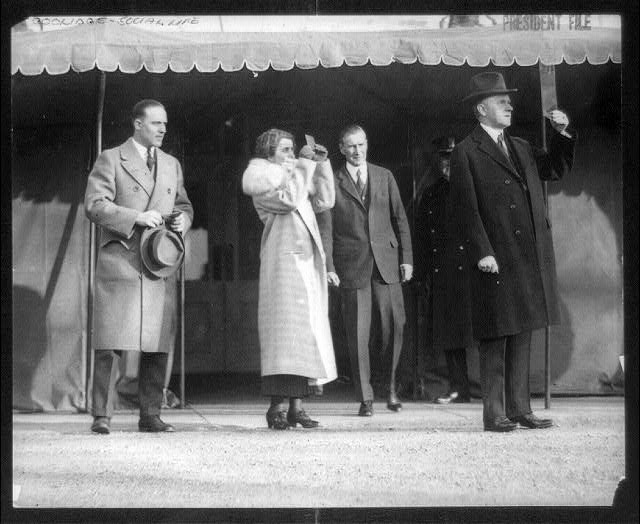
The picture at the top is one of President Coolidge and his wife viewing an eclipse in 1925. I hope you get to step outside of your classroom and catch a glimpse of such an awe-inspiring event!


Fun Friday Fact: Teddy Roosevelt’s Famous Sidearm

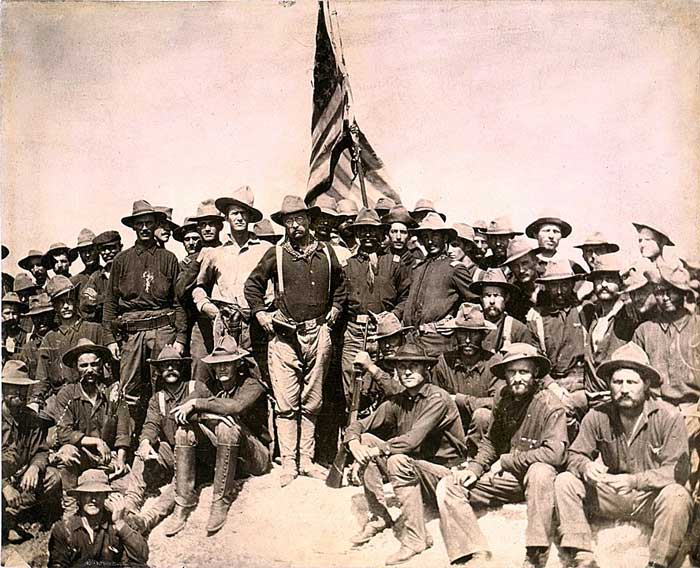
Here’s a fun fact that I didn’t find out until a few weeks ago. Did you know that when fighting in the Spanish American War, Teddy Roosevelt used a revolver that had been salvaged from the USS Maine? How cool! He used it when he charged San Juan Hill and was wearing it when the famous picture of he and his rough riders was taken.

How in the world did Roosevelt get it? The revolver was recovered by divers searching the Maine’s captain’s quarters for keys to the ship’s magazine bunkers. Eventually it was gifted to Roosevelt by his brother-in-law. Side note: The revolver was also stolen at one point! It was stolen from a locked display case in a museum and was missing for 16 years.

Great Depression Song to Use in Class

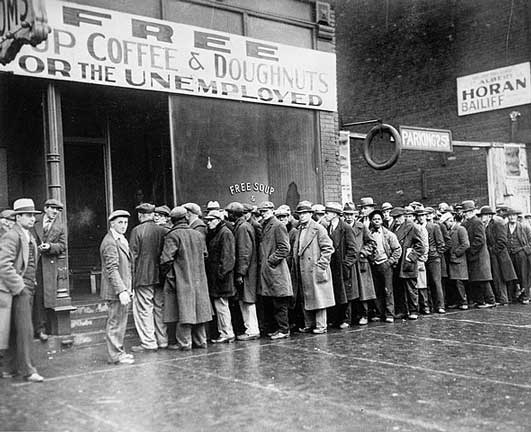
One of the most popular songs of the Great Depression was “Brother, Can You Spare a Dime.” In it the writers express the fear, anger, and despair that many Americans were feeling during this time. This song is definitely, well, depressing. It’s a great classroom aid though! Use it to set the mood for your students.

Give your students a copy of the lyrics and play the song. Ask them to answer the following questions:

  • What is the mood of this song?
  • What historical references to events before or during the Great Depression do you see in the song?
  • What kind of feelings does this evoke in you?
  • Why do you think this song was so popular during the Great Depression?

You can also use “Song of the South” by Alabama to talk about the Great Depression. It’s a little more upbeat and some of your students may recognize it. Print out the lyrics and have your students highlight all of the references to the Great Depression.

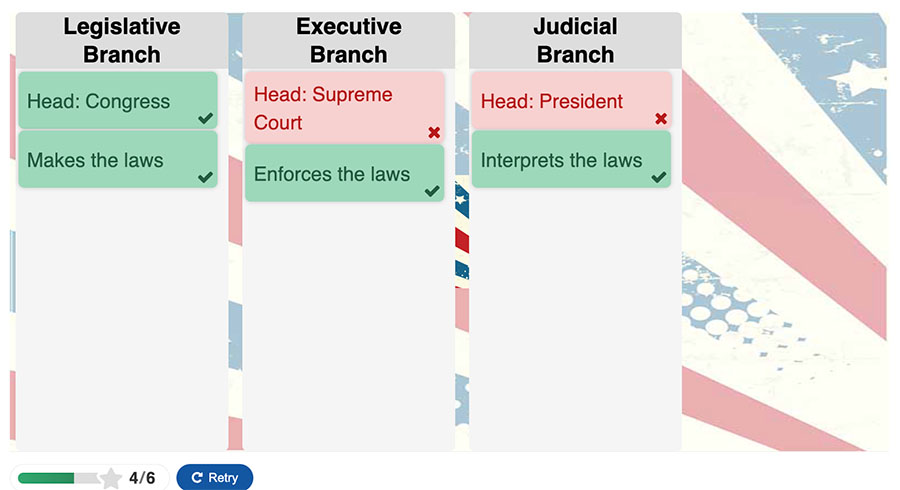
Branches of Government & Checks and Balances Drag and Drop Activities

I’ve been trying out some new software to add interactive student activities to the website. Try the two drag and drop activities that I added below! One is the basics of the 3 branches of government and the other is a review of the basic checks and balances of each branch.

How You Can Use This In the Classroom
  • Use it during a unit on the Constitution as a review at the end of class. (Students can do it individually on their devices or you can project it and complete it as a class. See the QR code at the bottom. Students can scan it with their devices!)
  • Use it at the beginning of class the day after you have taught the information as a review.
  • Assign it as an exercise for students who finish their work early.
  • Use it at the end of the semester to review for an end of course test.


Have your students scan this QR code to quickly access these activities! (You can also access them under the “For Students” page.

Do you want to see more drag and drop review activities? Use my contact form to let me know!

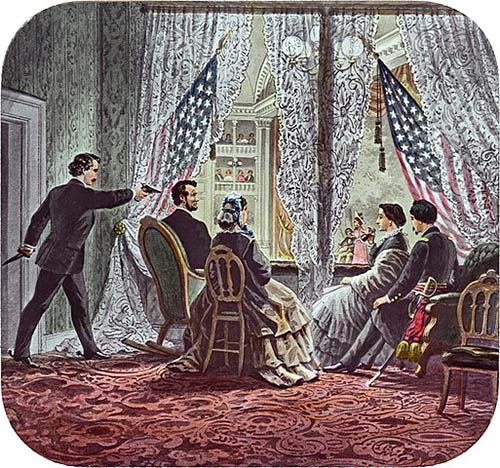
Virtual Tour of Ford’s Theatre, Assignment, and Video About Lincoln’s Assassination

Check out this virtual tour of Ford’s Theatre! Use the white arrows to move around the theatre and click/drag your mouse on the screen to turn around. The first part shows the main theater view from the stage, but if you scroll down the page, you will see other parts of the theater. Show your students exactly where Abraham Lincoln was assassinated! What better way to teach about what happened when Lincoln was assassinated than to take them inside the presidential box where it happened. See the stage on which John Wilkes Booth jumped when he yelled “Sic semper tyrranis!” Students can really visualize the events of that night using this tour.

How to Use This in Your Classroom
  • Note: This may not take an entire class period, especially if you are on block schedule or have high level students.
  • I suggest telling your students what happened the night of the assassination (take notes if necessary, etc.). Then, pull up the tour and show them around the theatre, explaining what happened where (or ask them to tell you what happened where).
  • Tell your students that the poem “O Captain, My Captain” was written about the death of Lincoln. Optional assignment: Break students into pairs and give them a copy of the poem worksheet. Have them answer the questions. This should not take more than about 5 minutes. This may be a little challenging for lower level students, but it’s a good cross-curricular tie in with literature and a great way to practice critical thinking and analysis. (Fun fact for poetry lovers: Lincoln’s favorite poem was Mortality by William Knox. There’s a video about it here.)
  • Go over the poem and/or worksheet.
  • Give them this assignment to work on: Write 10 tweets that might have been posted about Lincoln’s assassination. (More instructions are given on my download.) Students can post tweets by certain famous figures or random people, but the tweets must demonstrate facts and emotions associated with Lincoln’s assassination.
  • You can also show this video if you have time:

One final note: Have you ever seen The Conspirator? It’s a great movie about Mary Surratt, the only female charged in Lincoln’s assassination. It’s too long to show it in class, but it’s a really interesting movie that scratches that history itch!