Death on the Battlefield: Two Great Civil War Video Clips
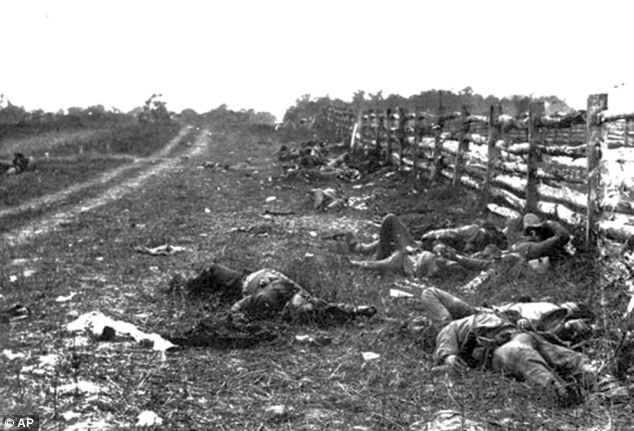
After recording my recent podcast about the Civil War activity that showed students Civil War casualty rates, I came across two great videos that you can use to go along with that activity.

#1 – This is actually a preview of the series Death and the Civil War.  It is a little over two minutes long, but it definitely pulls at your emotions!

#2 – This is from the Civil War Trust and it is called Battlefield Death In4.  This four-minute video gives an excellent summary of the logistical problems that the massive deaths in the Civil War caused.  They mention things that most students wouldn’t think of, like pigs digging up and eating corpses buried in shallow graves.  Plus, you can download this video so that you can access it quickly and/or have it in case your internet won’t work!  (This website covers various topics in four minutes.  After doing some digging, I found over 40 videos!!  What a great resource!)


LTH 008 – Fun Civil War Activity

In this episode, I’ll discuss a fun, quick activity to help your students understand casualty rates of the Civil War.

Show Notes and Resources:

Will You Survive – Numbers

Will You Survive Powerpoint

Civil War Medical Info and Worksheet

Source:  Civil War By the Numbers

Source:  Civil War Casualties


Intro music clip of “I Dunno” by Grapes CC BY-ND 3.0
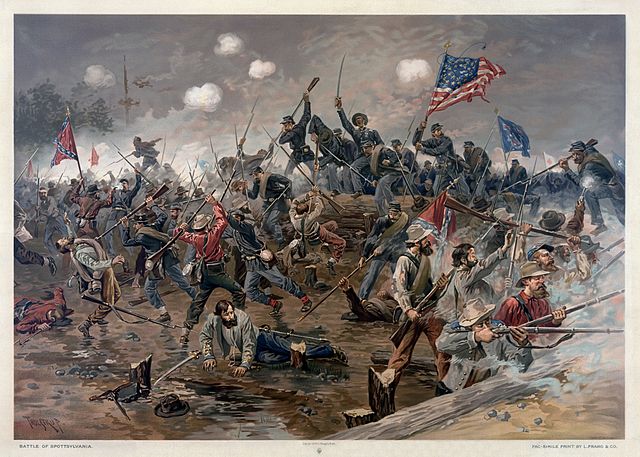
Photo:  A painting of Lee’s Army of Northern Virginia fighting the U.S. Army at Spotsylvania in 1864.  Library of Congress, Public Domain.

LTH – 007 Using a Prop Box

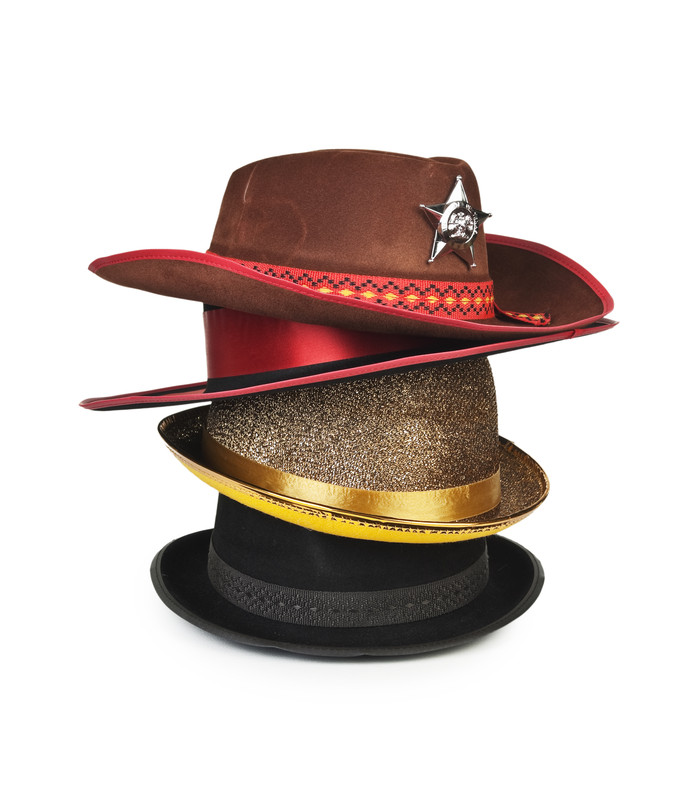
In this episode, we’ll look at how to use a box full of fun props in your classroom.  I’ll also tell you which props are helpful to have and where to get props for little or no money.

Show Notes and Resources:

Prop Box Basics


Intro music clip of “I Dunno” by Grapes CC BY-ND 3.0

Using Excerpts from The Jungle to Teach About Muckraking and the Progressive Era

I will never forget reading an excerpt from Upton Sinclair’s The Jungle.  I was so grossed out that I did a full-body shiver.  YUCK!  And then I thought…what a great way to get students’ attention!  The gross-out factor is always an easy way to hook your students, and there are a few times in a US History course when the opportunity arises to use such a ploy.  If you are covering muckrakers and the Progressive Era, excerpts from The Jungle are a must.  I poured over pages of the book and compiled my favorite passages here.

So how can you use these passages?  I used them with window notes.  (If you are not familiar with window notes, you can watch a short prezi on them here, but I think you will understand the basics just by looking at my PowerPoint slides.).  Essentially, you are allowing students to take notes in such a way that it appeals to different types of thinkers and multiple intelligences.  First, display this PowerPoint on the board for the students to copy.  Then, you have two options:

1- Read some of the passages aloud.  If you do this, I suggest that you read them twice.  The first time through, have all students put their pencils down and just listen and focus on what they are hearing.  Then, during the second reading, allow students to fill in the notes as you read.  (I loved hearing the students’ reactions as I read the gross parts out loud!)  If you read these, I suggest only choosing a couple of passages, as reading them all might stretch your students’ attention spans too much.  Plus, the point can be conveyed thoroughly with only one or two of these passages.

2- Have students read the passages silently and fill in the notes as they go.

The PowerPoint that I have created has two different options to give you an idea of what you can do.  You can be very general or very specific.

Other Options:

  • Use an excerpt as a bell ringer to introduce muckrakers or labor unions.
  • Read one aloud and have students write a short freewrite as an exit ticket.
  • Have students create a poster protesting the working conditions in the meat-packing factories.
  • Have students imagine that they are a worker in a meat-packing factory and have them create a journal entry about a day at work.

Also, for you economics teachers out there, you can use these to introduce the importance of government regulation and how it protects the public.  Even if you don’t use them, the excerpts are a great read…and they’ll definitely make you more appreciative of the FDA!


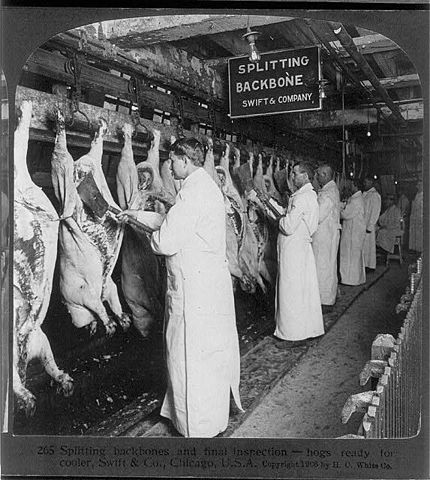
Photo Chicago Meat Inspectors in Early 1906, Library of Congress, public domain

LTH 006 – Mexican-American War

In this episode, we’ll look at activities and other resources to help you teach your students about the Mexican-American War.  Don’t forget to check the show notes below for free notes and assignments to use in your classroom.

Show Notes and Resources:

Bell-ringers, Exit Ticket, and Assignments

Guided Notes and Answer Key

Mexican-American War PowerPoint

Mexican-American War – PBS Video (2:29)

President Polk 60-Second President – Youtube Video (1:00)

Texas: Mexican-American War – Brittanica Kids Video (2:55)

“Did You Know” News Segment About Santa Anna’s Leg – Youtube Video (4:56)

Primary Source Worksheet – James K. Polk

Primary Source Worksheet – Joshua Giddings

Map of US in 1840

Map of US in 1850

Map of Texas Border Dispute


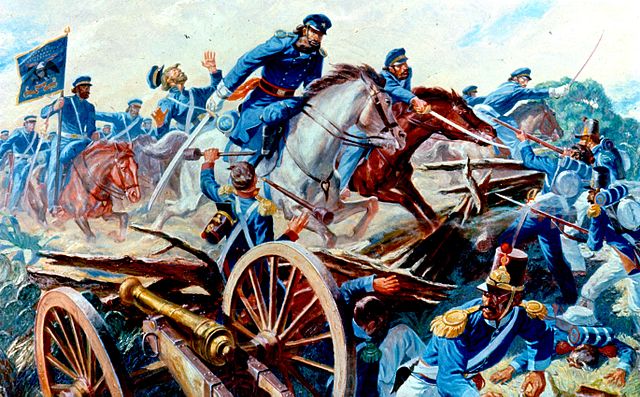
Photo Resaca de la Palma, Public Domain
Intro music clip of “I Dunno” by Grapes CC BY-ND 3.0

101 Quotes to Use in Your History Classroom

Well, I was planning on recording and posting my next podcast last night, but our refrigerator died.  So, we were in a mad dash to move food before it spoiled and now it seems we may be spending our free time in the next day or two trying to find a good deal on a new one.  I hope to have my next podcast up by this weekend.  I’ll be talking about the Mexican-American War!  Exciting!

In the meantime, here are 101 quotes that would be great to use in your classroom.  I used to put one on a PowerPoint slide and start every class with a quote.  I usually asked the students what they thought the quote meant.  After a brief discussion, we would talk about how they could apply the quote to their lives.  The quotes I used didn’t have to be history-related, but I did include many quotes by historical figures.  I used these quotes to help teach character education and self-examination to my students.  I think that, as teachers, we must speak to more than just our students’ knowledge, but to their moral compass and their character as well.   Click here to get my 101 quotes (this is now located at my new blog).

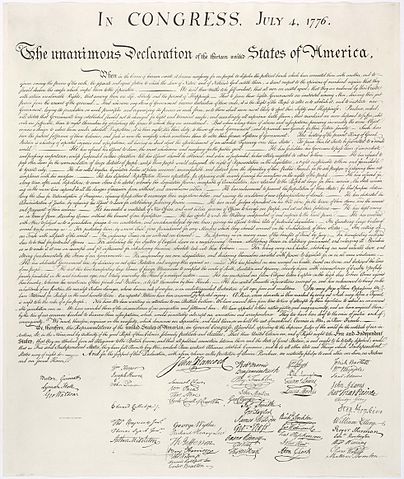
Declaration of Independence Memes

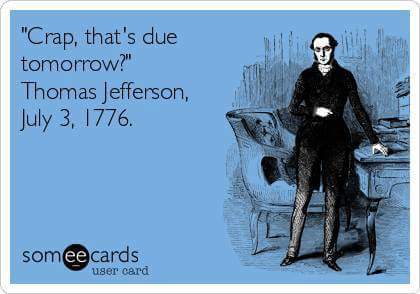
I know that I haven’t posted in a while. I took a little time off for vacation and then life got crazy. Anyway, I came across a few memes today on Facebook that would be GREAT to use in class when you are discussing the American Revolution.

The one at the top is funny and most teenagers (and people in general, I think) would relate to this. I know it’s not historically accurate…but it’s still funny.

FB_IMG_1467670652361

I LOVE this one also, because it shows history from a completely different perspective. It’s good to stretch students’ minds and demonstrate how different a historical event can seem depending on which side is telling the story. It would be a great discussion starter or a prompt for a freewrite on historical perspective.

Click here to see a previous post about some of my favorite history meme’s to use in class.

Also, don’t forget about my Declaration of Independence Fun Facts Quiz that addresses some myths surrounding the Declaration of Independence.

I’ve also got a podcast episode about teaching the causes of the American Revolution.

Happy Independence Day! In honor of today, I will leave you with one of my favorite quotes about independence:

“Posterity! You will never know how much it cost the present Generation to preserve your Freedom! I hope you will make good use of it.” – John Adams

God Bless America!!!

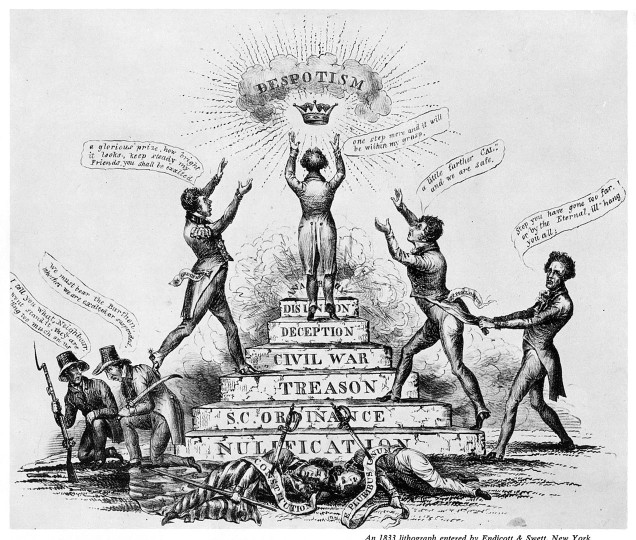
LTH 005 – Tariff of 1828 and the Nullification Crisis

In this episode, I’ll discuss free resources to help you teach the Tariff of 1828 and the Nullification Crisis.

Show Notes and Resources:

Discussion Starters

Guided Notes

Gilder Lehrman Powerpoint on the Nullification Crisis

Andrew Jackson 60 Second Presidents – PBS Video on Youtube (1 min.)

Jackson Nullification – History Channel Video on Youtube (1 min. 37 seconds)

Mr. O’s Andrew Jackson and the Nullification Crisis – Youtube Video (4 min. 33 seconds)

Writing Prompt & Propaganda Poster Assignment

Group Activity from Gilder Lehrman Institute of American History (Print out or download SC Exposition and Protest, Excerpt from Andrew Jackson’s Nullification Proclamation, Excerpt from Daniel Webster’s Reply to Hayne, and Nullification Readings Worksheet) — For some reason, when I tried to use a direct link to the lesson plan, a pop-up window came up and asked me to create an account, but when I went through Google it didn’t.  So, if you come across the pop-up, try Googling it to get access without encountering the pop-up.

Exit Ticket

Next Day Review

What is a Freewrite? Slide

Fort Hill Tour Information


Intro music clip of “I Dunno” by Grapes CC BY-ND 3.0


The Best Review Game Ever!

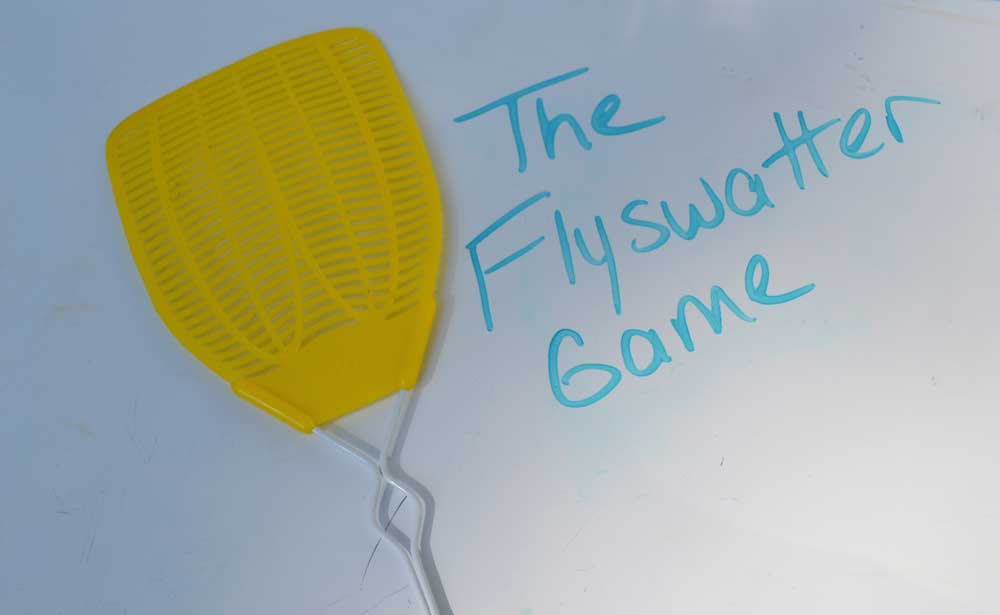
It’s the day before a test. There are 20 minutes of class left. Your students look up at you with pleading eyes that say, “Please don’t make us do another review worksheet!”  You pull out the flyswatters from your cabinet in the back of the room. All of the sudden, you hear several students say, “Yessssssss!”

I call it “The Flyswatter Game.”  It was, by far, the most popular in-class review method amongst my students.  Most of you have probably heard or seen this type of review before, but even if you have, take a look at how I implemented the game.  Adding some basic rules and strategies can mean the difference between classroom chaos and a fun, engaging review.

The basic premise of the game is that the teacher asks questions and the students try to be the first to slap the correct answer on the board.  Sounds simple, right?  Here’s what I found was the most effective way to play the game.

Flyswatter Game Procedures
  • Write the names of 20-30 review terms on your board.  The terms should not be written in rows or columns, but written randomly and tilted diagonally.
    • If you have many terms or phrases, you may want to do something to make each phrase stand out visually.  This will help students read the terms and phrases more quickly during the game.  I used different colored markers to draw a circle around each worSlide1d.  See my example.
    • Write enough terms on the board so that each student has a least one chance to participate in a round.
  • Divide the class into 2 teams and have them move to different sides of the classroom.
  • Explain the rules.  (See below)
  • Ask for one volunteer from each team to start the game.
    • I have found that most students are enthusiastic about playing and students love to go up against their friends.  I let students choose their match-ups, with the understanding that a student cannot go twice unless all students have already had a turn.
    • It is understood that all students must participate or lose points on their participation grade for that day.  This is typically not a problem, as students tend to cheer on their teammates.
  • Ask a question whose answer is a term or phrase written on the board.
  • The first student to slap the correct answer with his/her flyswatter wins a point for his/her team.
  • When students are finished with their round, they must pass the flyswatter on to someone in their team that hasn’t gone.
  • Play continues this way for as long as necessary.  I typically did enough rounds so that each student got at least two chances to play.
  • The winning team receives candy or bonus points on a quiz or test.
Rules
  • Students must face away from the board and cannot turn around until I finish reading/saying the question.
  • Students get one slap at a time. If the student slaps the wrong answer, he must wait until the opponent slaps a term before he can slap again. If the opponent is right, the round ends.  If the opponent is also wrong, then either can slap again, until someone is wrong.  (The key here is to penalize a student for slapping a wrong answer. When I first started playing this game, students would get it wrong and just keep randomly slapping terms to try to guess the right answer before the opponent could hit anything.)  Continue the round until one of the students slaps the correct answer. If it is obvious after several slaps that neither student knows the answer and it is slowing down the momentum of the game, just have the class yell out the correct answer after so many chances.
  • Any student who uses physical force to block an opponent loses the round.
  • Any student who hits his opponent with the fly swatter automatically loses the round. (This rule and the previous one are particularly necessary when dealing with high school boys.)
  • Students who inappropriately criticize other students in the class lose a point for their team.  (This prevents a lot of those outbursts of, “Gosh, you’re so stupid!  I can’t believe you didn’t know that!”)
  • Students who try to give clues to their teammates and/or cheat will cause their team to lose the round.
Other Tips
  • I typically didn’t have questions written down.  I just looked at the terms on the board and made up a question on the spot.
    • If you do this, be aware that some evil-genius students eventually try to watch your eyes and see where on the board you are looking in order to figure out where to slap.  To avoid giving away the answer, simply look at various parts of the board each time and don’t look at the answer word right before you say the question.
  • Some terms can be the source of multiple questions, which can enable you to do more rounds in a game, even though your list of terms may be limited.  For example, the term “John Adams” may be on the board.  Throughout the game, you can ask several different questions for which he is the answer.
  • Students tend to get close to the board, thinking this will help them slap the answer first, but it actually limits their field of vision.  Encourage students to take a few steps back from the board so that they can see all of the terms at once.
  • Use two different colors of fly swatters so that it will be easier to see who slaps first.
  • Students who are often hesitant or don’t know much material typically tend to go towards the end of each cycle.  If necessary, modify the questions to meet the needs of the students in that round (ask easier questions for students who need them).
  • Be aware of student height and arm length when you pick a term. If you have a short student going up against a tall student, pick a term that they can both reach easily.
  • If, for some reason, you miss a slap, students will often be able to tell you who slapped first.  If the class cannot come to a consensus as to who slapped first, redo the round with the same two students, but ask a different question.
  • The first time you play this, it may take a lot of work trying to enforce the rules.  However, once the rules are established and students become used to abiding by them, subsequent games become much easier to manage.

Have fun!  Yes, it will get a little loud.  You may hear students yelling, “Oh!  Oh!  I know this!”  Or, “Ahhh, it’s right there!”  It is so fun and satisfying to see students who can hardly stay in their seats because they are so excited that they know the answer but can’t give it away!  Do you have any other tips or strategies for playing the Flyswatter Game?  Leave them in the comments below.

Click here to download a PDF with the game instructions, rules, and tips.

LTH 004 – John Adams and His Presidency

In this episode, I’ll discuss how to teach about John Adams and the important events of his presidency.  You’ll get resources to help you cover the XYZ Affair, the Quasi-War with France, and the Alien and Sedition Acts.  Be sure and check out the show notes for all of the resources I mention!

Show Notes and Resources:

Bell Ringer, Attention-Getter, Exit Tickets, and Assignments

Important Terms/Concepts to Cover

Outline Summary of John Adams Life and Presidency

John Adams Powerpoint

Political Career of John Adams – History Channel Video (scroll down – second video on the page, 5 min.)

John Adams 60 Second Presidents – PBS Video on Youtube (1 min.)

Biography of Abigail Adams – Biography.com Video (3 min.)

Worksheets:  Looking at XYZ Affair and Alien and Sedition Acts from Both Sides (scroll down to page 8)

Worksheet:  Graphic Review of XYZ Affair and Alien and Sedition Acts (use as review the next day)

XYZ Affair Parody Song/Video to Wham’s Careless Whisper


Photo Official Presidential Portrait of John Adams, Public Domain
Intro music clip of “I Dunno” by Grapes CC BY-ND 3.0

Great History Memes

I came across this meme last night and thought it would be a great thing to use at some point when you are studying the American Revolution.  Students need to know that, yes, they will hear about this stuff again…even if it is the form of an Internet meme.  This person used their historical knowledge to come up with an awesome comeback that, I’m sure, gave countless other people a good chuckle.

tea tumbler

Classroom Uses:

  • Put it on the board at the beginning of class to grab students’ attention (the day after you study the Boston Tea Party)
  • Add it to a test as a bonus question and have students explain the meaning for extra credit
  • Use it to remind students that historical references pop up in the most unlikely places
  • Challenge students to come up with their own history meme

Here are some of my other favorites that I came across after the above meme inspired me to do a search.

thomasjefffranz

homingpiggenerallee

LTH 003 – Causes of the American Revolution

In this episode, I discuss over 20 resources that will help you teach about the causes of the American Revolution!

Show Notes and Resources:

Bell Ringer, Brainstorm, and Exit Ticket

Important Terms to Cover

Guided Notes and Answer Key

American Revolution PowerPoint

Colonists Protest British Taxes – History Channel Video (4 min.)

Sons of Liberty – History Channel Video (2 min.)

Sons of Liberty and Boston Tea Party – History Channel Video 9 (2 min.)

US History Released End of Course Test 

US History Released End of Course Test Answer Key (scroll to page 5)

Propaganda Poster Assignment

Examples of Propaganda Posters

Stamp Act Blog Post Assignment

Stamp Act Activity – How to Source and Contextualize a Historical Document

Create a Front Page of Boston Newspaper Assignment (scroll to last page)

Road to Revolution Bingo Review Game

American Revolution Jeopardy Game (for end of unit review)

Causes of the American Revolution Parody of Kesha’s Die Young

Huntington Trouble in Boston Lesson Plan (reader’s theater, analyze political cartoon, poems, etc.)

American Revolution Review ActivBoard Flipchart

Immediate Causes of American Revolution Test (use as quiz or review)


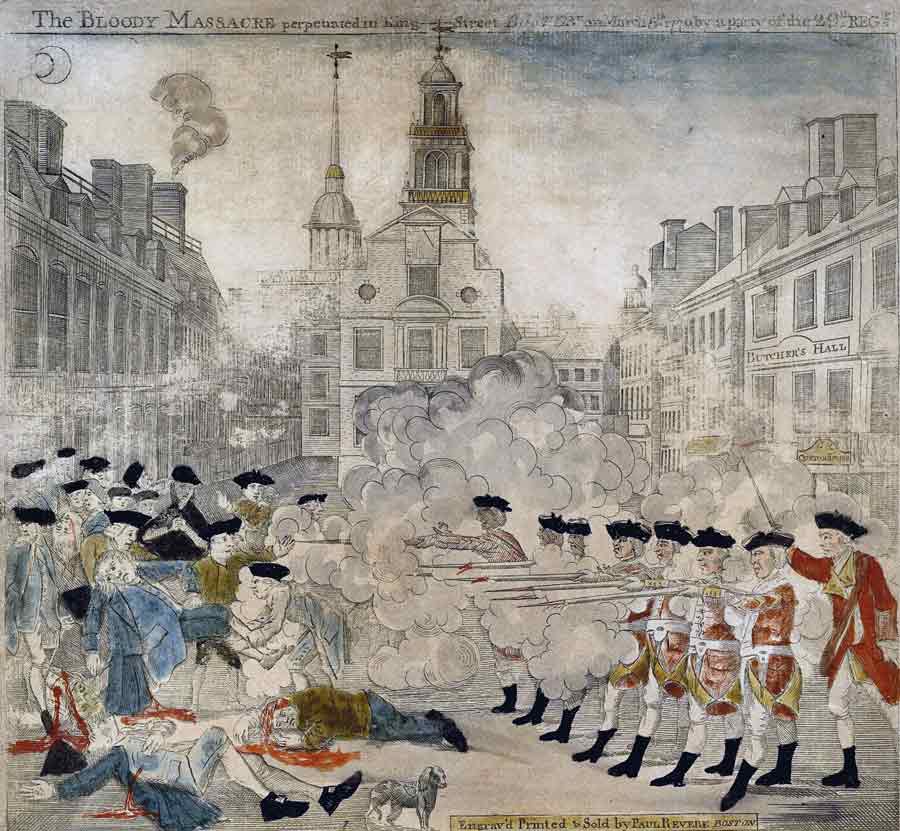
Photo The Bloody Massacre, Public Domain
Intro music clip of “I Dunno” by Grapes CC BY-ND 3.0

Interesting Person: Sybil Ludington – The “Female Paul Revere”

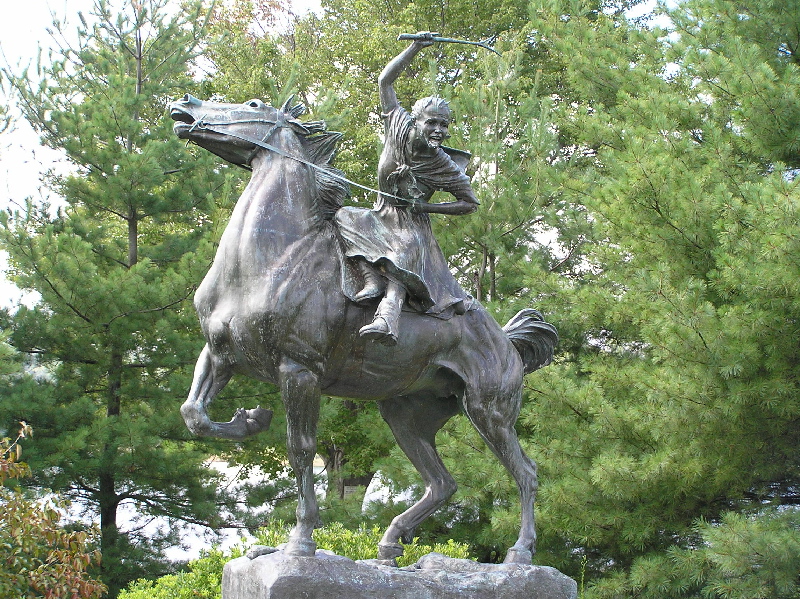
In between publishing podcasts, I thought that I would post some cool articles or information from time to time that might help spice up your classroom.  I came across this article today about Sybil Ludington, a sixteen-year-old girl who many describe as the “female Paul Revere.”  It’s such an interesting story!

Classroom Uses:

  • This would be a great attention-getter or even something to read as filler at the end of the class while students are waiting for the bell.
  • Read it aloud and have students do a brief freewrite or sketch as an exit ticket.
  • You could do a short activity where students read an account of Paul Revere’s ride and Ludington’s ride and them compare and contrast them.  I threw together a chart that you can download here to give you an idea of what you could do.  There is a lot of great information in this link about Paul Revere, but if you have students do the reading, have them start at the paragraph beginning “Unlike some historical events…”  Everything before that compares Longfellow’s poem to the actual events and can be confusing.
Photo by Anthony22 CC 3.0

LTH 002 – Jamestown

In this episode, I’ll give you activities to help you start, enhance, and wrap-up a lesson on the Jamestown colony.

Show Notes and Resources:

Jamestown Bell Ringers & Exit Ticket

Article on Roanoke

What is a Freewrite Slides

Jamestown Important Terms to Cover

Jamestown Powerpoint

Jamestown Founded in 1607 – History Channel Video (5 min.)

Pocahontas – History Channel Video (3 min.) (video removed)

America, The Story of Us:  Life in Jamestown – History Channel Video on YouTube (3 min.)

America, The Story of Us DVD

Discovery Education (ask your media specialist if your school has a free code)

10 Jamestown Assignments and Activities

9 Bacon’s Rebellion Assignments

Packing a Trunk for Jamestown Activity (activity removed from site)

Jamestown Parody Song of Shut Up and Dance

Exit Tickets – Zip file

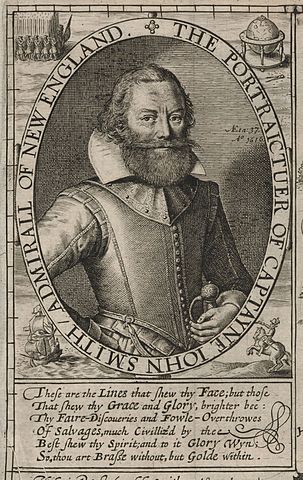
Photo STC 22790, Houghton Library, Harvard University, Public Domain
Intro music clip of “I Dunno” by Grapes CC BY-ND 3.0

LTH 001 – Introduction

In this first episode of Let’s Teach History, I’ll explain what to expect, who I am, and what a typical day in my classroom looked like.

Show Notes and Resources:

Caravel Curriculum – My Teachers Pay Teachers store

Interest Inventory – pdf

Today in History book (I think I mistakenly called it This Day in History)

Quick Prezi on Cloze Notes

Exit Tickets for Any Subject – Zip file


Photo by Denise Mattox CC BY-ND 2.0
Intro music clip of “I Dunno” by Grapes CC BY-ND 3.0