New Blog with More Social Studies Resources

I love finding new US History resources, but for years I have wanted a place to catalog and post all of the resources I find for my other classes such as Geography, World History, and Economics. 

I’ve kicked around the idea of having two blogs for a while, and I finally decided to go for it. There’s still a lot in the works, but I have started posting resources, and I’m so excited that I can post so many things for so many different areas!

And so, I give you my new blog, The Social Studies Life. For now, I will be updating both blogs and will still continue to post US History resources on this blog unless I feel like I can’t keep up with both. But if you need resources for other social studies classes, be sure to check out my new brainchild! I’ve got a lot of video resources on there now, but I’m hoping to add more free printables as time goes on. I’ve also got some Economics resources that I used to sell but am going to release as freebies!

Also, don’t forget that I love hearing about free resources that I can share with others, so feel free to use the Contact form on either website to let me know of any awesome new resources you come across.
Two Exciting New Products! Lots of US History Help!

I’ve been slaving away behind the scenes to finish something I’ve been working on for a while! The first is a massive list of US History Assignments. I ended up with over 211 assignments and 15 printable templates! I’m breaking them up into 2 separate products based on time period. The first is 101 Assignments for Colonies to Civil War. I’m still putting the finishing touches on the second part, 110 Assignments for Reconstruction to 9/11. I hope to have that one available within the month!

I also have a set of 180 discussion starters and bell ringers I’ve been working on. You can find that here which also includes a link to a free sample download.

Use the code BLOG20 to get 20% off of your purchase!


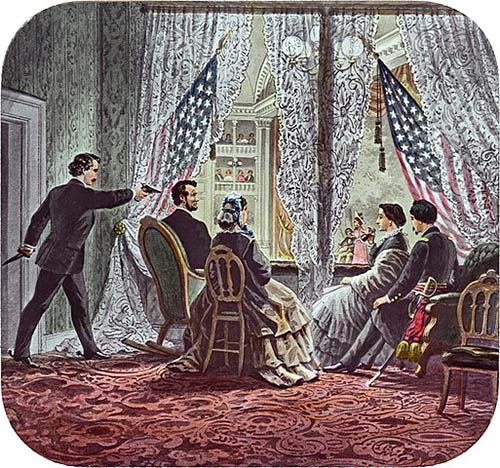
Virtual Tour of Ford’s Theatre, Assignment, and Video About Lincoln’s Assassination

Check out this virtual tour of Ford’s Theatre! Use the white arrows to move around the theatre and click/drag your mouse on the screen to turn around. The first part shows the main theater view from the stage, but if you scroll down the page, you will see other parts of the theater. Show your students exactly where Abraham Lincoln was assassinated! What better way to teach about what happened when Lincoln was assassinated than to take them inside the presidential box where it happened. See the stage on which John Wilkes Booth jumped when he yelled “Sic semper tyrranis!” Students can really visualize the events of that night using this tour.

How to Use This in Your Classroom
  • Note: This may not take an entire class period, especially if you are on block schedule or have high level students.
  • I suggest telling your students what happened the night of the assassination (take notes if necessary, etc.). Then, pull up the tour and show them around the theatre, explaining what happened where (or ask them to tell you what happened where).
  • Tell your students that the poem “O Captain, My Captain” was written about the death of Lincoln. Optional assignment: Break students into pairs and give them a copy of the poem worksheet. Have them answer the questions. This should not take more than about 5 minutes. This may be a little challenging for lower level students, but it’s a good cross-curricular tie in with literature and a great way to practice critical thinking and analysis. (Fun fact for poetry lovers: Lincoln’s favorite poem was Mortality by William Knox. There’s a video about it here.)
  • Go over the poem and/or worksheet.
  • Give them this assignment to work on: Write 10 tweets that might have been posted about Lincoln’s assassination. (More instructions are given on my download.) Students can post tweets by certain famous figures or random people, but the tweets must demonstrate facts and emotions associated with Lincoln’s assassination.
  • You can also show this video if you have time:

One final note: Have you ever seen The Conspirator? It’s a great movie about Mary Surratt, the only female charged in Lincoln’s assassination. It’s too long to show it in class, but it’s a really interesting movie that scratches that history itch!

US Expansion Map and Quick Manifest Destiny Assignment

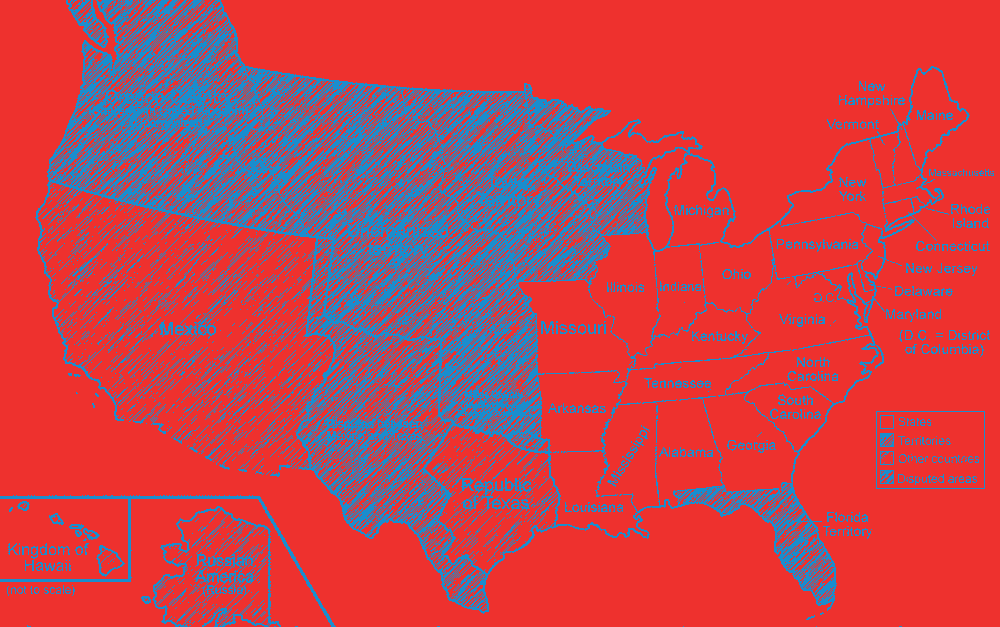
When covering the idea of manifest destiny and how it contributed to the Mexican-American War, a map is always helpful. Maps like the one linked below summarize lots of historical information in a friendly, visual format that makes it far easier for students to understand and remember. Use the blank expansion map found here (page 3) to help your students understand the idea of manifest destiny and its effect on expansion.

How?

After discussing manifest destiny, give your students a blank copy of the expansion map. Have them label the official United States up to 1844 (before Texas was added). Tell them to illustrate what manifest destiny would look like on that map. Tell them they need to include arrows to show which way the US is expanding and to add any other words, pictures, or symbols needed to accurately convey the concept. (My students drew things like wagons trains, telegraph lines, steam trains, and stick people heading west.) Be sure to have them write the term manifest destiny at the top.

Then have students label the territory owned by Mexico before the Mexican-American War (it’s labeled as the Mexican cession on page 2) and that of Texas.

After the students have labeled their maps, ask the following questions: What country or territories are in the way of the US fulfilling its manifest destiny at this time in history? What could the US do to gain these territories?

This discussion should help students understand why President Polk felt it was necessary to provoke a war with Mexico in order to gain territory.

You can also use this document to

  • Teach students about each of the major US territorial gains and how we acquired them
  • Review US territorial gains before an end of course test
Image: Creative Commons Attribution-Share Alike 3.0 Unported

My First Video Post! Free Digital Pamphlet Template and Two Free Assignments

I’ve decided to start doing some video posts! Watch the video below or read the summary after the video for the basics.

Download your free template and assignments here!

An easy and creative way to let students showcase a large amount of knowledge on a subject is to have them create pamphlets. The most popular design for a pamphlet is the trifold layout.

A tri-fold pamphlet can be tricky for students to design, especially when creating it digitally. It’s hard to visualize which part will be the front. So, I created this free digital template to help your students create a trifold pamphlet! It works as a PowerPoint file, or you can upload it to Google slides and share it with your students. If your students create a hard copy at their desks, display the PowerPoint on your board to help them get started.

Tips
  • Make sure you give your students a subject for which lots of information is available. The students have six panels to fill, and you want to make sure they have plenty of information to fill those panels. So, rather than assigning a pamphlet on a single event, like the Boston Massacre, you might assign students a pamphlet on the Continental Army or one on major battles in the American Revolution.
  • When you give the assignment, be specific about the details you want students to include. Do you want pictures? How many pictures should students include? Should they be in color? How many facts do you want? Are there certain people, places, or things you want students to mention? Should the pamphlet be typed or hand-written?
  • Does your school have a career center? Stop by and see if they have an example of a pamphlet that you can show your students. (Next time you are traveling to a different state, stop by the rest area to get pamphlets to show your students. Bonus: Look for pamphlets about historical sites and experiences if you have time.)

To give you an idea of what this might look like, I’ve included two sample assignments to use with the template. One covers the Continental Army, and the other covers Jamestown.

Download your free template and assignments here!

Video and Assignment Ideas for Upton Sinclair’s The Jungle

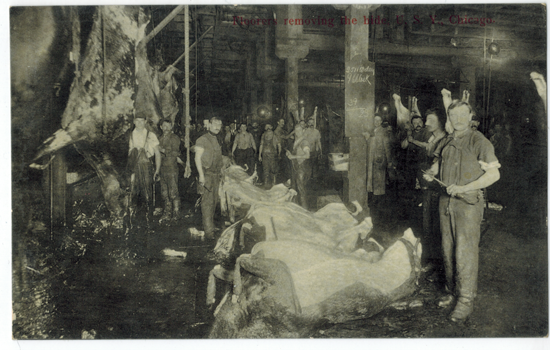
This video is a short and sweet summary of how Upton Sinclair’s book The Jungle led to changes in the meat-packing industry. It’s a great way to reinforce a discussion of the Pure Food and Drug Act, and it also shows some really interesting shots of the meat-packing industry back in the day.

You can use this in conjunction with my other free resources to teach The Jungle found in this blog post.

While you’re at it, check out my QR Code Scavenger Hunt on the Progressive Era in my TPT store. It’s a fun and engaging way to get students out of their seats while reviewing important aspects of the Progressive Era! Students LOVE my QR code scavenger hunts!

Sitting Bull and Little Bighorn Videos and Free Acrostic Poem Assignment

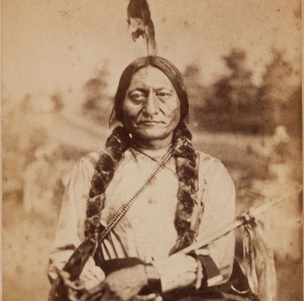
Here is a great video about Sitting Bull and his role in Native American resistance, particularly in the Battle of Little Bighorn. It’s not on Youtube, but you can watch it here. There’s even a link to download the video! This is a great option if you need to post it somewhere for distance learning or if you want to have a copy on your hard drive in case your internet goes down the day you want to show the video.

Here’s another video showing the reaction to the Battle of Little Bighorn.

This is a longer video that gives a play by play of the Battle of Little Bighorn. It might be too long for the classroom if you have a lot of material to cover, but it would be a great suggestion for students who want to learn more about the battle itself.

Easy assignments to implement after watching these videos include a word web about Sitting Bull or my free acrostic poem assignment.


*Image of Sitting Bull is in the public domain.

Free Historical Christmas Ornament Assignment & Other Ideas

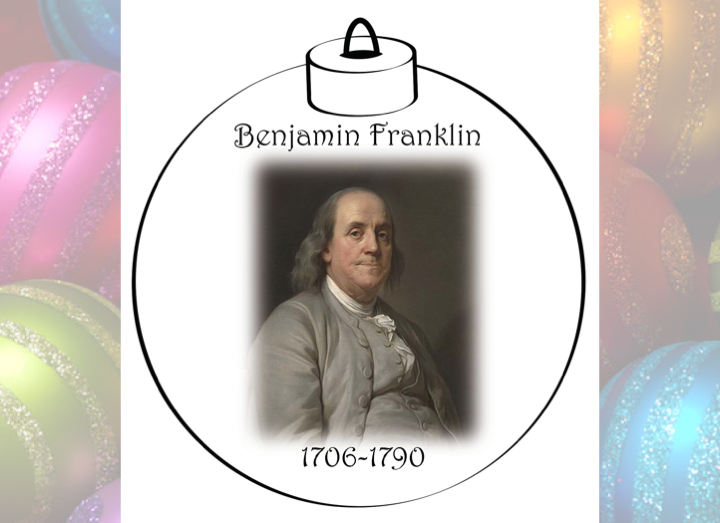
Do you need something fun to do with your students before the Christmas holidays? Have your students create a commemorative Christmas ornament about someone or something you have studied this year! You can get all of the directions and downloads at my TPT store here. It’s free! There’s a printable and digital template, so you can use it in the classroom or for distance learning. Links to Google Slides are also included.

Do you need more ideas? I’ve got an older blog post that gives you several other options here.


Pearl Harbor PowerPoint, Interactive Quiz, and Videos

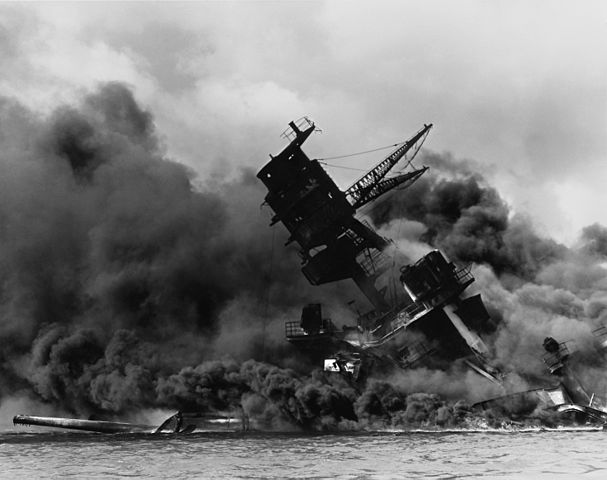
In honor of December 7th, I have created a PowerPoint summary of the key points you may want to review with your students when discussing the importance of the attack on Pearl Harbor. I also created an interactive quiz and have embedded several videos that might be useful in your classroom.

Click here to download my free PowerPoint summary of Pearl Harbor.

Pearl Harbor Interactive Quiz (10 Questions)

Quick video summary of the attack


FDR’s Famous Speech (speech starts at 0:30)


Interview with survivor of USS Arizona (It’s about 15 minutes long, but it’s so interesting!)


New Product: Get Those Students Out of Their Seats!

I’ve finally released my Stand and Sorts for US History! What is a stand and sort? It’s a way to get your students out of their seats while reviewing content. Category signs are taped on the walls in various locations in the classroom.  Students (or groups of students) are given characteristic/example cards.  Students use their knowledge of the content to determine (based on their card) what category sign they must stand under.  The cards can be reshuffled and the activity can be repeated.  A stand and sort can also be completed individually (at the students’ desks) or as a group.  You can also make it a group competition stand and sort, where each group races to get their example cards posted around the classroom before the other groups do so. My students LOVED the group competition. Years ago I created Stand and Sorts for Economics and people really enjoyed them. I’ve always wanted to make some stand and sorts for US History and was finally able to get them finished! You can buy them on TPT here.

Use these stand and sorts to:

  1. Reinforce content immediately after you teach it
  2. Review content the day after teaching it
  3. Do one stand a sort a day as review leading up to standardized testing
  4. Give a struggling student extra practice

Each stand and sort is listed below.

  • 13 Colonies (New England Colonies, Middle Colonies, Southern Colonies)
  • American Revolution (Britain, Colonies)
  • Important Founding Documents (Declaration of Independence, Articles of Confederation, Constitution, Bill of Rights)
  • Articles of Confederation v. Constitution
  • Founding Fathers (George Washington, John Adams, Thomas Jefferson, James Madison, Alexander Hamilton, Benjamin Franklin)
  • Branches of Government (Legislative, Executive, Judicial)
  • Industrial Revolution (Before v. After)
  • Civil War (Union, Confederacy)
  • Civil War Events (Harper’s Ferry, Fort Sumter, Bull Run/Manassas, Antietam, Gettysburg, Vicksburg, Sherman’s March to the Sea, Appomattox)
  • American Inventors (Benjamin Franklin, Eli Whitney, Robert Fulton, Thomas Edison, George Washington Carver, Alexander Graham Bell, Wright Brothers, Garrett Morgan, Henry Ford, Samuel Morse)
  • Roaring Twenties v. Great Depression
  • World War II (Allies, Axis)
  • World War I v. World War II
  • Cold War (US, Soviet Union)
  • Korean War v. Vietnam War
  • Civil Rights (Little Rock Nine, Montgomery Bus Boycott, Sit-ins, Freedom Summer, Martin Luther King, Jr., Malcolm X, Plessy v. Ferguson, Brown v. Board of Education, SCLC & SNCC, Freedom Ride)
  • Vietnam War (US v. North Vietnam)
  • Late 20th Century Presidents (John F. Kennedy, Lyndon Johnson, Richard Nixon, Gerald Ford, Jimmy Carter, Ronald Reagan)

What do you need during the coronavirus school shutdown?

I’m thinking about creating some free resources that teachers can use while most students are at home during the school shutdowns because of the coronavirus.  I thought about creating instructional videos or at-home activities.  What do you need?  What types of activities, videos, etc. would help right now?  What types of assignments are you giving your students?  What subjects do you need materials for?  What are you covering now?  Let me know how I can help you during this time! Use the contact form below to tell me!

[formidable id=”3″]


Assignment Ideas for the Week Before Christmas Break

You know it’s coming. That dreaded “week before Christmas break.” It’s a time when it’s every teacher for himself, and most educators believe that just for a few days, entire schools should be crop-dusted with ADHD meds.

What do you do? Half of your class has checked-out mentally and the other half have checked-out physically. If you are on a block schedule, then odds are that you have a few days sandwiched between end-of-course tests and Christmas break. If you only have a day or two, by all means, give your kids a break and watch a movie. You all deserve it. But don’t check out and just show something with zero educational value like Elf. Make sure it is a movie with historical content, and write a few class discussion questions on the board while you’re at it.

Sidenote: I recently was somewhat horrified to hear that some teachers the local area had students watch movies for the last TWO WEEKS of the semester because testing was over. I know that it’s hard to keep kids focused after testing, but if you automatically show movies to kill time you are telling your students several things:

  • School is about testing, not learning
  • Learning for learning’s sake is not valuable
  • It’s ok to take the easy way out

Movies in the classroom are ok as an occasional reward (be careful with this one) or to reinforce content, but they should NEVER take the place of instruction just because you don’t feel like teaching. Rant over.

What if your administrators won’t allow movies or you have more than just a day or two to kill? What then? Well, the thing to keep in mind is that you want assignments that meet the following criteria:

  • Creative (Kids are burned out from test or distracted by the coming break.)
  • Adaptable (Kids will be sporadically absent. Do something that can work with any subject matter and any amount of students.)

So just what can you do when things are crazy? Here are my assignment ideas to help get you through the pre-Christmas craziness. (Keep in mind that these can be used at the end of the year in May/June as well.)

  • Have students design a commemorative Christmas ornament about a historical figure. I just posted a very detailed version of this assignment on Teachers Pay Teachers. It will be free for a limited time. Get it while you can, and if you like it, please leave me a good review!
  • Put students in groups and have them act out historical events for the class to guess. (Each group must provide 3 clues within their skit and must give you a hard copy of the clues before they perform.)
  • Have students create a song in which they replace traditional Christmas lyrics with those about a historical event. Click here to download my stellar creation about Valley Forge called Deck the Tents…sure to be a blockbuster hit! 😉 If your students choose this option, take a picture of the lyrics and project them on the board. Have the class sing it together! Get into it and make it fun and silly.
  • Have student write poetry, create raps, or make acrostic poems about historical figures.
  • Have students plan a very brief presentation answering one of the following questions: What historical figure (that we have studied) would you like to meet and why? What historical event (that we have studied) would you like to have witnessed and why? Students should give 3-5 solid reasons for their feelings. Require students to make a bulleted list that they must eventually turn in to you, which will help them solidify/organize their thoughts. (You could make them write an essay, but the whole point of these activities is that they are low-stress for students. If you think your kids can handle it, go for it.) Then have students get in small groups and share their presentations.

The common thing about all of these activities is that they can be adapted to almost any subject, they allow kids to get creative, and they require very little planning on your part!

Good luck! You’re almost there!

*Image copyrighted and used in accordance with license agreement at Canstockphoto.com

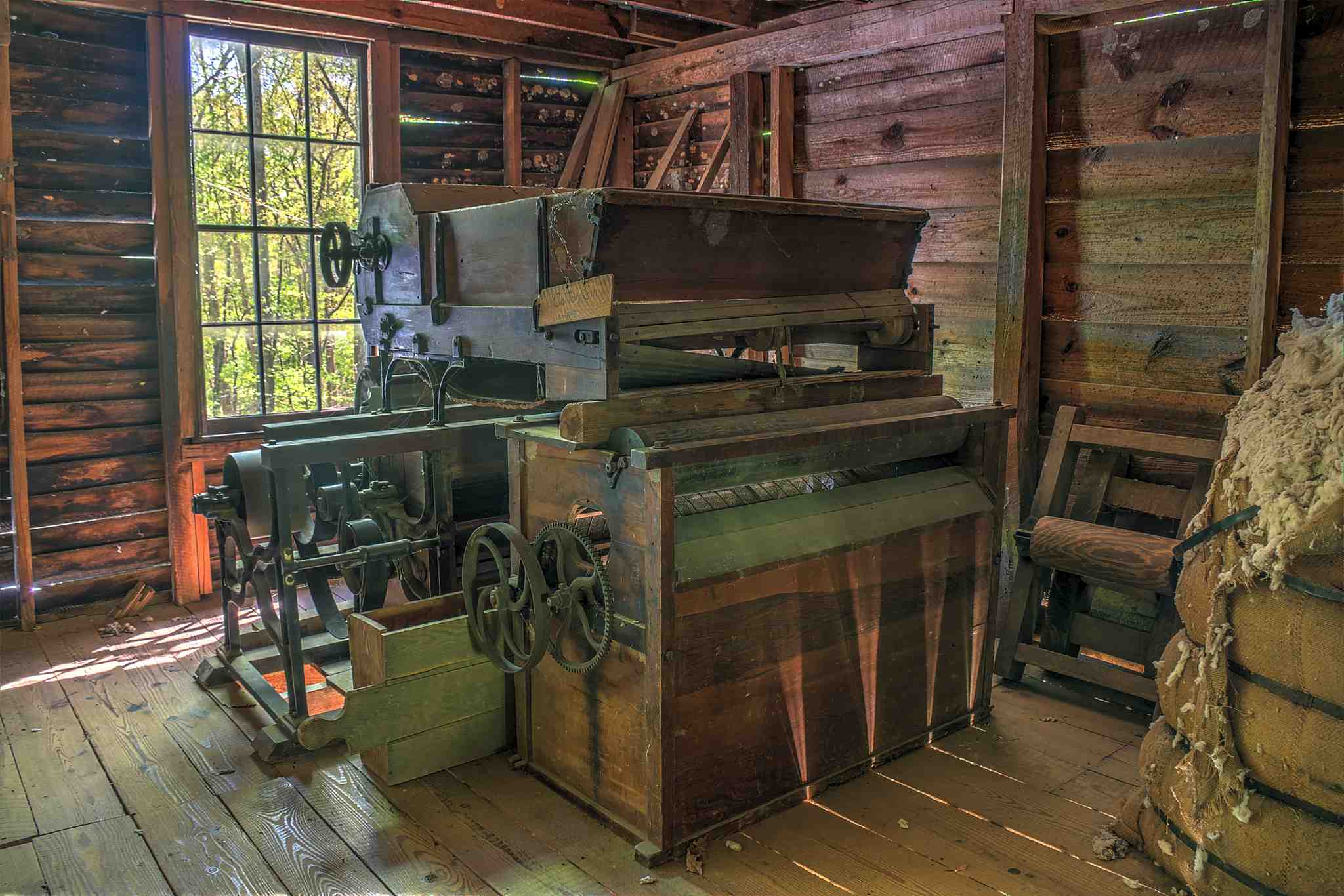
Eli Whitney Videos and Cotton Gin Craft

Eli Whitney.  You’ve all heard of him.  You know, he’s that guy that indirectly led to an increase in slavery and all of that horrible stuff.  He was just trying to help make life easier (and make a little cash in the process), but his ideas made a HUGE impact on America.

I taught a lesson on Eli Whitney this week.  In my opinion, you need to make sure your students know 2 things about Eli Whitney:

1- He invented the cotton gin

2- He came up with the idea of using interchangeable parts in manufacturing

It can be hard to visualize how the cotton gin works without seeing one (or at least a diagram of one).  I found the BEST video I have ever seen showing the operation of a cotton gin.  Now granted, this video is in black and white and is probably older than me, but there is no better video that I have found which has clear shots of the teeth in the wheels.  When you show this to your students, just let them know ahead of time that it is an older black and white video and that there is a cheesy guy in a wig pretending to be Eli Whitney.

(Side note:  I have often found that students tend to dismiss something they see as old or in black and white IF they haven’t been prepped for it.  Before I show an older video, I always explain that the video explains or illustrates something so much better than other videos that it still has relevance and is worth showing.  Once I acknowledge any obviously cheesy moments or outdated phrases or clothing, it takes away much of the novelty of it, and the students can move past it and just absorb what the video is showing.)


Another “decent” video (although NOT the History Channel’s best production) is this one.  You may want to use this in between your discussion of the cotton gin and interchangeable parts.

Now, here’s what I’m REALLY proud of!  I decided that I wanted to have my students make some kind of crafty-type thing to help them remember how the cotton gin worked.  So I enlarged and printed the picture below on cardstock (you could use regular paper too if you had to).

I then gave my students some glue, cotton balls, and unpopped popcorn kernels (to represent cotton seeds).  They had to glue the stuff on the diagram in such a way as to represent what the cotton gin did.  Use liquid glue if you do this.  None of this will stick if you use a glue stick.  Also, tell your students to tear apart the cotton balls into smaller chunks.  The balls will last longer, and it just looks better.


Now, this will seriously take less than 5 minutes, so why should you do it?  Because sometimes your students need to do something hands-on.  Because sometimes your students need to do something other than take notes.  Because sometimes you need to do something different.  And if you think this craft may be too “childish” for your kids, I think you underestimate how refreshing a change of pace is when you are sitting in class and listening to people talk all day long.  Did I mention that it would be GREAT reinforcement for tactile learners…or really anyone?

If this idea is too simple for your “high-minded classroom ways,” (haha) try this:  Divide your students into small groups and give them a poster board, cotton balls, popcorn, and glue and say…”Make me a diagram of a cotton gin.” or “Make a poster demonstrating how a cotton gin works.”

Before you get your students pasting and crafting, you need to reinforce the impact of the cotton gin.  It is pointless for your students to know how the cotton gin works if they don’t know the impact it had on the South (and really the world).  I used a table to show the students the difference the cotton gin made.  Have them cut out each box and put it in the correct spot in the chart.  (See link at the bottom of the article.)

One thing that you need to discuss when covering the effects of the cotton gin is the positive and negative effects of the invention.  Have a brief discussion about the good and bad that has resulted from various inventions (start off discussing the cell phone).  Have students do some deep thinking about consequences and cause and effect (maybe a short free-write).  Many people talk about the fact that the cotton gin led to an increase in slavery but often overlook the fact that the cotton gin also provided a way for poor farmers living in the South (who didn’t own slaves) to better support their family.  Also, cotton provided the raw materials necessary for textile mills to expand which provided more jobs.

Once you cover the cotton gin and move on to interchangeable parts, there’s more fun stuff to do.  After explaining interchangeable parts and their importance, may sure you show them that they are surrounded by hundreds of examples of them.  You can use your board markers as a handy example.  If you lose the top to one, you can replace it with another.

Have your students go on a scavenger hunt around the room for examples of interchangeable parts.  You can divide them into groups and have them race.  Whoever gets done first is the winner and gets candy or extra points on a quiz.  I would make them find about 30 different examples within the classroom.  Or, you could also set a timer and see which group can come up with the most examples of items with interchangeable parts in the time allotted.  Pretty much anything with a screw has interchangeable parts.  In fact, a screw is an interchangeable part!  Students are probably wearing examples of items with interchangeable parts as well:  watches, zippers, buttons, earrings, etc.

A word of warning, apparently there is a theory out there called the Mandela effect, where a group of people collectively remembers something wrong.  There’s a bunch of articles devoted to this.  Well, some crazy people claim that Eli Whitney was black and that he invented the cotton gin to reduce the work of slaves.  It’s a crazy Internet theory with no reliable evidence, but there’s always that ONE kid in class who’s read stuff like that and brings it up.  Haha!  The point is, the cotton gin changed the course of American history, regardless of the physical characteristics of the inventor!

Here’s a link to my cotton gin table.  It’s pretty simple.  You can add more stuff to it if you would like (specific statistics about cotton production and slavery).  The fonts may look weird if you don’t have them on your computer.


Featured image courtesy of Dsdugan – Own work, CC0, https://commons.wikimedia.org/w/index.php?curid=58026846

Biography Book Cover Assignment

If a book was written about your life what would it look like? What picture would be on the cover? What tag line would be used? What would the summary on the back say?

While working on my lesson for Benjamin Franklin, I decided to have my students create a book cover for a biography about him. This would be a great idea to use with any historical figure that you wanted your students to know a lot about.


You could use this book cover idea to reinforce the importance of people such as:
  • Christopher Columbus
  • George Washington
  • Thomas Jefferson
  • Andrew Jackson
  • Civil War generals
  • Abraham Lincoln
  • Teddy Roosevelt
  • Franklin Roosevelt
  • Dwight Eisenhower
  • Martin Luther King, Jr.
My students have to include the following things:
  • A catchy title that reflects the life of the person
  • A picture that represents that person’s life
  • A tag line under the title that gives a little more information (A phrase or one-line summary of this person)
  • A paragraph on the back of the book that gives a summary of the book, which includes some details of this person’s life/interests/importance.  (You may want to give a specific number of details required if you think your students might skimp on the information.)
  • You could also include an optional book endorsement quote by someone who would have known the person. (If the book was about Ben Franklin, you could have something like this… “A great book about a great man.” – Thomas Jefferson)
I whipped up a quick book cover template that I thought I’d share with you.  It would be a good idea to also show your students several copies of real book covers, so they get an idea of what you want.  (Just run down to the media center before class and grab a few.)

Visual Syllabus – A Fun Way to Deliver the Boring Stuff…and More!

While prepping for my American Inventors class (I’m teaching one for my local homeschool co-op), I decided that I wanted to spice up my syllabus.  I stumbled across this simple but neat looking visual syllabus.  It’s only $1.75 on TPT. I’ve never used one before, but I decided to try it.  It was very easy to edit, and it looked pretty cool afterwards.  I did make a few changes and tweaks to fit my needs.  It’s much more visually appealing than a regular old syllabus.  I will say, however, that while you can give the basics on this syllabus, you STILL need to make sure you give out a copy of your procedures (which definitely won’t fit on this).

You could also use this syllabus for notes.  Change out some of the clip art and you can add note content instead of syllabus content.  It wouldn’t need to be anything fancy, but sometimes delivering content in a different manner helps break the monotony.  You could use it to create a broad overview of a war.  Have the dates in one box, the good and bad guys in another, important battles in another, and important people in another.  Oooooh, even better, give the blank template to your students and (as a review) have THEM create a “cheat-sheet” about the war!  That would be a great way to review the basics about a war or other large topic.

Here’s my syllabus that I created for my class.  I blacked out some top secret stuff that I didn’t think you needed to know…stuff I could let you read, but then I’d have to kill you!  This syllabus is doesn’t include all of the stuff that I would put in if I were teaching a large class full of 30 students, but it still has the basics.  Oh, and by the way, I wasn’t paid or anything like that to write about that syllabus product.  I just like sharing neat and useful things I find!


Blank Newspaper Worksheet: 4 Assignment Ideas

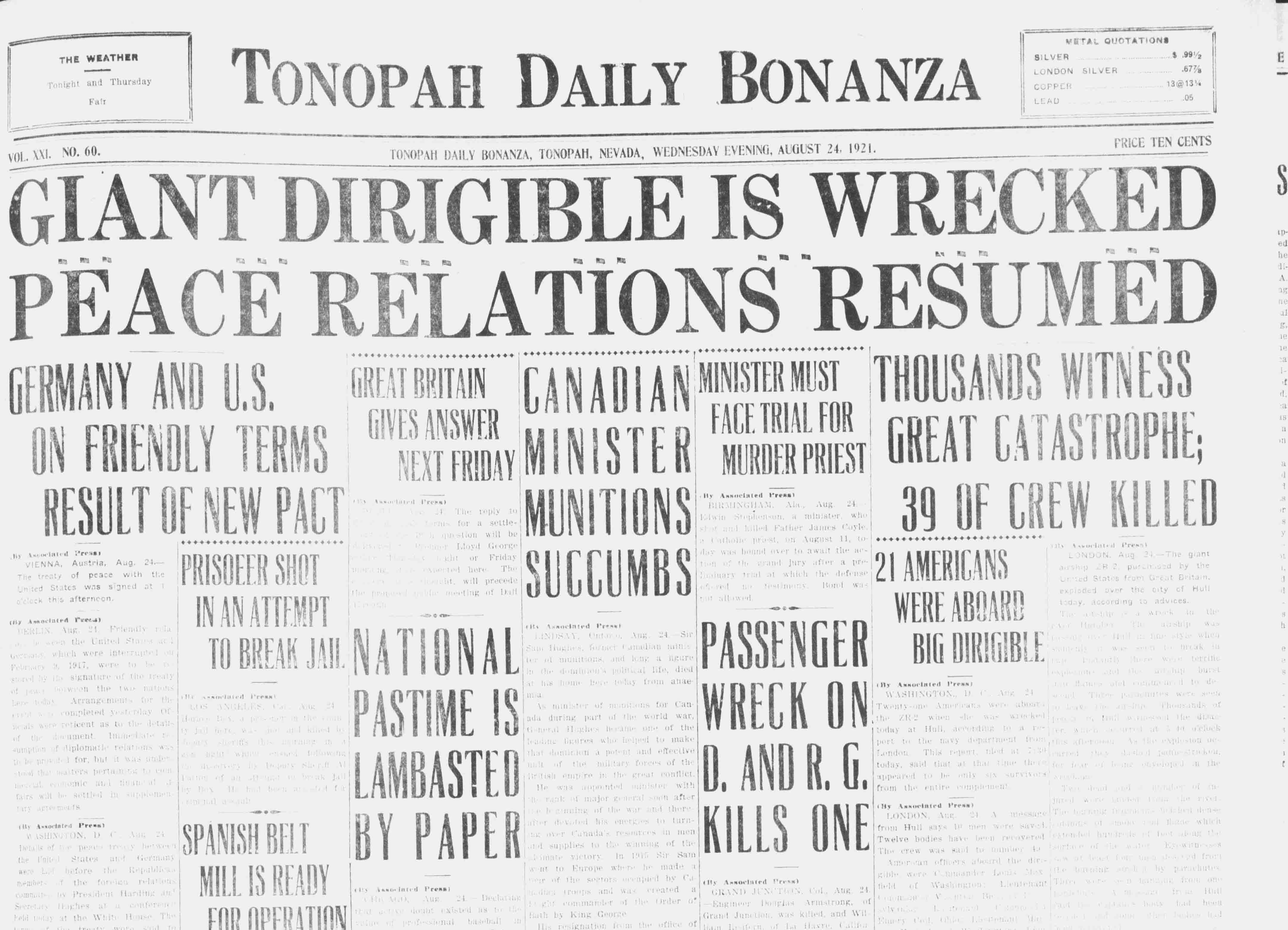
Have you ever found a cool news article that you want to make sure your students read and understand?  This sheet, covering the 5 W’s of a newspaper article, was created to be used with the NY Times, but it can be used with any news article.  It’s a fillable PDF, so students can fill it in online or you can print a blank copy.

Classroom Uses:

  • Give students current event articles relating to historical discoveries or events and have them complete the sheet.
  • Give students old newspaper articles about historical events and have them read the article and complete the sheet.
  • Have students read a news article from this list and fill out the form.
  • Use the form as a planning sheet to help a student write their own fake news article about an important historical event.

What other ways could you use this in the classroom?  Share your ideas in the comments section below.